EDTA chelated zinc (Zn-EDTA) is one of the most widely used micronutrient fertilizers in modern agriculture. Zinc is an essential element for enzyme activation, protein synthesis, and plant growth regulation. However, in many soils, especially alkaline conditions, zinc becomes insoluble and unavailable to plants. This is where EDTA chelation technology becomes critical.
By binding zinc ions with EDTA (Ethylenediaminetetraacetic acid), manufacturers can produce a stable, water-soluble fertilizer that ensures efficient nutrient delivery. Understanding the production process and formulation principles of Zn-EDTA is essential for creating high-quality agricultural products.
👉 If you want to produce high-quality EDTA chelated zinc with exact raw material ratios, industrial formulations and full production systems, you can access professional formulation guides used by manufacturers.
✔ 100 kg production-based formulations
✔ Real raw materials with CAS numbers
✔ Step-by-step industrial production methods
✔ Multiple Zn-EDTA formulation variations
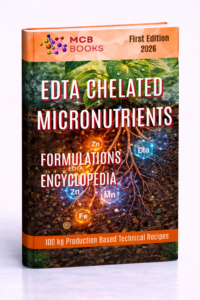
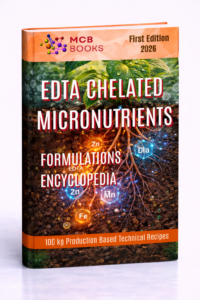
👉 Discover the full
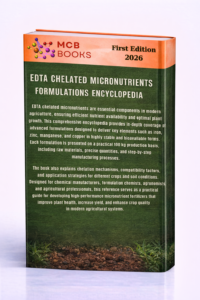
EDTA CHELATED MICRONUTRIENTS FORMULATIONS ENCYCLOPEDIA
and start manufacturing today.
In industrial fertilizer production, the preparation of EDTA chelated zinc is not just a chemical reaction — it is a controlled process that determines product quality, stability and market value.
Manufacturers who understand formulation details and production parameters can create premium Zn-EDTA fertilizers with high efficiency and commercial success.
WHAT IS EDTA CHELATED ZINC (Zn-EDTA)?
EDTA chelated zinc is a coordination compound formed by reacting zinc ions with EDTA molecules. The EDTA ligand surrounds the zinc ion, protecting it from precipitation and unwanted chemical reactions in soil or water.
This structure provides several advantages:
- High solubility in water
- Stability across a moderate pH range
- Improved plant absorption efficiency
- Reduced nutrient loss in soil
Zn-EDTA is commonly used in foliar sprays, fertigation systems, and hydroponic solutions.
RAW MATERIALS USED IN PRODUCTION
The industrial production of EDTA chelated zinc requires carefully selected raw materials to ensure purity and reaction efficiency. The main components include:
- EDTA acid or its sodium salt (chelating agent)
- Zinc sulfate or zinc chloride (zinc source)
- Sodium hydroxide (for pH adjustment)
- Deionized water
The quality of these raw materials directly affects the chelation efficiency and final product stability.
PRODUCTION PROCESS OF Zn-EDTA
The production of EDTA chelated zinc follows a controlled chemical process to ensure complete chelation and high product quality.
First, EDTA is dissolved in water and neutralized using sodium hydroxide to form a soluble EDTA salt. This step is essential because EDTA acid alone has limited solubility.
Next, the zinc salt (typically zinc sulfate) is slowly added to the EDTA solution under continuous stirring. During this stage, the zinc ions react with EDTA molecules to form a stable chelate complex.
The reaction conditions, especially pH and temperature, must be carefully controlled. The optimal pH range for Zn-EDTA formation is typically between 5 and 6. If the pH is too low or too high, incomplete chelation or precipitation may occur.
After the reaction is complete, the solution is filtered to remove impurities. Depending on the final product type, the solution can be:
- Concentrated and sold as liquid fertilizer
- Spray-dried to produce powder form
- Granulated for solid fertilizer applications
QUALITY CONTROL AND STABILITY
To ensure a high-quality Zn-EDTA product, several parameters must be monitored:
- Chelation percentage (degree of complex formation)
- pH stability
- Solubility in water
- Absence of free zinc ions
Properly produced Zn-EDTA fertilizers exhibit excellent storage stability and compatibility with other agricultural inputs.
APPLICATIONS IN AGRICULTURE
EDTA chelated zinc is widely used in various agricultural systems due to its high efficiency and reliability. Common applications include:
- Foliar sprays for rapid zinc correction
- Fertigation systems in greenhouse cultivation
- Hydroponic nutrient solutions
- Soil application in micronutrient-deficient regions
Zinc plays a vital role in chlorophyll formation, enzyme activation, and growth hormone production, making Zn-EDTA an essential component of balanced fertilization programs.
ADVANTAGES OF Zn-EDTA FERTILIZERS
Using EDTA chelated zinc fertilizers provides significant benefits:
- Prevents zinc fixation in soil
- Enhances nutrient uptake efficiency
- Improves crop yield and quality
- Ensures uniform nutrient distribution
- Compatible with most fertilizer systems
These advantages make Zn-EDTA a preferred choice for both small-scale farmers and large agricultural operations.
SUMMARY
EDTA chelated zinc production is a critical process in the fertilizer industry, enabling the creation of highly efficient and stable micronutrient products. By carefully controlling raw materials, reaction conditions, and formulation parameters, manufacturers can produce Zn-EDTA fertilizers that significantly enhance plant nutrition and agricultural productivity.
If you are serious about producing EDTA chelated zinc fertilizers at industrial scale, having the right formulation knowledge is essential.
Our professional formulation books provide:
✔ Industrial-scale Zn-EDTA formulations
✔ Complete raw material systems
✔ Production techniques used by manufacturers
✔ Ready-to-use manufacturing knowledge
👉 Get instant access and start building your own fertilizer production line today.