FRUIT ENLARGEMENT PLANT GROWTH REGULATOR FORMULATIONS ENCYCLOPEDIA
Book details
- Editor
- MCB BOOKS
- ISBN
- 978-6058-8350-5-4
- Number of Pages
- 535 Pages
- Publication Date
- 2026
- Copyright
- MCB BOOKS
- Format
- Hard Book & E book (PDF)
- Language
- English
About the Encyclopedia
Fruit Enlargement Plant Growth Regulator Formulations Encyclopedia is a comprehensive professional technical reference prepared for agricultural chemical manufacturers, plant growth regulator producers, fertilizer companies, formulators and R&D specialists developing commercial fruit enlargement products.
Fruit enlargement products represent an important category of modern agricultural inputs because commercial fruit production often requires carefully designed programs targeting fruit size, weight, uniformity, firmness, color, quality and overall marketable yield.
This encyclopedia contains 315 formulations and technical sections across 535 pages, providing manufacturers with an extensive collection of fruit enlargement product-development concepts.
The book includes general-purpose, high-performance and premium fruit enlargement formulations together with water-soluble systems, soluble concentrates, suspension concentrates, liquid products and foliar spray formulations.
Specialized formulation groups cover fruit size enhancement, fruit weight improvement, cell expansion, cell division, fruit development promotion, early fruit growth, rapid fruit enlargement, uniform fruit size, fruit quality enhancement, fruit firmness improvement, fruit color enhancement and fruit yield enhancement.
The encyclopedia also contains fruit enlargement formulations based on different plant growth regulator technologies including CPPU, Brassinolide, 24-Epibrassinolide, Triacontanol and Cytokinin systems.
A large crop-specific section covers fruit enlargement formulations for kiwi, grape, apple, pear, peach, apricot, plum, cherry, citrus, pomegranate, strawberry, blueberry, raspberry, tomato, pepper, cucumber, melon and watermelon.
Table of contents
01Page 1 Contents 315 formulations · 1–504
- 1General Purpose Fruit Enlargement Plant Growth Regulator Formulation and Industrial Production Process 1
- 3General Purpose Fruit Enlargement Plant Growth Regulator Formulation and Industrial Production Process 2
- 5General Purpose Fruit Enlargement Plant Growth Regulator Formulation and Industrial Production Process 3
- 7General Purpose Fruit Enlargement Plant Growth Regulator Application Guidelines and Field Usage Program For Maximum Efficiency
- 8General Purpose Fruit Enlargement Plant Growth Regulator Technical Properties and Usage
- 9High Performance Fruit Enlargement Formulation and Industrial Production Process 1
- 11High Performance Fruit Enlargement Formulation and Industrial Production Process 2
- 13High Performance Fruit Enlargement Formulation and Industrial Production Process 3
- 15High Performance Fruit Enlargement Application Guidelines and Field Usage Program For Maximum Efficiency
- 16High Performance Fruit Enlargement Technical Properties and Usage
- 17Premium Fruit Enlargement Formulation and Industrial Production Process 1
- 19Premium Fruit Enlargement Formulation and Industrial Production Process 2
- 21Premium Fruit Enlargement Formulation and Industrial Production Process 3
- 23Premium Fruit Enlargement Application Guidelines and Field Usage Program For Maximum Efficiency
- 24Premium Fruit Enlargement Technical Properties and Usage
- 25Water Soluble Fruit Enlargement Formulation and Industrial Production Process 1
- 27Water Soluble Fruit Enlargement Formulation and Industrial Production Process 2
- 29Water Soluble Fruit Enlargement Formulation and Industrial Production Process 3
- 31Water Soluble Fruit Enlargement Application Guidelines and Field Usage Program For Maximum Efficiency
- 32Water Soluble Fruit Enlargement Technical Properties and Usage
- 33Soluble Concentrate Fruit Enlargement Formulation and Industrial Production Process 1
- 35Soluble Concentrate Fruit Enlargement Formulation and Industrial Production Process 2
- 37Soluble Concentrate Fruit Enlargement Formulation and Industrial Production Process 3
- 39Soluble Concentrate Fruit Enlargement Application Guidelines and Field Usage Program For Maximum Efficiency
- 40Soluble Concentrate Fruit Enlargement Technical Properties and Usage
- 41Suspension Concentrate Fruit Enlargement Formulation and Industrial Production Process 1
- 43Suspension Concentrate Fruit Enlargement Formulation and Industrial Production Process 2
- 45Suspension Concentrate Fruit Enlargement Formulation and Industrial Production Process 3
- 47Suspension Concentrate Fruit Enlargement Application Guidelines and Field Usage Program For Maximum Efficiency
- 48Suspension Concentrate Fruit Enlargement Technical Properties and Usage
- 49Liquid Fruit Enlargement Formulation and Industrial Production Process 1
- 51Liquid Fruit Enlargement Formulation and Industrial Production Process 2
- 53Liquid Fruit Enlargement Formulation and Industrial Production Process 3
- 55Liquid Fruit Enlargement Application Guidelines and Field Usage Program For Maximum Efficiency
- 56Liquid Fruit Enlargement Technical Properties and Usage
- 57Foliar Spray Fruit Enlargement Formulation and Industrial Production Process 1
- 59Foliar Spray Fruit Enlargement Formulation and Industrial Production Process 2
- 61Foliar Spray Fruit Enlargement Formulation and Industrial Production Process 3
- 63Foliar Spray Fruit Enlargement Application Guidelines and Field Usage Program For Maximum Efficiency
- 64Foliar Spray Fruit Enlargement Technical Properties and Usage
- 65Fruit Size Enhancement Formulation and Industrial Production Process 1
- 67Fruit Size Enhancement Formulation and Industrial Production Process 2
- 69Fruit Size Enhancement Formulation and Industrial Production Process 3
- 71Fruit Size Enhancement Application Guidelines and Field Usage Program For Maximum Efficiency
- 72Fruit Size Enhancement Technical Properties and Usage
- 73Fruit Weight Improvement Formulation and Industrial Production Process 1
- 75Fruit Weight Improvement Formulation and Industrial Production Process 2
- 77Fruit Weight Improvement Formulation and Industrial Production Process 3
- 79Fruit Weight Improvement Application Guidelines and Field Usage Program For Maximum Efficiency
- 80Fruit Weight Improvement Technical Properties and Usage
- 81Cell Expansion Fruit Enlargement Formulation and Industrial Production Process 1
- 83Cell Expansion Fruit Enlargement Formulation and Industrial Production Process 2
- 85Cell Expansion Fruit Enlargement Formulation and Industrial Production Process 3
- 87Cell Expansion Fruit Enlargement Application Guidelines and Field Usage Program For Maximum Efficiency
- 88Cell Expansion Fruit Enlargement Technical Properties and Usage
- 89Cell Division Fruit Enlargement Formulation and Industrial Production Process 1
- 91Cell Division Fruit Enlargement Formulation and Industrial Production Process 2
- 93Cell Division Fruit Enlargement Formulation and Industrial Production Process 3
- 95Cell Division Fruit Enlargement Application Guidelines and Field Usage Program For Maximum Efficiency
- 96Cell Division Fruit Enlargement Technical Properties and Usage
- 97Fruit Development Promotion Formulation and Industrial Production Process 1
- 99Fruit Development Promotion Formulation and Industrial Production Process 2
- 101Fruit Development Promotion Formulation and Industrial Production Process 3
- 103Fruit Development Promotion Application Guidelines and Field Usage Program For Maximum Efficiency
- 104Fruit Development Promotion Technical Properties and Usage
- 105Early Fruit Growth Formulation and Industrial Production Process 1
- 107Early Fruit Growth Formulation and Industrial Production Process 2
- 109Early Fruit Growth Formulation and Industrial Production Process 3
- 111Early Fruit Growth Application Guidelines and Field Usage Program For Maximum Efficiency
- 112Early Fruit Growth Technical Properties and Usage
- 113Rapid Fruit Enlargement Formulation and Industrial Production Process 1
- 115Rapid Fruit Enlargement Formulation and Industrial Production Process 2
- 117Rapid Fruit Enlargement Formulation and Industrial Production Process 3
- 119Rapid Fruit Enlargement Application Guidelines and Field Usage Program For Maximum Efficiency
- 120Rapid Fruit Enlargement Technical Properties and Usage
- 121Uniform Fruit Size Formulation and Industrial Production Process 1
- 123Uniform Fruit Size Formulation and Industrial Production Process 2
- 125Uniform Fruit Size Formulation and Industrial Production Process 3
- 127Uniform Fruit Size Application Guidelines and Field Usage Program For Maximum Efficiency
- 128Uniform Fruit Size Technical Properties and Usage
- 129Fruit Quality Enhancement Formulation and Industrial Production Process 1
- 131Fruit Quality Enhancement Formulation and Industrial Production Process 2
- 133Fruit Quality Enhancement Formulation and Industrial Production Process 3
- 135Fruit Quality Enhancement Application Guidelines and Field Usage Program For Maximum Efficiency
- 136Fruit Quality Enhancement Technical Properties and Usage
- 137Fruit Firmness Improvement Formulation and Industrial Production Process 1
- 139Fruit Firmness Improvement Formulation and Industrial Production Process 2
- 141Fruit Firmness Improvement Formulation and Industrial Production Process 3
- 143Fruit Firmness Improvement Application Guidelines and Field Usage Program For Maximum Efficiency
- 144Fruit Firmness Improvement Technical Properties and Usage
- 145Fruit Color Enhancement Formulation and Industrial Production Process 1
- 147Fruit Color Enhancement Formulation and Industrial Production Process 2
- 149Fruit Color Enhancement Formulation and Industrial Production Process 3
- 151Fruit Color Enhancement Application Guidelines and Field Usage Program For Maximum Efficiency
- 152Fruit Color Enhancement Technical Properties and Usage
- 153Fruit Yield Enhancement Formulation and Industrial Production Process 1
- 155Fruit Yield Enhancement Formulation and Industrial Production Process 2
- 157Fruit Yield Enhancement Formulation and Industrial Production Process 3
- 159Fruit Yield Enhancement Application Guidelines and Field Usage Program For Maximum Efficiency
- 160Fruit Yield Enhancement Technical Properties and Usage
- 161CPPU Fruit Enlargement Formulation and Industrial Production Process 1
- 163CPPU Fruit Enlargement Formulation and Industrial Production Process 2
- 165CPPU Fruit Enlargement Formulation and Industrial Production Process 3
- 167CPPU Fruit Enlargement Application Guidelines and Field Usage Program For Maximum Efficiency
- 168CPPU Fruit Enlargement Technical Properties and Usage
- 169Brassinolide Fruit Enlargement Formulation and Industrial Production Process 1
- 171Brassinolide Fruit Enlargement Formulation and Industrial Production Process 2
- 173Brassinolide Fruit Enlargement Formulation and Industrial Production Process 3
- 175Brassinolide Fruit Enlargement Application Guidelines and Field Usage Program For Maximum Efficiency
- 176Brassinolide Fruit Enlargement Technical Properties and Usage
- 17724-Epibrassinolide Fruit Enlargement Formulation and Industrial Production Process 1
- 17924-Epibrassinolide Fruit Enlargement Formulation and Industrial Production Process 2
- 18124-Epibrassinolide Fruit Enlargement Formulation and Industrial Production Process 3
- 18324-Epibrassinolide Fruit Enlargement Application Guidelines and Field Usage Program For Maximum Efficiency
- 18424-Epibrassinolide Fruit Enlargement Technical Properties and Usage
- 185Triacontanol Fruit Enlargement Formulation and Industrial Production Process 1
- 187Triacontanol Fruit Enlargement Formulation and Industrial Production Process 2
- 189Triacontanol Fruit Enlargement Formulation and Industrial Production Process 3
- 191Triacontanol Fruit Enlargement Application Guidelines and Field Usage Program For Maximum Efficiency
- 192Triacontanol Fruit Enlargement Technical Properties and Usage
- 193Cytokinin Fruit Enlargement Formulation and Industrial Production Process 1
- 195Cytokinin Fruit Enlargement Formulation and Industrial Production Process 2
- 197Cytokinin Fruit Enlargement Formulation and Industrial Production Process 3
- 199Cytokinin Fruit Enlargement Application Guidelines and Field Usage Program For Maximum Efficiency
- 200Cytokinin Fruit Enlargement Technical Properties and Usage
- 201Kiwifruit Fruit Enlargement Formulation and Industrial Production Process 1
- 203Kiwifruit Fruit Enlargement Formulation and Industrial Production Process 2
- 205Kiwifruit Fruit Enlargement Formulation and Industrial Production Process 3
- 207Kiwifruit Fruit Enlargement Application Guidelines and Field Usage Program For Maximum Efficiency
- 208Kiwifruit Fruit Enlargement Technical Properties and Usage
- 209Grape Fruit Enlargement Formulation and Industrial Production Process 1
- 211Grape Fruit Enlargement Formulation and Industrial Production Process 2
- 213Grape Fruit Enlargement Formulation and Industrial Production Process 3
- 215Grape Fruit Enlargement Application Guidelines and Field Usage Program For Maximum Efficiency
- 216Grape Fruit Enlargement Technical Properties and Usage
- 217Apple Fruit Enlargement Formulation and Industrial Production Process 1
- 219Apple Fruit Enlargement Formulation and Industrial Production Process 2
- 221Apple Fruit Enlargement Formulation and Industrial Production Process 3
- 223Apple Fruit Enlargement Application Guidelines and Field Usage Program For Maximum Efficiency
- 224Apple Fruit Enlargement Technical Properties and Usage
- 225Pear Fruit Enlargement Formulation and Industrial Production Process 1
- 227Pear Fruit Enlargement Formulation and Industrial Production Process 2
- 229Pear Fruit Enlargement Formulation and Industrial Production Process 3
- 231Pear Fruit Enlargement Application Guidelines and Field Usage Program For Maximum Efficiency
- 232Pear Fruit Enlargement Technical Properties and Usage
- 233Peach Fruit Enlargement Formulation and Industrial Production Process 1
- 235Peach Fruit Enlargement Formulation and Industrial Production Process 2
- 237Peach Fruit Enlargement Formulation and Industrial Production Process 3
- 239Peach Fruit Enlargement Application Guidelines and Field Usage Program For Maximum Efficiency
- 240Peach Fruit Enlargement Technical Properties and Usage
- 241Apricot Fruit Enlargement Formulation and Industrial Production Process 1
- 243Apricot Fruit Enlargement Formulation and Industrial Production Process 2
- 245Apricot Fruit Enlargement Formulation and Industrial Production Process 3
- 247Apricot Fruit Enlargement Application Guidelines and Field Usage Program For Maximum Efficiency
- 248Apricot Fruit Enlargement Technical Properties and Usage
- 249Plum Fruit Enlargement Formulation and Industrial Production Process 1
- 251Plum Fruit Enlargement Formulation and Industrial Production Process 2
- 253Plum Fruit Enlargement Formulation and Industrial Production Process 3
- 255Plum Fruit Enlargement Application Guidelines and Field Usage Program For Maximum Efficiency
- 256Plum Fruit Enlargement Technical Properties and Usage
- 257Cherry Fruit Enlargement Formulation and Industrial Production Process 1
- 259Cherry Fruit Enlargement Formulation and Industrial Production Process 2
- 261Cherry Fruit Enlargement Formulation and Industrial Production Process 3
- 263Cherry Fruit Enlargement Application Guidelines and Field Usage Program For Maximum Efficiency
- 264Cherry Fruit Enlargement Technical Properties and Usage
- 265Citrus Fruit Enlargement Formulation and Industrial Production Process 1
- 267Citrus Fruit Enlargement Formulation and Industrial Production Process 2
- 269Citrus Fruit Enlargement Formulation and Industrial Production Process 3
- 271Citrus Fruit Enlargement Application Guidelines and Field Usage Program For Maximum Efficiency
- 272Citrus Fruit Enlargement Technical Properties and Usage
- 273Pomegranate Fruit Enlargement Formulation and Industrial Production Process 1
- 275Pomegranate Fruit Enlargement Formulation and Industrial Production Process 2
- 277Pomegranate Fruit Enlargement Formulation and Industrial Production Process 3
- 279Pomegranate Fruit Enlargement Application Guidelines and Field Usage Program For Maximum Efficiency
- 280Pomegranate Fruit Enlargement Technical Properties and Usage
- 281Strawberry Fruit Enlargement Formulation and Industrial Production Process 1
- 283Strawberry Fruit Enlargement Formulation and Industrial Production Process 2
- 285Strawberry Fruit Enlargement Formulation and Industrial Production Process 3
- 287Strawberry Fruit Enlargement Application Guidelines and Field Usage Program For Maximum Efficiency
- 288Strawberry Fruit Enlargement Technical Properties and Usage
- 289Blueberry Fruit Enlargement Formulation and Industrial Production Process 1
- 291Blueberry Fruit Enlargement Formulation and Industrial Production Process 2
- 293Blueberry Fruit Enlargement Formulation and Industrial Production Process 3
- 295Blueberry Fruit Enlargement Application Guidelines and Field Usage Program For Maximum Efficiency
- 296Blueberry Fruit Enlargement Technical Properties and Usage
- 297Raspberry Fruit Enlargement Formulation and Industrial Production Process 1
- 299Raspberry Fruit Enlargement Formulation and Industrial Production Process 2
- 301Raspberry Fruit Enlargement Formulation and Industrial Production Process 3
- 303Raspberry Fruit Enlargement Application Guidelines and Field Usage Program For Maximum Efficiency
- 304Raspberry Fruit Enlargement Technical Properties and Usage
- 305Tomato Fruit Enlargement Formulation and Industrial Production Process 1
- 307Tomato Fruit Enlargement Formulation and Industrial Production Process 2
- 309Tomato Fruit Enlargement Formulation and Industrial Production Process 3
- 311Tomato Fruit Enlargement Application Guidelines and Field Usage Program For Maximum Efficiency
- 312Tomato Fruit Enlargement Technical Properties and Usage
- 313Pepper Fruit Enlargement Formulation and Industrial Production Process 1
- 315Pepper Fruit Enlargement Formulation and Industrial Production Process 2
- 317Pepper Fruit Enlargement Formulation and Industrial Production Process 3
- 319Pepper Fruit Enlargement Application Guidelines and Field Usage Program For Maximum Efficiency
- 320Pepper Fruit Enlargement Technical Properties and Usage
- 321Cucumber Fruit Enlargement Formulation and Industrial Production Process 1
- 323Cucumber Fruit Enlargement Formulation and Industrial Production Process 2
- 325Cucumber Fruit Enlargement Formulation and Industrial Production Process 3
- 327Cucumber Fruit Enlargement Application Guidelines and Field Usage Program For Maximum Efficiency
- 328Cucumber Fruit Enlargement Technical Properties and Usage
- 329Melon Fruit Enlargement Formulation and Industrial Production Process 1
- 331Melon Fruit Enlargement Formulation and Industrial Production Process 2
- 333Melon Fruit Enlargement Formulation and Industrial Production Process 3
- 335Melon Fruit Enlargement Application Guidelines and Field Usage Program For Maximum Efficiency
- 336Melon Fruit Enlargement Technical Properties and Usage
- 337Watermelon Fruit Enlargement Formulation and Industrial Production Process 1
- 339Watermelon Fruit Enlargement Formulation and Industrial Production Process 2
- 341Watermelon Fruit Enlargement Formulation and Industrial Production Process 3
- 343Watermelon Fruit Enlargement Application Guidelines and Field Usage Program For Maximum Efficiency
- 344Watermelon Fruit Enlargement Technical Properties and Usage
- 345Greenhouse Fruit Enlargement Formulation and Industrial Production Process 1
- 347Greenhouse Fruit Enlargement Formulation and Industrial Production Process 2
- 349Greenhouse Fruit Enlargement Formulation and Industrial Production Process 3
- 351Greenhouse Fruit Enlargement Application Guidelines and Field Usage Program For Maximum Efficiency
- 352Greenhouse Fruit Enlargement Technical Properties and Usage
- 353Orchard Fruit Enlargement Formulation and Industrial Production Process 1
- 355Orchard Fruit Enlargement Formulation and Industrial Production Process 2
- 357Orchard Fruit Enlargement Formulation and Industrial Production Process 3
- 359Orchard Fruit Enlargement Application Guidelines and Field Usage Program For Maximum Efficiency
- 360Orchard Fruit Enlargement Technical Properties and Usage
- 361Hydroponic Fruit Enlargement Formulation and Industrial Production Process 1
- 363Hydroponic Fruit Enlargement Formulation and Industrial Production Process 2
- 365Hydroponic Fruit Enlargement Formulation and Industrial Production Process 3
- 367Hydroponic Fruit Enlargement Application Guidelines and Field Usage Program For Maximum Efficiency
- 368Hydroponic Fruit Enlargement Technical Properties and Usage
- 369Controlled Release Fruit Enlargement Formulation and Industrial Production Process 1
- 371Controlled Release Fruit Enlargement Formulation and Industrial Production Process 2
- 373Controlled Release Fruit Enlargement Formulation and Industrial Production Process 3
- 375Controlled Release Fruit Enlargement Application Guidelines and Field Usage Program For Maximum Efficiency
- 376Controlled Release Fruit Enlargement Technical Properties and Usage
- 377Slow Release Fruit Enlargement Formulation and Industrial Production Process 1
- 379Slow Release Fruit Enlargement Formulation and Industrial Production Process 2
- 381Slow Release Fruit Enlargement Formulation and Industrial Production Process 3
- 383Slow Release Fruit Enlargement Application Guidelines and Field Usage Program For Maximum Efficiency
- 384Slow Release Fruit Enlargement Technical Properties and Usage
- 385Tank Mix Compatible Fruit Enlargement Formulation and Industrial Production Process 1
- 387Tank Mix Compatible Fruit Enlargement Formulation and Industrial Production Process 2
- 389Tank Mix Compatible Fruit Enlargement Formulation and Industrial Production Process 3
- 391Tank Mix Compatible Fruit Enlargement Application Guidelines and Field Usage Program For Maximum Efficiency
- 392Tank Mix Compatible Fruit Enlargement Technical Properties and Usage
- 393Hard Water Stable Fruit Enlargement Formulation and Industrial Production Process 1
- 395Hard Water Stable Fruit Enlargement Formulation and Industrial Production Process 2
- 397Hard Water Stable Fruit Enlargement Formulation and Industrial Production Process 3
- 399Hard Water Stable Fruit Enlargement Application Guidelines and Field Usage Program For Maximum Efficiency
- 400Hard Water Stable Fruit Enlargement Technical Properties and Usage
- 401UV Stable Fruit Enlargement Formulation and Industrial Production Process 1
- 403UV Stable Fruit Enlargement Formulation and Industrial Production Process 2
- 405UV Stable Fruit Enlargement Formulation and Industrial Production Process 3
- 407UV Stable Fruit Enlargement Application Guidelines and Field Usage Program For Maximum Efficiency
- 408UV Stable Fruit Enlargement Technical Properties and Usage
- 409Rainfast Fruit Enlargement Formulation and Industrial Production Process 1
- 411Rainfast Fruit Enlargement Formulation and Industrial Production Process 2
- 413Rainfast Fruit Enlargement Formulation and Industrial Production Process 3
- 415Rainfast Fruit Enlargement Application Guidelines and Field Usage Program For Maximum Efficiency
- 416Rainfast Fruit Enlargement Technical Properties and Usage
- 417Professional Fruit Enlargement Formulation and Industrial Production Process 1
- 419Professional Fruit Enlargement Formulation and Industrial Production Process 2
- 421Professional Fruit Enlargement Formulation and Industrial Production Process 3
- 423Professional Fruit Enlargement Application Guidelines and Field Usage Program For Maximum Efficiency
- 424Professional Fruit Enlargement Technical Properties and Usage
- 425OEM Fruit Enlargement Formulation and Industrial Production Process 1
- 427OEM Fruit Enlargement Formulation and Industrial Production Process 2
- 429OEM Fruit Enlargement Formulation and Industrial Production Process 3
- 431OEM Fruit Enlargement Application Guidelines and Field Usage Program For Maximum Efficiency
- 432OEM Fruit Enlargement Technical Properties and Usage
- 433Multi-Crop Fruit Enlargement Formulation and Industrial Production Process 1
- 435Multi-Crop Fruit Enlargement Formulation and Industrial Production Process 2
- 437Multi-Crop Fruit Enlargement Formulation and Industrial Production Process 3
- 439Multi-Crop Fruit Enlargement Application Guidelines and Field Usage Program For Maximum Efficiency
- 440Multi-Crop Fruit Enlargement Technical Properties and Usage
- 441Stress Recovery Fruit Enlargement Formulation and Industrial Production Process 1
- 443Stress Recovery Fruit Enlargement Formulation and Industrial Production Process 2
- 445Stress Recovery Fruit Enlargement Formulation and Industrial Production Process 3
- 447Stress Recovery Fruit Enlargement Application Guidelines and Field Usage Program For Maximum Efficiency
- 448Stress Recovery Fruit Enlargement Technical Properties and Usage
- 449Bio-Based Carrier Fruit Enlargement Formulation and Industrial Production Process 1
- 451Bio-Based Carrier Fruit Enlargement Formulation and Industrial Production Process 2
- 453Bio-Based Carrier Fruit Enlargement Formulation and Industrial Production Process 3
- 455Bio-Based Carrier Fruit Enlargement Application Guidelines and Field Usage Program For Maximum Efficiency
- 456Bio-Based Carrier Fruit Enlargement Technical Properties and Usage
- 457Organic Compatible Fruit Enlargement Formulation and Industrial Production Process 1
- 459Organic Compatible Fruit Enlargement Formulation and Industrial Production Process 2
- 461Organic Compatible Fruit Enlargement Formulation and Industrial Production Process 3
- 463Organic Compatible Fruit Enlargement Application Guidelines and Field Usage Program For Maximum Efficiency
- 464Organic Compatible Fruit Enlargement Technical Properties and Usage
- 465Precision Agriculture Fruit Enlargement Formulation and Industrial Production Process 1
- 467Precision Agriculture Fruit Enlargement Formulation and Industrial Production Process 2
- 469Precision Agriculture Fruit Enlargement Formulation and Industrial Production Process 3
- 471Precision Agriculture Fruit Enlargement Application Guidelines and Field Usage Program For Maximum Efficiency
- 472Precision Agriculture Fruit Enlargement Technical Properties and Usage
- 473Laboratory Grade Fruit Enlargement Formulation and Industrial Production Process 1
- 475Laboratory Grade Fruit Enlargement Formulation and Industrial Production Process 2
- 477Laboratory Grade Fruit Enlargement Formulation and Industrial Production Process 3
- 479Laboratory Grade Fruit Enlargement Application Guidelines and Field Usage Program For Maximum Efficiency
- 480Laboratory Grade Fruit Enlargement Technical Properties and Usage
- 481Industrial Grade Fruit Enlargement Formulation and Industrial Production Process 1
- 483Industrial Grade Fruit Enlargement Formulation and Industrial Production Process 2
- 485Industrial Grade Fruit Enlargement Formulation and Industrial Production Process 3
- 487Industrial Grade Fruit Enlargement Application Guidelines and Field Usage Program For Maximum Efficiency
- 488Industrial Grade Fruit Enlargement Technical Properties and Usage
- 489Commercial Orchard Fruit Enlargement Formulation and Industrial Production Process 1
- 491Commercial Orchard Fruit Enlargement Formulation and Industrial Production Process 2
- 493Commercial Orchard Fruit Enlargement Formulation and Industrial Production Process 3
- 495Commercial Orchard Fruit Enlargement Application Guidelines and Field Usage Program For Maximum Efficiency
- 496Commercial Orchard Fruit Enlargement Technical Properties and Usage
- 497Advanced Fruit Enlargement Plant Growth Regulator Technology Formulation and Industrial Production Process 1
- 499Advanced Fruit Enlargement Plant Growth Regulator Technology Formulation and Industrial Production Process 2
- 501Advanced Fruit Enlargement Plant Growth Regulator Technology Formulation and Industrial Production Process 3
- 503Advanced Fruit Enlargement Plant Growth Regulator Technology Application Guidelines and Field Usage Program For Maximum Efficiency
- 504Advanced Fruit Enlargement Plant Growth Regulator Technology Technical Properties and Usage
More about this book
What's Inside the Encyclopedia
The encyclopedia provides a broad technical library of 315 fruit enlargement formulations and associated production sections developed for professional agricultural product manufacturing.
Manufacturers can study general-purpose fruit enlargement products together with high-performance, premium, water-soluble, soluble concentrate, suspension concentrate, liquid and foliar spray formulations.
Application-oriented sections include Fruit Size Enhancement, Fruit Weight Improvement, Cell Expansion, Cell Division, Fruit Development Promotion, Early Fruit Growth and Rapid Fruit Enlargement.
Additional formulation groups focus on Uniform Fruit Size, Fruit Quality Enhancement, Fruit Firmness Improvement, Fruit Color Enhancement and Fruit Yield Enhancement, allowing manufacturers to develop products aimed at several different commercial fruit-quality objectives.
The encyclopedia also covers specific plant growth regulator technologies including CPPU Fruit Enlargement, Brassinolide Fruit Enlargement, 24-Epibrassinolide Fruit Enlargement, Triacontanol Fruit Enlargement and Cytokinin Fruit Enlargement formulations.
One of the strongest parts of the book is its crop-specific formulation library. Separate product groups are included for kiwi, grape, apple, pear, peach, apricot, plum, cherry, citrus, pomegranate, strawberry, blueberry, raspberry, tomato, pepper, cucumber, melon and watermelon.
The book also includes greenhouse, orchard and hydroponic fruit enlargement products together with controlled-release, slow-release, tank-mix-compatible, hard-water-stable and UV-stable formulation technologies.
This structure provides manufacturers with both conventional and advanced approaches for building a complete professional fruit enlargement product portfolio.
Why This Encyclopedia
Fruit enlargement formulation development is more complex than simply combining a plant growth regulator with water or a carrier.
Different commercial products may target fruit size, cell expansion, fruit weight, firmness, color, uniformity, quality or yield. Each objective can require a different formulation approach and different supporting raw materials.
Product form is also important.
A foliar spray fruit enlargement product may have different formulation requirements from a soluble concentrate, suspension concentrate, controlled-release system or hydroponic product.
Manufacturers must consider active ingredient compatibility, solubility, carrier selection, surfactant systems, wetting behavior, pH, dispersion, storage stability and application characteristics.
The encyclopedia provides a wide range of formulation technologies so manufacturers can compare alternative approaches rather than depending on one universal fruit enlargement recipe.
It is particularly valuable for companies seeking to develop several differentiated products for specific crops or commercial fruit-quality objectives.
The book can be used as a professional reference during formulation selection, laboratory development, pilot production, quality-control planning, product optimization and commercial scale-up.
Its combination of general, active-specific, crop-specific and advanced-delivery formulations makes it a broad technical resource for companies operating in the professional agricultural input market.
About Formulations
315 Fruit Enlargement Formulations, general purpose fruit enlargement, high performance formulations, premium fruit enlargement products, water soluble formulations, soluble concentrates, suspension concentrate formulations, liquid fruit enlargement, foliar spray formulations, fruit size enhancement, fruit weight improvement, cell expansion, cell division formulations, fruit development promotion, early fruit growth, rapid fruit enlargement, uniform fruit size, fruit quality enhancement, fruit firmness improvement, fruit color enhancement, fruit yield enhancement, CPPU fruit enlargement, Brassinolide fruit enlargement, 24-Epibrassinolide fruit enlargement, Triacontanol formulations, Cytokinin fruit enlargement, crop specific formulations, greenhouse fruit enlargement, orchard formulations, hydroponic products, controlled release formulations, slow release formulations, tank mix compatible products, hard water stable formulations, UV stable formulations
Manufacturing Methods
Each formulation is presented in a clear and practical structure showing the raw materials, CAS numbers, functions of each ingredient, and exact quantities required for production.
All formulations are calculated on a 100 kg production basis, making them easy to understand, compare, scale, and adapt for laboratory or industrial R&D work.
The book uses straightforward technical language so that readers can follow the formulations without needing advanced engineering knowledge.
The Production Process section explains the manufacturing sequence step by step, including charging order, mixing, dissolution, dispersion, temperature control, viscosity adjustment, filtration, and final filling.
Special attention is given to what happens at each production stage, helping the reader understand not only what to add, but when, how, and why it is added.
The formulations are presented as practical starting formulations for laboratory, in-house, R&D, product-development, and commercial production studies, with final validation and regulatory testing required before market use.
In this way, the encyclopedia guides the reader through the complete manufacturing workflow in a form that can be followed by formulators, technicians, production staff, entrepreneurs, and manufacturers alike.
Troubleshooting
The encyclopedia helps readers understand and identify common problems that may occur during production and application.
Issues such as incorrect viscosity, poor adhesion, slow or incomplete curing, premature thickening, air bubbles, poor dispersion, and moisture-related instability can be evaluated through the formulation and production guidance.
The production processes explain critical factors such as mixing order, temperature, moisture control, dispersion, degassing, viscosity adjustment, filtration, and packaging conditions that can directly influence the final product.
Readers can also understand how substrate preparation, mixing accuracy, bond-line thickness, curing conditions, and application environment affect adhesive performance.
By comparing the expected product properties with actual production results, users can more easily determine where a problem may have originated in the manufacturing process.
This practical approach helps reduce unnecessary trial and error and provides a clearer direction for corrective formulation adjustments and process optimization.
Troubleshooting therefore becomes part of the overall formulation-development process rather than a separate, complicated engineering task.
Unlimited Technical Support
Customers purchasing the Fruit Enlargement Plant Growth Regulator Formulations Encyclopedia can contact our technical team for support concerning the formulations and production processes included in the book.
Technical support may include questions related to raw-material selection, formulation structure, production sequence, mixing conditions, product form selection and general formulation-development considerations.
The formulations included in the encyclopedia can serve as professional starting points for laboratory development, pilot-scale production and commercial product development.
Manufacturers should complete appropriate quality-control testing, storage-stability evaluation, crop-specific agricultural trials and all applicable registration procedures before commercializing finished fruit enlargement plant growth regulator products.
Featured Articles
1. How to Make Fruit Enlargement Plant Growth Regulator Formulations
Fruit enlargement plant growth regulators are specialized agricultural products developed to support commercial programs targeting fruit size, weight, development, uniformity and marketable quality.
A professional fruit enlargement formulation can be produced in several physical forms depending on the intended active ingredients, target crop and method of application.
Common commercial systems include water-soluble formulations, soluble concentrates, suspension concentrates, liquid products and foliar sprays. More advanced systems may include controlled-release and slow-release products.
The first stage in formulation development is identifying the desired agricultural objective. Some products focus primarily on fruit size, while others are designed around cell expansion, cell division, fruit weight, firmness, color or yield.
The selected plant growth regulator system must then be incorporated into a carrier that provides suitable chemical and physical stability.
Depending on the formulation, manufacturers may use solvents, co-solvents, surfactants, wetting agents, dispersing agents, stabilizers and pH-adjusting materials.
Liquid production normally starts with preparation of the carrier phase. Active ingredients are introduced under controlled agitation, followed by supporting formulation materials according to the required sequence.
Suspension systems require additional attention to particle distribution, settling behavior and redispersibility.
Finished products should be evaluated for appearance, active ingredient concentration, pH, density, solubility or dispersibility and storage stability.
The agricultural application program should be developed separately because crop type, cultivar, fruit-development stage, environmental conditions and treatment timing can significantly influence plant response.
The Fruit Enlargement Plant Growth Regulator Formulations Encyclopedia provides hundreds of formulation concepts that enable manufacturers to compare different technologies and develop professional commercial products for a wide variety of fruit and vegetable crops.
TAGS: fruit enlargement formulation, fruit enlargement plant growth regulator, fruit growth formulation, fruit size enhancement, fruit weight improvement, PGR manufacturing, fruit enlargement production process, agricultural formulation
2. Fruit Size, Weight and Cell Expansion Formulations
Increasing marketable fruit size and weight is one of the major commercial objectives behind fruit enlargement plant growth regulator products.
The development of these formulations may involve several physiological approaches, including cell division during earlier stages of fruit development and cell expansion during subsequent growth.
The encyclopedia therefore separates Fruit Size Enhancement, Fruit Weight Improvement, Cell Expansion and Cell Division into dedicated formulation groups.
Each group can require different active ingredient combinations and supporting formulation systems depending on the intended commercial positioning.
Manufacturers may develop liquid concentrates, foliar sprays, soluble products or suspension systems according to the selected technology.
Uniform active ingredient distribution is important because plant growth regulators are often used at relatively controlled concentrations.
Solvents, surfactants, emulsifying materials, wetting agents, dispersants and stabilizers should therefore be selected carefully to provide both manufacturing consistency and storage stability.
During production, the carrier phase is normally prepared first. Active components are incorporated under controlled mixing and the remaining formulation auxiliaries are then introduced according to the product design.
Finished products should be checked for active ingredient concentration, appearance, pH, density, dilution behavior and storage performance.
Manufacturers should avoid assuming that all fruit enlargement products can be used identically across crops.
Fruit-development physiology differs greatly between grapes, kiwi, apples, citrus, berries, melons and vegetables.
Application concentration and timing therefore require crop-specific trials and appropriate regulatory evaluation.
The encyclopedia provides multiple formulation concepts for fruit size, fruit weight, cell expansion and cell division, giving manufacturers the ability to develop differentiated products instead of relying on one general-purpose fruit enlargement formulation.
This approach can support the development of a broader professional portfolio aimed at different fruit-development stages and commercial production goals.
TAGS: fruit size formulation, fruit weight improvement, cell expansion formulation, cell division fruit growth, fruit enlargement PGR, fruit growth promoter, fruit size enhancer, agricultural fruit formulation
3. Fruit Quality, Firmness, Color and Yield Enhancement Formulations
Commercial fruit enlargement programs are not limited to increasing physical fruit size.
Growers and agricultural input companies may also focus on uniformity, firmness, color, quality and overall marketable yield.
For this reason, the encyclopedia contains dedicated formulation groups for Uniform Fruit Size, Fruit Quality Enhancement, Fruit Firmness Improvement, Fruit Color Enhancement and Fruit Yield Enhancement.
These product categories allow manufacturers to develop a more complete commercial fruit-management range.
A formulation developed primarily for fruit firmness may require a different active system and carrier structure from a product intended mainly for color development or fruit-size enhancement.
Likewise, yield-oriented products may combine several plant-growth and nutritional support strategies rather than focusing on one physiological response.
The physical form of the product should be selected according to the intended application system.
Liquid and foliar formulations provide convenient dilution, while concentrated and advanced delivery systems may provide alternative commercial options.
Manufacturers should evaluate raw-material compatibility, stability, pH, active ingredient distribution and dilution characteristics during product development.
Pilot production should confirm that the formulation remains reproducible when batch size increases.
Finished products can be assessed for appearance, density, pH, active concentration, stability and other formulation-specific parameters.
Agricultural performance must then be evaluated under real crop conditions.
Fruit quality characteristics are strongly influenced by cultivar, nutrition, irrigation, climate, crop load and harvest maturity, so plant growth regulator products should form part of a broader crop-management strategy.
The Fruit Enlargement Plant Growth Regulator Formulations Encyclopedia provides manufacturers with multiple formulation approaches for developing products aimed not only at larger fruit but also at improved marketable characteristics and commercial fruit-production performance.
TAGS: fruit quality enhancement, fruit firmness formulation, fruit color enhancement, fruit yield formulation, uniform fruit size, fruit quality PGR, fruit enlargement products, fruit development formulation
4. CPPU, Brassinolide, 24-Epibrassinolide, Triacontanol and Cytokinin Fruit Enlargement Formulations
Fruit enlargement products can be developed around several different plant growth regulator technologies, and one of the strongest sections of this encyclopedia is its active-specific formulation library.
Dedicated formulation groups are provided for CPPU, Brassinolide, 24-Epibrassinolide, Triacontanol and Cytokinin-based fruit enlargement products.
These active systems do not perform identically and should not be treated as interchangeable ingredients.
Each has different physicochemical properties, concentration requirements and formulation challenges.
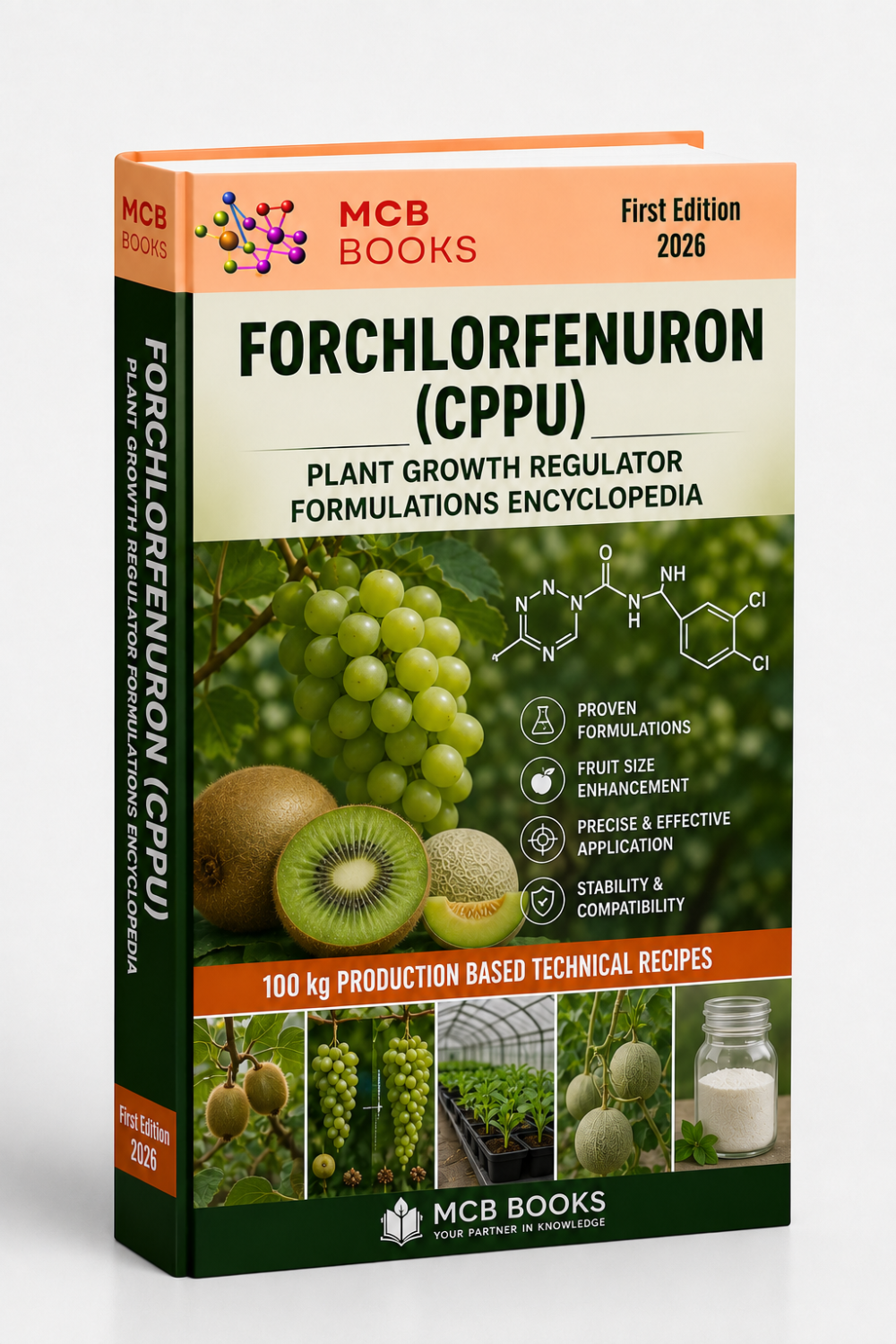
Forchlorfenuron or CPPU is commonly incorporated into specialized cytokinin-type fruit-development products. Brassinolide and 24-Epibrassinolide belong to the brassinosteroid group and can be incorporated into different plant-development systems.
Triacontanol is used in another category of plant growth promoter formulations, while broader cytokinin systems may be developed for cell division and fruit-development programs.
Manufacturers must choose solvent systems, surfactants, solubilizers, carriers and stabilizers according to the specific active ingredient being used.
Some actives may require careful solubilization before incorporation into the final formulation, while other product types can be produced as dispersed or concentrated systems.
Processing conditions should provide uniform active distribution throughout the batch.
Finished products should undergo appropriate chemical and physical quality-control testing.
Agricultural application programs should then be established independently for each active system and crop.
The encyclopedia's active-specific formulation sections are particularly valuable for companies that want to produce more than one type of fruit enlargement product.
Instead of offering a single general formulation, manufacturers can build a portfolio based on several plant growth regulator technologies and position products according to different crops, development stages and commercial objectives.
TAGS: CPPU fruit enlargement, Brassinolide fruit enlargement, 24-Epibrassinolide formulation, Triacontanol fruit growth, Cytokinin fruit enlargement, fruit growth regulator, plant hormone formulation, fruit enlargement manufacturing
5. Crop-Specific Fruit Enlargement Formulations for Orchards, Greenhouses and Hydroponics
Crop-specific product development is one of the most extensive parts of the Fruit Enlargement Plant Growth Regulator Formulations Encyclopedia.
The encyclopedia includes dedicated fruit enlargement products for kiwi, grape, apple, pear, peach, apricot, plum, cherry, citrus and pomegranate.
Berry crops are represented through separate formulations for strawberry, blueberry and raspberry, while vegetable and cucurbit products include tomato, pepper, cucumber, melon and watermelon.
These crop-specific formulation groups are important because fruit-development patterns differ significantly between species.
A grape enlargement program cannot automatically be transferred to apples, citrus, strawberries or watermelons.
Cultivar, flowering time, fruit-development stage, climate, nutrient supply and application timing can all influence the response to a plant growth regulator.
Manufacturers can therefore use crop-specific formulation concepts to create more clearly positioned commercial products.
The encyclopedia also includes separate greenhouse, orchard and hydroponic fruit enlargement formulations, allowing product development to consider the production system as well as the crop itself.
Advanced formulation technologies include controlled-release, slow-release, tank-mix-compatible, hard-water-stable and UV-stable products.
These systems can be particularly useful where manufacturers want to differentiate a premium product from a conventional liquid formulation.
Development should begin with laboratory compatibility and stability testing, followed by pilot production and quality-control evaluation.
Crop-specific trials are then essential before final use recommendations are established.
With 315 formulations and technical sections, the encyclopedia gives manufacturers an unusually broad technical base for creating multiple fruit enlargement products aimed at orchard crops, berries, vegetables, cucurbits, greenhouses and hydroponic production.
This makes it particularly suitable for companies planning to build a complete professional fruit development and enlargement product range.
TAGS: crop specific fruit enlargement, grape enlargement formulation, kiwi fruit enlargement, apple fruit enlargement, melon fruit enlargement, greenhouse fruit PGR, orchard fruit enlargement, hydroponic fruit formulation
Some Raw Materials Used
Forchlorfenuron (CPPU), Brassinolide, 24-Epibrassinolide, Triacontanol, Cytokinin-Type Plant Growth Regulators, Gibberellin-Based Components, Auxin-Type Plant Growth Regulators, Amino Acids, Seaweed Extracts, Potassium Compounds, Phosphorus Compounds, Micronutrients, Chelating Agents, Ethanol, Isopropyl Alcohol, Propylene Glycol, Polyethylene Glycol, Dimethyl Sulfoxide, Nonionic Surfactants, Anionic Surfactants, Solubilizing Agents, Emulsifying Agents, Wetting Agents, Dispersing Agents, Suspension Agents, Thickening Agents, Xanthan Gum, Cellulose Derivatives, Silica, Kaolin, Water-Soluble Carriers, Deionized Water, pH Adjusting Agents, Preservatives, Antifoaming Agents, Stabilizers, Controlled Release Carriers
Why Choose This Encyclopedia
FRUIT ENLARGEMENT PLANT GROWTH REGULATOR FORMULATIONS ENCYCLOPEDIA is prepared for manufacturers, formulators and R&D teams who want to produce commercially, not only to read about chemistry. Every product in the book follows the same structure: raw materials with their functions and quantities; the complete production process with charging order, mixing, temperature and control points; product specifications; and troubleshooting guidance that links common production problems to their causes.
The recipes are written as tested starting points: reproduce them at laboratory scale, confirm the specification, then scale up to pilot and full production. Readers planning a new line often combine this book with PLANT TISSUE CULTURE GROWTH REGULATOR FORMULATIONS ENCYCLOPEDIA, and our free articles offer further technical background.
Every MCB Books encyclopedia is available as a hard book and PDF — the PDF is delivered instantly, the printed edition ships worldwide — and all purchases include unlimited technical support. Questions before ordering? Contact the MCB Books team or write to us on WhatsApp; we reply the same day.
Related books