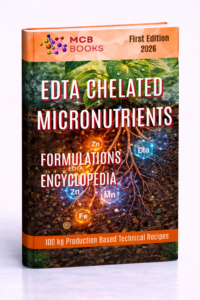
Introduction
When people first get into fertilizer production, they usually focus on raw materials.
Fertilizer raw materials are the foundation of all fertilizer products, but understanding how they are used in real formulations is what truly determines product performance.
Nitrogen sources, phosphorus compounds, potassium salts… everything seems to revolve around ingredients.
But after a certain point, most people realize something important:
Knowing the raw materials does not mean you know how to make a fertilizer.
And this is exactly where things start to get complicated.
The Real Problem Behind Fertilizer Production
On paper, it looks simple.
You take a few raw materials, mix them in certain ratios, and you get a product.
In reality, it rarely works that way.
Because fertilizers are not just mixtures. They are structured systems where each component affects the others.
This is why many attempts result in unstable products, poor performance, or inconsistent results.
📌 MICRONUTRIENTS SYSTEMS

One of the most misunderstood areas is micronutrient fertilizers.
Elements like zinc, iron, manganese, and copper are used in very small amounts, but their impact is significant.
However, using them correctly is not just about adding them into a mix. Their form, compatibility, and stability define whether the product works or not.
📌 CHELATED SYSTEMS
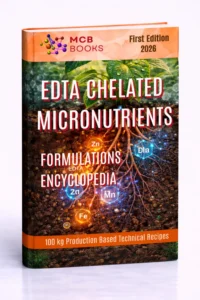
Chelation is another critical topic.
Many formulations fail simply because micronutrients are not properly stabilized. Chelated systems solve this problem—but only when designed correctly.
Otherwise, nutrients can become unavailable or ineffective.
📌 GRANULAR NPK SYSTEMS
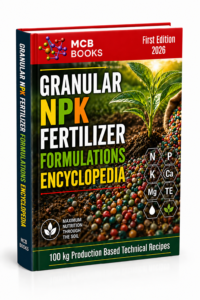
Granular fertilizers are one of the most widely used formats in agriculture.
But producing a stable, uniform, and effective granular NPK product requires more than just blending raw materials.
Particle size, binding systems, and nutrient distribution all play a role in the final product quality.
📌 FOLIAR SYSTEMS
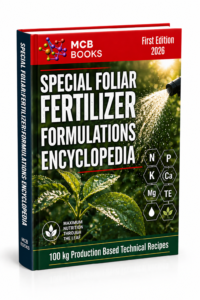
Foliar fertilizers bring another layer of complexity.
Since they are applied directly to leaves, absorption speed and compatibility become critical.
A formulation that looks correct on paper may not perform well if these factors are not properly balanced.
A More Practical Way to Work
At this point, most people face the same challenge:
There is too much scattered information, but very little that shows how everything actually comes together.
That’s why working with structured formulation systems makes a difference.
Instead of trying to combine raw materials blindly, you start from systems that are already designed to work in real conditions.
From Raw Materials to Real Products
Once you move beyond raw materials and start working with full formulations, everything becomes clearer.
You begin to understand:
- why certain ingredients are used together
- how stability is achieved
- what makes a product perform consistently
And most importantly, you stop guessing.
SUMMARY
Raw materials are only the starting point in fertilizer production.
What really matters is how those materials are turned into a complete, stable, and effective formulation.
For anyone serious about developing fertilizer products, working with structured systems is the fastest and most reliable way forward.
In real-world applications, fertilizer production is not based only on raw material selection. It involves understanding how different components interact under various environmental conditions. Factors such as solubility, stability, and compatibility play a major role in determining the effectiveness of the final product.
This is why many formulations that look correct on paper fail during actual use. Without a structured formulation approach, achieving consistent and reliable results becomes extremely difficult. For manufacturers, this often leads to repeated testing, time loss, and inconsistent product quality.