Leonardite vs Humic Acid: What Is the Difference?
Many people use the terms Leonardite and humic acid interchangeably, but they are not the same thing. Leonardite is a naturally oxidized material formed from ancient organic deposits, while humic acid is one of the valuable substances extracted from it.
In simple terms, Leonardite is the raw material and humic acid is one of the finished components obtained through processing and extraction. Because high-quality Leonardite contains large amounts of humic substances, it is widely used in the production of humic acid fertilizers, potassium humate products and other organic soil improvement products.
Understanding the relationship between Leonardite and humic acid is important for anyone involved in fertilizer manufacturing, product development or agricultural input production.
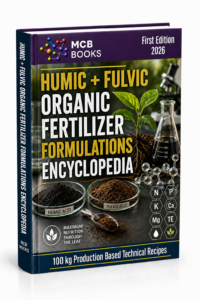
Developing Humic Acid Products from Leonardite
The quality of a humic acid fertilizer often begins with the quality of the Leonardite used during production. Factors such as humic substance content, raw material selection, extraction methods and formulation design all influence the final product.
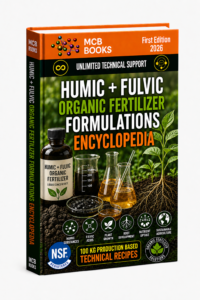
The HUMIC + FULVIC ORGANIC FERTILIZER FORMULATIONS ENCYCLOPEDIA provides practical information for manufacturers interested in developing commercial humic acid and fulvic acid fertilizer products.
Inside the encyclopedia you will find:
✔ Humic Acid Fertilizer Formulations
✔ Humic + Fulvic Fertilizer Products
✔ Commercial Manufacturing Concepts
✔ Leonardite-Based Fertilizer Development
✔ Production and Processing Information
✔ Product Development Know-How
Why Is Leonardite Used for Humic Acid Production?
The simple answer is that Leonardite contains exceptionally high levels of humic substances compared with most other natural organic materials. This makes it one of the preferred raw materials for manufacturing humic acid fertilizers, potassium humate products and other soil improvement products.
Not all Leonardite deposits are the same. The quality of the raw material can vary depending on its origin, organic content and humification level. For this reason, manufacturers often place significant emphasis on selecting suitable Leonardite sources before beginning production.
Is Leonardite Better Than Humic Acid?
This question is actually based on a misunderstanding. Comparing Leonardite vs humic acid is similar to comparing crude oil with gasoline. One is the raw material, while the other is a product derived from that raw material.
Leonardite itself is not typically used as a finished fertilizer product in the same way that humic acid is. Instead, it serves as the starting material from which humic substances are extracted and processed into commercial fertilizer products.
Because of this relationship, manufacturers are often more interested in the humic substance content of Leonardite than in the Leonardite itself.
How Humic Acid Is Obtained from Leonardite
Commercial production usually begins by processing Leonardite through extraction methods that separate the valuable humic substances from the raw material. These extracts are then filtered, concentrated and standardized to create products suitable for agricultural applications.
The final product may contain different levels of humic acid, fulvic acid and other naturally occurring organic compounds depending on the manufacturing process and intended application.
As a result, two products made from Leonardite can perform quite differently if their extraction methods and formulations are not the same.
Why Raw Material Quality Matters
In fertilizer manufacturing, product performance often begins long before the formulation stage. The quality of the raw material can influence humic acid concentration, product stability, solubility and overall consistency.
This is one reason why professional manufacturers spend considerable time evaluating raw materials and production methods before launching commercial products. A well-designed formulation built on high-quality Leonardite can often provide more consistent results than products manufactured from lower-grade sources.
SUMMARY
Understanding the relationship between Leonardite and humic acid helps clarify an important concept in fertilizer production. Leonardite is the raw material, while humic acid is one of the valuable components obtained through extraction and processing.
For fertilizer manufacturers, entrepreneurs and product developers, this distinction is important because both raw material selection and formulation quality can influence the success of the final product. Choosing the right Leonardite source and applying appropriate manufacturing methods are often key steps in developing reliable and competitive humic acid fertilizer products.