SC Herbicide Formulation | Suspension Concentrate Production Guide
Suspension concentrate (SC) herbicides are widely used in modern agriculture due to their high stability, safety profile, and effectiveness in delivering active ingredients to target weeds. Unlike emulsifiable concentrates, SC formulations are water-based systems in which finely ground solid active ingredients are dispersed in a liquid phase. Understanding how to produce SC herbicide formulations is essential for manufacturers aiming to develop efficient, environmentally safer, and high-performance agrochemical products.
An SC herbicide formulation typically consists of an active ingredient in solid form, water as the continuous phase, dispersing agents, wetting agents, stabilizers, and sometimes anti-foaming agents or preservatives. The active ingredient must be micronized into very fine particles to ensure uniform distribution and effective biological activity. Dispersants and wetting agents are critical components that help maintain the suspension and prevent particles from settling over time.
The production of SC herbicides begins with the selection of the appropriate active ingredient and supporting additives. Compatibility between the active ingredient and formulation components is crucial to ensure long-term stability. The manufacturing process starts with pre-mixing, where water and additives such as dispersants and stabilizers are blended under controlled agitation. This creates a stable base for incorporating the active ingredient.
The next stage involves the addition of the solid active ingredient into the liquid phase. This is followed by a grinding or milling process, typically using high-energy equipment such as bead mills or ball mills. The purpose of this step is to reduce particle size to a fine level, usually in the micron range, which improves suspension stability and enhances herbicide performance in the field.
After milling, the formulation undergoes homogenization to ensure uniform particle distribution throughout the liquid. Proper homogenization prevents sedimentation and ensures consistent product quality. Once the desired particle size and consistency are achieved, the product is subjected to quality control testing. Important parameters include particle size distribution, viscosity, pH, suspension stability, and storage performance.
SC herbicide formulations offer several advantages compared to other formulation types. They are generally safer due to the absence of organic solvents, have lower toxicity, and are more environmentally friendly. Additionally, they provide excellent stability and are less likely to cause phytotoxicity when properly formulated. These characteristics make SC formulations increasingly popular in modern agrochemical production.
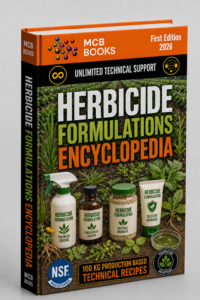
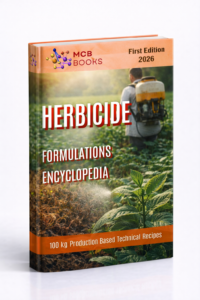
For professionals and manufacturers seeking advanced formulation knowledge, the Herbicide Formulations Encyclopedia provides detailed insights into real industrial SC formulations, raw material selection, and proven production techniques used in large-scale manufacturing.
In conclusion, SC herbicide formulation is a highly technical process that requires expertise in particle size reduction, dispersion stability, and formulation chemistry. By mastering suspension concentrate production techniques, manufacturers can develop safe, stable, and high-performance herbicides that meet the evolving demands of modern agriculture.