Introduction
Sulfate free shampoo production is one of the fastest growing segments in the cosmetic industry. As consumers demand milder and skin-friendly products, manufacturers are increasingly focusing on sulfate-free formulations. In this guide, you will learn sulfate free shampoo production, including ingredients, formulation logic and industrial manufacturing methods.

If you are planning to develop your own shampoo products, understanding formulation is just the beginning. Real production requires precise raw material selection, balanced surfactant systems and tested industrial processes.
For those who want to go beyond basic knowledge, professional formulation guides provide a clear advantage.
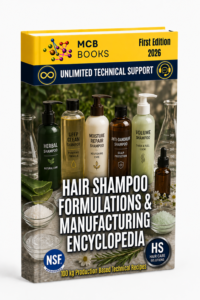
The HAIR CARE SHAMPOOS FORMULATIONS ENCYCLOPEDIA includes:
✔ Industrial shampoo formulations
✔ Sulfate free and specialty shampoo systems
✔ Real raw materials with functional roles
✔ 100 kg production-based recipes
✔ Step-by-step manufacturing processes
You can use these formulations to create your own product line, improve existing formulas or enter the cosmetic manufacturing market with confidence.
What is Sulfate-Free Shampoo?
Sulfate-free shampoo is a mild cleansing formulation that does not contain strong sulfate surfactants such as sodium lauryl sulfate (SLS) or sodium laureth sulfate (SLES). Instead, it uses gentle surfactants that clean hair while preserving natural moisture.
These formulations are commonly used in sensitive scalp care, baby shampoos, and premium hair care products.
Sulfate-Free Shampoo Formula (Example)
A typical sulfate-free shampoo formulation may include:
- Mild surfactants (e.g., glucosides): 10–20%
- Cocamidopropyl betaine: 5–10%
- Conditioning agents: 1–3%
- Thickener: 1–2%
- Preservatives: small amounts
- Water: balance
This formulation provides gentle cleansing with good foaming and conditioning performance.
Ingredients and Their Functions
Each ingredient plays a specific role:
- Mild surfactants: provide gentle cleansing
- Amphoteric surfactants: improve foam and mildness
- Conditioners: enhance hair softness
- Thickeners: adjust viscosity
- Additives: improve performance
Advanced formulation strategies for hair care products are explained in the Hair Care Shampoos Formulations Encyclopedia.
Production Process
1. Raw Material Preparation
All ingredients are measured accurately.
2. Mixing
Surfactants are mixed with water under controlled conditions.
3. Additive Incorporation
Conditioners and additives are added.
4. Thickening
Thickeners are introduced to adjust viscosity.
5. Homogenization
The mixture is blended until uniform.
6. Packaging
The final product is filled into containers.
Benefits of Sulfate-Free Shampoo
- Gentle on hair and scalp
- Preserves natural oils
- Suitable for daily use
- Ideal for sensitive skin
- Reduces irritation
Professional hair care formulation techniques are detailed in the Hair Care Shampoos Formulations Encyclopedia.
Applications
Sulfate-free shampoos are widely used in:
- Daily hair care products
- Baby shampoos
- Sensitive scalp formulations
- Premium cosmetic products
Formulation Tips
- Use mild surfactant systems
- Balance foam and conditioning
- Maintain proper pH
- Ensure formulation stability
More advanced formulation techniques can be found in the Hair Care Shampoos Formulations Encyclopedia.
Safety and Handling
- Use cosmetic-grade ingredients
- Follow hygiene standards
- Store properly
- Ensure product stability
Frequently Asked Questions (FAQ)
What is sulfate-free shampoo?
It is a shampoo that does not contain harsh sulfate surfactants.
Is sulfate-free shampoo better?
It is gentler and suitable for sensitive scalp and daily use.
Does sulfate-free shampoo foam?
Yes, but it produces milder foam compared to traditional shampoos.
Who should use sulfate-free shampoo?
People with sensitive scalp, dry hair, or those seeking gentle cleansing.
Author
This content is prepared by a professional chemical engineer with over 40 years of formulation experience.
SUMMARY
Sulfate-free shampoo formulations represent a modern approach to gentle hair cleansing, combining mild surfactants, conditioning agents, and balanced formulation techniques. These products are widely used in premium and professional hair care applications.
Understanding formulation methods and ingredient selection allows manufacturers to develop high-quality sulfate-free shampoos that meet current market demands.
If you want to turn this knowledge into real products, having access to complete and tested formulations is essential.
The HAIR CARE SHAMPOOS FORMULATIONS ENCYCLOPEDIA provides professional shampoo formulas, raw material systems and industrial production methods used by manufacturers.
You can use these formulations to develop your own shampoo products and enter the cosmetic production market with confidence.
👉 Explore Shampoo Formulations Encyclopedia