
Chlorhexidine has activity against gram-positive and gram-negative organisms, facultative anaerobes, aerobes, and yeast; it is both bacteriostatic and bactericidal, depending on its concentration. The bactericidal effect of chlorhexidine is a result of the binding of this cationic molecule to negatively charged bacterial cell walls and extramicrobial complexes.
At low concentrations, this causes an alteration of bacterial cell osmotic equilibrium and leakage of potassium and phosphorous resulting in a bacteriostatic effect. At high concentrations of chlorhexidine, the cytoplasmic contents of the bacterial cell precipitate and result in cell death.
CHLORHEXIDINE DISINFECTANT
AND
PRODUCTION PROCESS
AND
PRODUCTION PROCESS
MANUFACTURING PROCESS OF DISINFECTANT is not very complicated. For the production, there is need usable and tried a formulation, raw materials and mixing tank. For raw materials to be used, quantities to be used and ingredients usage rankings, you should look into this formulation. Therefore, formulation and productıon methods of disinfectant solutions are important. If you have not a good formulation, you cannot make healthy and efficient production of any disinfectant products and derivatives.
DISINFECTANT PRODUCTS FORMULATIONS ENCYCLOPEDIA
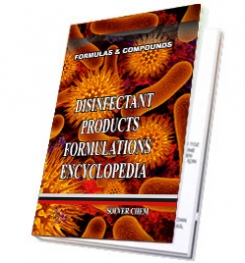
HARD BOOK E BOOK
RELATED TAGS: WHAT IS HAND DISINFECTANT SPRAY, MAKING HAND DISINFECTANT GEL,INGREDIENTS OF HAND DISINFECTANT SPRAY, FORMULATION OF HAND DISINFECTANT SPRAY,DISINFECTANT FORMULATIONS, BENZALKONIUM CHLORIDE MSDS,CHLORHEXIDINE SPECIFICATION,HAND DISINFECTING PRODUCTS,HAND DISINFECTANT GEL PRODUCTION PROCESS, COMPOSITION OF HAND DISINFECTANT SPRAY,HOW TO MAKE HAND DISINFECTANT SPRAY,WHERE TO USE DISINFECTANT SPRAY,USING HAND DISINFECTANT GEL,TYPES OF HAND DISINFECTANT SPRAY,HAND DISINFECTANT GEL RECIPLE,HAND SANITIZER GEL MAKING,WHAT IS HAND SANITIZER GEL,HAND SANITIZER GEL COMPOSITIONS,COMPOUNDS OF HAND DISINFECTANT GEL.
👁️ Görüntülenme: 12