INTRODUCTION
Maintaining strict hygiene in poultry farms is essential for preventing disease outbreaks and improving productivity. Chicken farms are highly sensitive environments where bacteria, viruses, and fungi can easily spread through contaminated surfaces, equipment, and housing systems.
Surface disinfectants used in poultry farms must provide both strong antimicrobial action and effective cleaning performance. For this reason, formulations often combine disinfectant actives such as quaternary ammonium compounds with surfactants that remove organic dirt and biofilm.
This article explains the formulation, raw materials, and production process of a professional surface disinfectant and cleaner specifically designed for chicken farms.
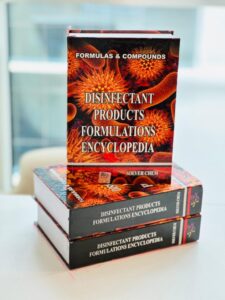
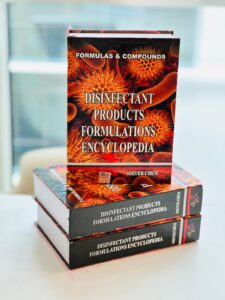
This formulation is included in the Industrial Disinfectant Formulations Encyclopedia, containing real industrial recipes developed by a chemical engineer with 40+ years of experience.
REQUIREMENTS FOR POULTRY FARM DISINFECTANTS
A high-performance disinfectant for chicken farms must:
- Be effective against bacteria, viruses, and fungi
- Work in the presence of organic matter
- Provide both cleaning and disinfection
- Be safe for surfaces and equipment
- Have residual antimicrobial activity
SURFACE DISINFECTANT FORMULA FOR CHICKEN FARM (100 KG)
Raw Material | Function | Amount (kg)
- Didecyl Dimethyl Ammonium Chloride (DDAC 80%) → Disinfectant active → 5 kg
- Benzalkonium Chloride (50%) → Secondary disinfectant → 4 kg
- Nonionic Surfactant (Alcohol Ethoxylate) → Cleaning agent → 5 kg
- Cocamidopropyl Betaine → Foam booster → 3 kg
- Sodium Metasilicate → Alkaline builder → 2 kg
- Isopropyl Alcohol → Solvent → 6 kg
- EDTA → Chelating agent → 0.5 kg
- Fragrance → Odor control → 0.5 kg
- Water → Carrier → 74 kg
Total: 100 kg
PRODUCTION PROCESS
Production starts by adding water into a stainless-steel mixing tank equipped with agitation. EDTA is dissolved first to improve stability and prevent interference from metal ions.
Nonionic surfactants are slowly added under controlled mixing to avoid excessive foam formation. Cocamidopropyl betaine is introduced to enhance surface wetting and cleaning efficiency.
Sodium metasilicate is added to provide alkalinity, which helps remove organic residues commonly found in poultry environments.
Disinfectant actives (DDAC and benzalkonium chloride) are then added carefully while mixing continues. These actives must be dispersed uniformly to ensure effective antimicrobial performance.
Isopropyl alcohol is added to improve drying speed and increase disinfectant penetration. Finally, fragrance is added and the mixture is stirred for 20–30 minutes until fully homogeneous. The product is then filtered if necessary and filled into suitable containers.
APPLICATION AREAS IN CHICKEN FARMS
This type of disinfectant is used for:
- Poultry house floors and walls
- Feeding and drinking equipment
- Transport cages and containers
- Farm tools and machinery
- Entry sanitation areas
For more disinfectant formulations:
- DDAC surface disinfectant formulations
- Hydrogen peroxide disinfectant systems
- Peracetic acid disinfectants for farms
These articles help build a complete disinfectant production cluster.
SUMMARY
Surface disinfectant and cleaner formulations for chicken farms must combine strong antimicrobial agents with effective cleaning components. DDAC and benzalkonium chloride provide powerful disinfection, while surfactants and alkaline builders ensure removal of organic contamination.
Such formulations are essential for maintaining biosecurity and improving productivity in poultry operations.
🚀 PROFESSIONAL DISINFECTANT FORMULATIONS
If you want to produce industrial-level disinfectants for poultry farms and other applications:
👉 The Industrial Disinfectant Products Formulations Encyclopedia includes:
✔ 150+ professional formulations
✔ Industrial production methods
✔ Raw material details and usage levels
✔ Suitable for manufacturing businesses