Introduction
Fabric softener formulations are essential products in the detergent and textile care industry, widely used to improve fabric softness, reduce static electricity, and provide long-lasting fragrance to washed clothes. These products are commonly applied in both household laundry systems and industrial textile processing operations.
Modern fabric softener formulations are typically based on cationic surfactants, emulsifiers, stabilizers, and fragrance components that interact with fabric fibers to reduce friction and improve softness. These formulations create a protective layer on textile surfaces, resulting in smoother texture, improved comfort, and enhanced fabric appearance.
Manufacturers producing detergent and fabric care products develop different fabric softener formulations depending on concentration, viscosity, and performance requirements. Understanding raw materials, formulation techniques, and production processes is essential for producing high-quality fabric softeners used in modern detergent systems.
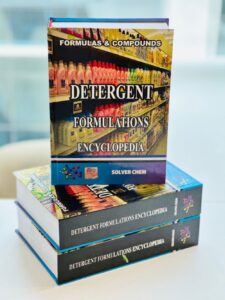
Discover professional detergent formulations including fabric softeners, liquid laundry detergents, dishwashing liquids and many other cleaning products in the Detergent Formulations Encyclopedia used by manufacturers worldwide.
Main Raw Materials Used in Fabric Softener Formulations
Fabric softener formulations contain specific functional ingredients designed to provide softness, anti-static properties, and fragrance performance.
Common ingredients include:
• Cationic Surfactants (Quaternary Ammonium Compounds) – primary softening agents
• Emulsifiers – stabilize oil-water systems
• Fragrance Compounds – provide long-lasting scent
• Preservatives – prevent microbial growth
• Stabilizers – improve emulsion stability
• Water – main solvent in liquid formulations
The balance of these raw materials determines product viscosity, performance, and stability.
Types of Fabric Softener Formulations
Manufacturers produce various fabric softener formulations depending on application and performance requirements.
Diluted Fabric Softener
Used in household laundry applications with lower active content.
Concentrated Fabric Softener
Provides stronger softening performance with reduced dosage.
Silicone-Enhanced Fabric Softener
Improves smoothness and fabric feel using silicone additives.
Industrial Fabric Conditioner
Used in textile processing and commercial laundry systems.
Fabric Softener Production Process
The production of fabric softener formulations involves controlled mixing and emulsification.
-
Add water to the mixing tank
-
Heat if required for proper emulsification
-
Slowly introduce cationic surfactants under agitation
-
Add emulsifiers and stabilizers
-
Incorporate fragrance and preservatives
-
Continue mixing until a uniform emulsion is formed
-
Cool the mixture and adjust viscosity
-
Transfer the finished product to packaging
Proper process control ensures stable and homogeneous formulations.
Key Performance Properties of Fabric Softeners
Fabric softener products are evaluated based on several performance characteristics:
• Softness Improvement – reduces fiber friction
• Anti-Static Effect – prevents static electricity buildup
• Fragrance Retention – provides long-lasting scent
• Viscosity Stability – ensures consistent product texture
• Emulsion Stability – prevents phase separation
These properties determine product quality and user satisfaction.
Common Production Problems and Solutions
During manufacturing, several issues may arise:
• Phase Separation – caused by poor emulsification
• Low Viscosity – due to incorrect formulation balance
• Fragrance Loss – from improper mixing or storage
• Microbial Growth – due to insufficient preservation
These problems can be minimized by proper formulation design and process control.
Relationship Between Raw Materials and Performance
Fabric softener performance is directly related to raw material selection:
• Cationic surfactants → softness & anti-static
• Stabilizers → product stability
• Preservatives → shelf life
• Equipment → mixing efficiency
👉 For detailed raw material analysis, see:
Cationic Surfactants in Fabric Softeners
Fabric Softener Stabilizers and Preservatives
Fabric Softener Manufacturing Equipment
Industrial Applications
Fabric softeners are widely used in:
• household laundry products
• industrial laundry systems
• textile manufacturing
• hotel and hospital laundry services
• commercial cleaning operations
These products improve fabric quality and washing performance.
Learn More Detergent Formulations
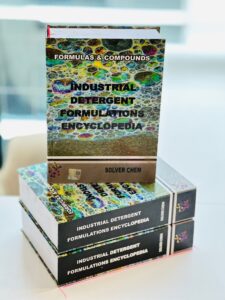
Many professional detergent formulations used in cleaning and textile care industries are compiled in the following technical reference book.
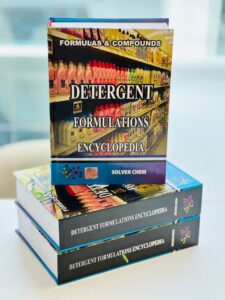
Detergent Formulations Encyclopedia
This encyclopedia includes numerous formulations used for producing fabric softeners, liquid detergents, dishwashing liquids, and industrial cleaning chemicals.
SUMMARY
Fabric softener formulations are essential products in the detergent industry, designed to improve fabric softness, reduce static electricity, and enhance fragrance retention. By combining cationic surfactants with stabilizing additives, manufacturers can produce high-performance fabric softeners suitable for both household and industrial applications.
Detergent Formulation Knowledge
Professional formulations for fabric softeners, liquid detergents, dishwashing liquids, and other cleaning products are compiled in the Detergent Formulations Encyclopedia, providing practical formulation knowledge and production guidance used by chemical manufacturers worldwide.