Introduction
The blending process is one of the most widely used methods in NPK fertilizer production. In this process, different fertilizer materials containing nitrogen, phosphorus, and potassium are mechanically mixed to obtain the desired nutrient ratio. Blended fertilizers are commonly used in large-scale agriculture because they are easy to produce, cost-effective, and flexible in formulation.
Unlike complex fertilizers that require chemical reactions during production, blended NPK fertilizers are produced by physically mixing granular fertilizer materials. This method allows fertilizer manufacturers to quickly produce customized fertilizer formulations according to crop nutrient requirements.
For a complete overview of industrial fertilizer manufacturing methods, see our guide on NPK Fertilizer Production Process.
Raw Materials Used in Blended NPK Fertilizers
Blended fertilizers are produced using pre-manufactured fertilizer granules. These granules contain individual nutrients that are combined in specific proportions.
Typical raw materials used in fertilizer blending include:
Nitrogen sources
-
Urea
-
Ammonium nitrate
-
Ammonium sulfate
Phosphorus sources
-
Diammonium phosphate (DAP)
-
Monoammonium phosphate (MAP)
Potassium sources
-
Potassium chloride (MOP)
-
Potassium sulfate (SOP)
Additional micronutrients such as zinc, boron, and magnesium may also be added to improve fertilizer efficiency.
More information about fertilizer ingredients can be found in Raw Materials Used in NPK Fertilizer Production.
Fertilizer Blending Equipment
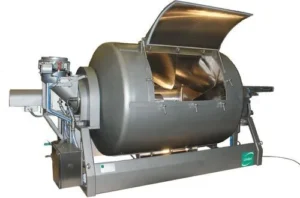
The fertilizer blending process uses industrial equipment designed to mix fertilizer granules evenly without breaking them.
Common blending equipment includes:
-
Rotary drum mixers
-
Horizontal fertilizer mixers
-
Bulk blending systems
-
Belt conveyor mixing units
These machines ensure that each fertilizer granule remains intact while achieving uniform nutrient distribution.
Industrial equipment used in fertilizer plants is explained in detail in Equipment Used in NPK Fertilizer Production.
Bulk Blending Method
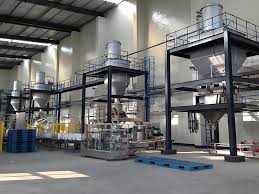
Bulk blending is the most common technique used in fertilizer blending plants. In this method, different fertilizer materials are weighed and combined in large mixing drums.
The bulk blending process includes several steps:
-
Raw material storage in fertilizer silos
-
Automatic weighing of fertilizer components
-
Mechanical mixing of fertilizer granules
-
Transfer to storage or packaging systems
Bulk blended fertilizers are widely used in agricultural distribution systems because they allow flexible fertilizer formulations.
Advantages of Blended NPK Fertilizers
Blended fertilizers offer several advantages compared to chemically produced compound fertilizers.
These advantages include:
-
Lower production cost
-
Flexible nutrient ratios
-
Faster manufacturing process
-
Easy customization for specific crops
-
Reduced production complexity
Because of these advantages, fertilizer blending plants are widely used in many agricultural regions.
Quality Considerations in Fertilizer Blending
Uniform nutrient distribution is essential in blended fertilizers. Poor blending can lead to inconsistent fertilizer quality and uneven nutrient application in fields.
Key factors affecting fertilizer blending quality include:
-
Similar particle size of fertilizer granules
-
Proper mixing time
-
Moisture control
-
Prevention of material segregation
Modern fertilizer plants use automated control systems to maintain consistent blending quality.
SUMMARY
The blending process is an important method used in industrial NPK fertilizer production. It allows fertilizer manufacturers to combine different fertilizer materials and create customized nutrient formulations.
Blended fertilizers are widely used in modern agriculture due to their flexibility, lower production costs, and fast manufacturing process. With proper mixing equipment and quality control systems, fertilizer blending plants can produce high-quality NPK fertilizers suitable for large-scale agricultural use.
Professional fertilizer formulations and industrial production methods are explained in the Chemical Fertilizers Formulations Encyclopedia.