How to Manufacture HD, Mineral and Translucent Face Powders
HD, mineral, and translucent face powders have become some of the fastest-growing products in the global cosmetics market. Although these powders serve different purposes, they all require carefully designed formulations, high-quality raw materials, and precise manufacturing techniques to achieve professional performance. For cosmetic manufacturers, understanding the differences between these powder types is essential for developing products that meet modern consumer expectations.
HD (High Definition) face powders are formulated to create a flawless appearance under high-resolution cameras and bright lighting conditions. These powders typically contain ultra-fine particles that blur the appearance of pores, fine lines, and skin imperfections without creating a heavy or cakey finish. Ingredients such as spherical silica, soft-focus powders, boron nitride, and lightweight fillers are commonly selected to provide excellent optical performance while maintaining a smooth skin feel.
Mineral face powders focus on simplicity, skin compatibility, and naturally derived mineral ingredients. They are often formulated with mica, zinc oxide, titanium dioxide, kaolin clay, and other mineral-based powders. Many mineral formulations are free from unnecessary additives and are designed for consumers who prefer lightweight makeup with a natural-looking finish. Manufacturers may also develop talc-free, fragrance-free, vegan, or clean beauty mineral powders to meet growing market demand.
Translucent face powders are designed to set makeup without noticeably changing the foundation shade. Their primary function is to reduce excess oil, extend makeup wear, and provide a smooth, soft-focus finish suitable for a wide range of skin tones. Depending on the formulation goals, translucent powders may include silica, mica, modified starches, nylon powders, or other finely milled ingredients that create a transparent appearance while maintaining excellent oil absorption.
The manufacturing process for all three powder types follows similar production principles. Raw materials are accurately weighed before being blended under controlled conditions to ensure homogeneous particle distribution. Pigments and functional ingredients are dispersed evenly throughout the formulation to maintain consistency. Pressed powder versions require the addition of carefully selected binders before compression into metal pans, while loose powders are filled directly into containers equipped with sifters. Throughout production, manufacturers perform quality control tests to verify particle size, texture, color consistency, oil absorption, hardness, microbial quality, and product stability.
Conclusion
Producing high-quality HD, mineral, and translucent face powders requires much more than selecting premium ingredients. A successful formulation depends on balancing texture, coverage, oil control, optical performance, and manufacturing precision. By combining appropriate raw materials with optimized production techniques, cosmetic manufacturers can develop innovative powders that satisfy both professional makeup artists and everyday consumers.
Discover Professional Face Powder Formulations
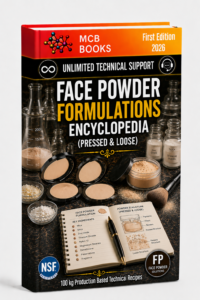
If you are looking for complete production-ready formulations rather than general cosmetic manufacturing information, the Face Powder Formulations Encyclopedia (Pressed & Loose) is an essential technical resource for cosmetic manufacturers, formulation chemists, private label producers, cosmetic laboratories, and entrepreneurs.
The encyclopedia features professional formulations for HD finishing powders, mineral powders, translucent powders, compact powders, loose powders, mattifying powders, oil-control powders, setting powders, illuminating powders, soft-focus powders, and many other commercially successful products. It also provides practical guidance on ingredient selection, formulation development, manufacturing techniques, processing methods, and product optimization to help accelerate cosmetic product development.
Whether you are launching a new makeup collection or expanding an existing cosmetics portfolio, the Face Powder Formulations Encyclopedia (Pressed & Loose) provides the technical knowledge needed to develop stable, high-performance face powder products for today’s competitive beauty market.