Plants require a balanced supply of nutrients to grow, develop, and produce high yields. While macronutrients such as nitrogen, phosphorus, and potassium are needed in large amounts, micronutrients are equally essential, even though they are required in smaller quantities. Elements like iron (Fe), zinc (Zn), manganese (Mn), copper (Cu), boron (B), and molybdenum (Mo) play critical roles in plant metabolism, enzyme systems, and physiological processes. Without adequate micronutrient supply, plants cannot perform efficiently, leading to reduced growth, poor crop quality, and lower yields.
What Are Micronutrients?
Micronutrients are essential elements that plants need in small amounts but are vital for proper growth and development. Unlike macronutrients, their required concentration is low, yet their absence can severely disrupt plant functions.
The most important micronutrients include:
- Iron (Fe)
- Zinc (Zn)
- Manganese (Mn)
- Copper (Cu)
- Boron (B)
- Molybdenum (Mo)
Each of these elements has a specific role in plant biology and cannot be replaced by another nutrient.
1. Role in Photosynthesis
Micronutrients are directly involved in photosynthesis, the process by which plants produce energy.
- Iron is essential for chlorophyll formation
- Manganese participates in photosynthetic reactions
- Magnesium (often grouped as secondary) supports chlorophyll structure
👉 Without these nutrients, plants cannot efficiently convert sunlight into energy.
2. Enzyme Activation and Metabolism
Many plant enzymes require micronutrients as cofactors.
- Zinc activates enzymes involved in protein synthesis
- Copper supports redox reactions
- Manganese aids in metabolic processes
👉 These enzymes regulate growth, development, and energy production.
3. Hormone Production and Growth Regulation
Micronutrients influence plant hormones:
- Zinc plays a role in auxin synthesis (growth hormone)
- Boron affects cell division and elongation
👉 Proper hormone balance ensures healthy plant structure and development.
4. Nutrient Transport and Uptake
Micronutrients help regulate the movement of nutrients within the plant.
- Copper and zinc assist in nutrient transport
- Boron improves sugar movement
👉 This ensures that all plant parts receive necessary nutrients.
5. Flowering, Pollination, and Fruit Development
Micronutrients are critical for reproductive growth:
- Boron supports pollen formation and fertilization
- Zinc improves flowering and fruit set
👉 Deficiencies can lead to poor fruit formation and yield loss.
6. Disease Resistance and Plant Health
Micronutrients strengthen plant defense systems:
- Copper enhances resistance to pathogens
- Zinc improves plant immunity
👉 Healthy plants are more resistant to stress and diseases.
7. Root Development
Micronutrients contribute to strong root systems:
- Zinc supports root growth
- Boron aids in cell development
👉 Strong roots improve water and nutrient uptake.
8. Impact on Crop Yield and Quality
Balanced micronutrient supply leads to:
- Higher crop yield
- Better fruit size and uniformity
- Improved color and nutritional value
👉 Especially important for high-value crops such as fruits and vegetables.
9. Micronutrient Deficiency Problems
When micronutrients are lacking, plants show visible symptoms:
- Yellowing of leaves (chlorosis)
- Stunted growth
- Poor flowering and fruiting
- Weak plant structure
👉 These deficiencies often occur not because nutrients are absent, but because they are not available in the soil.
10. Importance of Chelated Micronutrients
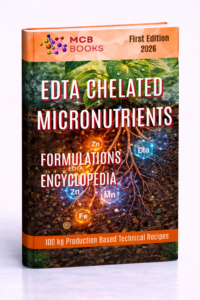
To overcome availability issues, chelated micronutrients (such as EDTA forms) are widely used.
Benefits include:
- Improved solubility
- Better plant uptake
- Higher efficiency in difficult soils
👉 Chelation ensures that micronutrients remain available to plants.
Micronutrients are essential for plant growth, even though they are required in small quantities. They play critical roles in photosynthesis, enzyme activity, hormone production, and overall plant health. Proper micronutrient management is necessary to achieve optimal crop performance, high yield, and superior quality. In modern agriculture, the use of efficient sources such as chelated micronutrients ensures that plants receive the nutrients they need for sustainable and productive growth.
Micronutrients are vital for plant growth, supporting photosynthesis, metabolism, and reproduction. Despite being required in small amounts, their deficiency can significantly reduce yield and quality. Proper management, including the use of chelated forms, ensures efficient nutrient availability and healthy crop development.