Gibberellic Acid (GA3) is one of the most widely used plant growth regulators in agriculture, known for its powerful effects on plant growth, seed germination, flowering, and fruit development. However, the effectiveness of GA3 depends not only on the active ingredient itself but also on how it is formulated.
Different agricultural conditions, crop types, and application methods require different formulation systems. Among the most common and commercially important are liquid, powder, and granular GA3 formulations. Each system offers unique advantages in terms of stability, application, and performance.
In this guide, we will explore the key formulation techniques for GA3 in agriculture, focusing on liquid (SL), powder (SP), and granular (GR) systems, along with their production methods, benefits, and technical considerations.
UNDERSTANDING GA3 FORMULATION PRINCIPLES
Before developing any formulation, it is essential to understand the key challenges associated with GA3:
- Low solubility in water
- Sensitivity to light and alkaline pH
- Potential degradation during storage
- Need for uniform distribution on plant surfaces
To overcome these challenges, formulation scientists use a combination of solvents, surfactants, stabilizers, and carriers.
LIQUID GA3 FORMULATIONS (SL – SOLUBLE LIQUID)
Overview
Liquid formulations are among the most popular GA3 products due to their ease of application and rapid absorption by plants.
Key Components
- GA3 technical (active ingredient)
- Solvents (ethanol, isopropanol)
- Nonionic surfactants
- Stabilizers and antioxidants
- pH buffers
Production Process
- Solvent Preparation
Add alcohol-based solvent into a mixing tank. - Dissolution of GA3
Slowly introduce GA3 under controlled temperature and continuous stirring. - Addition of Surfactants
Improve wetting and spreading properties. - Stabilization
Add stabilizers to protect against degradation. - pH Adjustment
Maintain slightly acidic conditions (pH 4–5). - Dilution and Homogenization
Add deionized water and mix thoroughly. - Filtration and Packaging
Filter impurities and package in UV-protected containers.
Advantages
- Fast plant absorption
- Easy application (foliar spray)
- Uniform distribution
Limitations
- Requires careful stabilization
- Shorter shelf life if poorly formulated
POWDER GA3 FORMULATIONS (SP – SOLUBLE POWDER)
Overview
Soluble powders are widely used due to their long shelf life and ease of transportation.
Key Components
- GA3 technical
- Carriers (silica, kaolin)
- Dispersing agents
- Wetting agents
Production Process
- Dry Mixing
Blend GA3 with carriers and additives. - Milling
Reduce particle size for better solubility. - Addition of Dispersants
Improve water dispersion. - Drying
Remove moisture to enhance stability. - Sieving
Ensure uniform particle size. - Packaging
Use moisture-proof packaging materials.
Advantages
- Longer shelf life
- Lower transportation cost
- Stable under various conditions
Limitations
- Requires proper mixing before application
- Dust formation during handling
GRANULAR GA3 FORMULATIONS (GR – GRANULES)
Overview
Granular formulations are designed for soil application and controlled release of GA3.
Key Components
- GA3 technical
- Granular carriers (clay, bentonite)
- Binders
- Coating materials
Production Process
- Blending
Mix GA3 with granular carriers. - Granulation
Form granules using binders. - Drying
Remove excess moisture. - Coating (Optional)
Apply coating for controlled release. - Screening and Packaging
Ensure uniform granule size.
Advantages
- Controlled release of GA3
- Reduced application frequency
- Suitable for soil application
Limitations
- Slower action compared to liquid formulations
- More complex production process
COMPARISON OF GA3 FORMULATION TYPES
| Feature | Liquid (SL) | Powder (SP) | Granular (GR) |
|---|---|---|---|
| Application | Foliar spray | Foliar spray | Soil application |
| Absorption Speed | Fast | Medium | Slow |
| Shelf Life | Medium | Long | Long |
| Ease of Use | High | Medium | High |
| Stability | Moderate | High | High |
KEY FORMULATION CONSIDERATIONS
To develop effective GA3 formulations, the following factors must be carefully controlled:
- pH Control: Slightly acidic conditions improve stability
- Light Protection: Use UV-resistant packaging
- Particle Size: Critical for powder formulations
- Surfactant Selection: Affects absorption efficiency
- Moisture Control: Essential for powders and granules
ADVANCED GA3 FORMULATION TECHNOLOGIES
Modern agriculture is increasingly adopting advanced technologies to improve performance.
Nano Formulations
- Enhance bioavailability
- Reduce required dosage
Microencapsulation
- Protect GA3 from environmental degradation
- Provide controlled release
Multi-Component Systems
- Combine GA3 with other hormones or nutrients
- Improve overall plant response
APPLICATION METHODS AND BEST PRACTICES
- Apply GA3 at the correct growth stage
- Use proper dilution rates
- Avoid application under extreme temperatures
- Ensure uniform coverage
Timing and dosage are critical for achieving optimal results.
INDUSTRIAL AND COMMERCIAL IMPORTANCE
GA3 formulations are widely used in:
- Fruit crops (grapes, apples, citrus)
- Vegetables
- Cereals
- Ornamentals
The demand for different formulation types is driven by:
- Crop requirements
- Application methods
- Climate conditions
PROFESSIONAL FORMULATION KNOWLEDGE
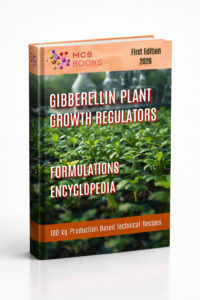
For advanced formulation techniques and industrial-scale production methods, the Gibberellin Plant Growth Regulators Formulations Encyclopedia offers:
- Detailed formulation recipes
- Industrial production systems
- Raw material selection strategies
- Commercial product insights
This type of resource is essential for manufacturers aiming to produce high-quality GA3 products.
SUMMARY
GA3 formulation techniques play a crucial role in determining the effectiveness of plant growth regulators in agriculture. Liquid, powder, and granular systems each offer unique advantages and are suited to different applications.
Understanding the formulation process, raw materials, and production techniques allows manufacturers and agricultural professionals to develop high-performance products. With advancements in formulation technologies, GA3 continues to be a key component of modern, efficient, and sustainable agriculture.