Pressed Powder vs Loose Powder: Formula Differences, Manufacturing Methods and Applications
Pressed powder and loose powder are two of the most widely used face powder products in the cosmetics industry. While both are designed to reduce shine, improve makeup longevity, and create a smoother complexion, they differ significantly in formulation design, manufacturing processes, packaging, and consumer applications. Understanding these differences is essential for cosmetic manufacturers, formulation chemists, and beauty brands developing new powder products.
The primary distinction lies in the formulation itself. Loose powders generally contain a higher percentage of lightweight fillers and oil-absorbing ingredients such as silica, mica, kaolin clay, and finely milled minerals. Their free-flowing texture allows for a lightweight finish, making them particularly suitable as finishing or setting powders. Pressed powders, however, require the addition of binders and pressing agents that allow the powder to maintain its compact shape without cracking during handling and transportation. Ingredients such as magnesium stearate, zinc stearate, dimethicone, or specialized binding systems are commonly used to improve adhesion and structural integrity.
Manufacturing methods also differ considerably. Loose powders are produced by accurately weighing, blending, and homogenizing dry ingredients before filling the finished product into sifter containers or jars. Since no compression step is required, the manufacturing process is relatively straightforward. Pressed powders require an additional stage where the blended formulation is compressed into metal pans using specialized powder pressing equipment. Proper pressing pressure and binder selection are critical factors that influence hardness, payoff, durability, and product performance.
Each product type offers unique advantages for different consumer needs. Loose powders provide an ultra-lightweight feel, excellent oil absorption, and a natural finish, making them popular for setting foundation and reducing excess shine. Pressed powders are more convenient for daily use and touch-ups because they are portable, less messy, and easy to apply with a sponge or compact puff. Many consumers carry compact powders for quick makeup correction throughout the day.
Today’s cosmetic market continues to expand with innovative powder technologies. Manufacturers are developing talc-free formulations, mineral powders, HD finishing powders, vegan cosmetics, clean beauty products, waterproof powders, and long-wear formulations to meet evolving consumer expectations. Selecting the appropriate formulation depends on the desired performance, target market, packaging format, and brand positioning.
Conclusion
Although pressed powders and loose powders share similar cosmetic purposes, their formulations, manufacturing techniques, and end-user experiences are quite different. Successful product development requires careful ingredient selection, optimized processing methods, and thorough quality control to achieve consistent performance and customer satisfaction.
Discover Professional Face Powder Formulations
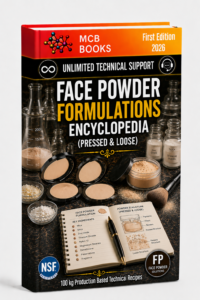
If you are looking for complete production-ready formulations instead of general cosmetic information, the Face Powder Formulations Encyclopedia (Pressed & Loose) offers a comprehensive technical resource for cosmetic manufacturers, formulation chemists, OEM producers, laboratories, and entrepreneurs.
The encyclopedia includes professional formulations for compact powders, loose powders, translucent powders, HD finishing powders, mineral powders, mattifying powders, oil-control powders, illuminating powders, setting powders, soft-focus powders, and many other commercially successful products. It also provides valuable technical guidance on raw material selection, manufacturing techniques, processing methods, and product optimization, making it an essential reference for modern cosmetic production.
Whether you are launching a new cosmetics brand or expanding an existing product line, the Face Powder Formulations Encyclopedia (Pressed & Loose) can help accelerate product development and support the creation of high-quality face powder products.