
 Plant-derived amino acid powder production requires a coordinated combination of raw material preparation systems, hydrolysis reactors, separation equipment, purification units, concentration systems, dryers, powder handling machinery, and laboratory instruments. Correct equipment selection is essential for achieving stable production, high protein conversion, consistent amino acid composition, and reliable finished powder quality.
The process begins with raw material preparation equipment. Depending on the vegetable protein source, a production line may include crushers, mills, vibrating screens, conveyors, storage silos, weighing systems, and slurry preparation tanks. Soybean meal, corn protein, wheat protein, pea protein, rice protein, and similar plant materials may require different preparation conditions before hydrolysis.
Prepared raw material is transferred to the hydrolysis section. Industrial hydrolysis reactors are typically equipped with agitators, heating and cooling systems, pH meters, temperature sensors, chemical or enzyme dosing systems, level controls, and transfer pumps. Reactor design depends on the selected hydrolysis method, which may be enzymatic, acid, alkaline, or a controlled combination of these technologies.
Hydrolysis efficiency depends strongly on parameters such as temperature, pH, reaction time, mixing intensity, enzyme dosage, reagent concentration, and solid-to-liquid ratio. For this reason, modern plants often use automated monitoring and dosing systems to maintain consistent operating conditions.
After hydrolysis, the mixture enters the solid-liquid separation stage. This section may include decanters, filter presses, centrifuges, settling tanks, bag filters, cartridge filters, or membrane filtration systems. Efficient removal of insoluble plant residues is important for reducing ash, improving solubility, and preventing downstream processing problems.
The clarified amino acid-rich liquid may then undergo purification and refinement. Depending on the desired product grade, equipment can include activated carbon treatment tanks, fine filtration systems, membrane units, ion exchange columns, decolorization systems, and clarification equipment. These technologies help control color, odor, mineral content, insoluble matter, and other impurities.
The purified hydrolysate is generally sent to a concentration system. Vacuum evaporators are commonly used to remove part of the water and increase solids content before drying. Higher feed solids can improve dryer efficiency, but viscosity and thermal stability must also be considered during concentration.
The concentrated solution is then converted into powder in the drying section. Spray dryers are widely used for industrial amino acid powder production because they allow continuous operation and rapid moisture removal. A typical system may include a feed tank, feed pump, atomizer or spray nozzle, drying chamber, hot-air generator, cyclone separator, dust collector, and powder discharge system.
After drying, the product may require milling, sieving, blending, and conditioning. Pin mills, hammer mills, vibrating screens, ribbon blenders, storage hoppers, and pneumatic conveying systems may be used depending on the target particle size and commercial specification.
The finished powder is then moved to the packaging section. Automatic or semi-automatic filling machines can package the product into bags, pouches, drums, or bulk containers. Moisture-resistant packaging is important because many amino acid powders can absorb humidity and develop caking during storage.
A complete manufacturing plant also requires a quality control laboratory. Typical laboratory equipment may include balances, moisture analyzers, pH meters, spectrophotometers, drying ovens, sieves, conductivity meters, filtration apparatus, and analytical instruments used to evaluate amino acid composition and product purity.
Common quality parameters include total amino acid content, free amino acid content, moisture, pH, ash, water solubility, insoluble matter, particle size, bulk density, color, and appearance. Additional microbiological or contaminant testing may be required depending on the intended application and regulatory market.
The overall process flow can generally be summarized as raw material preparation → hydrolysis → solid-liquid separation → purification → concentration → drying → milling and sieving → blending → quality control → packaging.
Successful plant-derived amino acid powder manufacturing depends not only on individual machines but also on proper equipment integration, automation, process control, sanitation, energy efficiency, filtration performance, powder recovery, and laboratory monitoring.
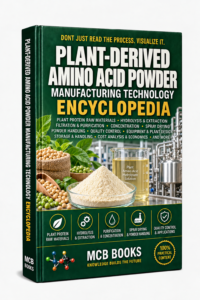
The PLANT-DERIVED AMINO ACID POWDER MANUFACTURING TECHNOLOGY ENCYCLOPEDIA provides detailed technical information on manufacturing equipment, hydrolysis systems, purification technologies, concentration, drying, process flow, quality control, troubleshooting, and industrial plant-derived amino acid powder production.