 Calcium fertilizer formulations are widely used in commercial agriculture to support strong plant tissues, healthy root development, fruit firmness, and improved crop quality. Calcium is an essential secondary plant nutrient that contributes to cell-wall formation, membrane stability, enzyme activity, and the development of new leaves, roots, flowers, and fruits. When calcium uptake or movement within the plant is insufficient, crops may develop serious physiological disorders such as blossom-end rot, bitter pit, tip burn, fruit cracking, weak tissues, and poor post-harvest durability.
Blossom-end rot is commonly observed in tomatoes, peppers, melons, cucumbers, eggplants, and several other fruiting crops. It appears as a water-soaked area near the blossom end of the fruit and gradually develops into a dark, sunken lesion. Although the disorder is associated with insufficient calcium in developing fruit tissues, it may occur even when the soil contains adequate calcium. Irregular irrigation, root damage, excessive salinity, rapid vegetative growth, high ammonium nutrition, and environmental stress can restrict calcium transport to the fruit.
Commercial calcium fertilizer formulations can be manufactured as liquid concentrates, water-soluble powders, suspension fertilizers, foliar sprays, fertigation products, and hydroponic nutrient solutions. Common calcium sources include calcium nitrate, calcium chloride, calcium acetate, calcium formate, calcium gluconate, calcium lignosulfonate, calcium carbonate, and organically complexed or chelated calcium compounds. The correct source should be selected according to solubility, calcium concentration, crop sensitivity, application method, water quality, and compatibility with other nutrients.
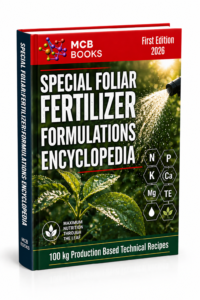
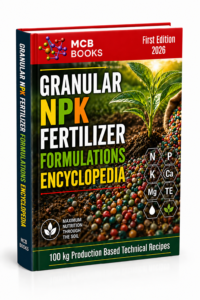
The CALCIUM BASED FERTILIZERS FORMULATIONS ENCYCLOPEDIA provides practical formulation concepts for developing calcium fertilizers intended to support the prevention and correction of calcium-related crop disorders. These products may include calcium nitrate fertigation solutions, calcium-boron fertilizers, amino acid-complexed calcium products, foliar calcium concentrates, calcium-magnesium blends, and crop-specific formulations.
Calcium nitrate is frequently used in fertigation because it supplies highly soluble calcium together with nitrate nitrogen. It is suitable for drip irrigation, greenhouse production, hydroponic systems, and intensive vegetable cultivation. Calcium chloride can provide a concentrated and rapidly soluble calcium source, but its chloride content must be controlled carefully, especially for chloride-sensitive crops.
Chelated and organically complexed calcium fertilizers are commonly used in foliar applications. Amino acids, gluconates, lignosulfonates, and selected organic acids may help maintain calcium solubility and improve formulation stability. Suitable nonionic surfactants and humectants can also improve spray coverage and contact with leaf and fruit surfaces. However, foliar calcium application should be considered part of an integrated nutrition program rather than a complete replacement for balanced root-zone calcium supply and proper irrigation management.
Water quality is extremely important during calcium fertilizer production. Water containing high concentrations of sulfate, phosphate, carbonate, or bicarbonate may react with calcium and form insoluble compounds. These reactions may create sediment, reduce nutrient availability, cause crystallization, and block irrigation filters or drip emitters. Purified, softened, demineralized, or low-hardness water is generally preferred for professional liquid formulations.
Calcium should not normally be combined in concentrated solutions with phosphate or sulfate fertilizers. Materials such as monopotassium phosphate, monoammonium phosphate, phosphoric acid, magnesium sulfate, and potassium sulfate may react with calcium and produce insoluble precipitates. Separate stock tanks are therefore commonly used in fertigation programs.
The production process generally begins by adding clean water to a corrosion-resistant mixing vessel. The selected calcium source is added gradually under continuous agitation until completely dissolved. Compatible complexing agents, boron sources, amino acids, organic acids, stabilizers, surfactants, or preservatives may then be incorporated individually. Product pH must be monitored because unsuitable conditions may cause precipitation, instability, or reduced storage performance.
Quality-control testing should include appearance, color, odor, pH, density, calcium content, nitrogen content, solubility, viscosity, sediment formation, crystallization resistance, dilution stability, and storage performance. Fertigation-grade products must be fully soluble and finely filtered to prevent blockage of irrigation systems.
The CALCIUM BASED FERTILIZERS FORMULATIONS ENCYCLOPEDIA can help fertilizer manufacturers select suitable raw materials, establish ingredient quantities, determine production procedures, and define technical quality specifications. Standardized formulations can improve production consistency and facilitate scale-up from laboratory batches to commercial manufacturing.
Effective prevention of blossom-end rot requires more than calcium fertilizer application alone. Growers should maintain consistent soil moisture, avoid root damage, manage salinity, prevent excessive ammonium or potassium application, and support balanced plant growth. When technically correct calcium fertilizer formulations are combined with proper irrigation and crop-management practices, they can improve calcium availability, reduce deficiency-related disorders, strengthen fruit tissues, and contribute to better crop quality and shelf life.