
Gibberellic Acid (GA3) is one of the most widely used plant growth regulators in commercial agriculture. Its ability to enhance plant growth, improve flowering, increase fruit size, and boost crop yield has made it a key component in modern agrochemical products. Commercial GA3 products are designed to deliver consistent performance, long shelf life, and ease of application across a wide range of crops.
Understanding the ingredients, formulation types, and manufacturing processes behind these products is essential for manufacturers, distributors, and agricultural professionals who want to develop or select high-quality plant growth regulators.
KEY INGREDIENTS IN COMMERCIAL GA3 PRODUCTS
The effectiveness of a commercial GA3 product depends on its formulation composition. Each ingredient plays a specific role in ensuring stability, solubility, and performance.
The primary component is the active ingredient, Gibberellic Acid (GA3), usually present in technical grade form with high purity. Since GA3 has limited water solubility, solvents or co-solvents such as ethanol or isopropanol are often used to dissolve it effectively.
Surfactants are essential ingredients that improve the spreading and adhesion of the product on plant surfaces. These help ensure uniform coverage during foliar application and enhance absorption through the leaf cuticle.
Stabilizers, including antioxidants and UV absorbers, are added to protect GA3 from degradation caused by light and oxidation. Buffers are also included to maintain a slightly acidic pH, which is critical for maintaining chemical stability.
In some advanced formulations, additional components such as micronutrients or biostimulants are included to enhance plant response and provide synergistic effects.
COMMON FORMULATION TYPES
Commercial GA3 products are available in several formulation types, each designed for specific applications and market needs.
Liquid concentrates (SL formulations) are among the most widely used. These products are easy to dilute and apply, providing rapid absorption and quick results. However, they require careful stabilization to maintain shelf life.
Soluble powders (SP) are another popular option. They offer long shelf life and are easier to transport and store. When mixed with water, they form a solution suitable for foliar spraying.
Granular formulations (GR) are used primarily for soil applications. They release GA3 slowly over time, providing longer-lasting effects and reducing the need for frequent application.
Suspension concentrates (SC) are also used in some commercial products. These formulations contain finely dispersed particles of GA3 suspended in a liquid medium, offering good stability and uniform distribution.
MANUFACTURING PROCESS OF COMMERCIAL GA3 PRODUCTS
The production of commercial GA3 products involves multiple stages, combining biotechnology and formulation science.
The process begins with the production of GA3 through microbial fermentation, typically using fungal strains such as Gibberella fujikuroi. This stage requires controlled conditions, including temperature, pH, and aeration, to maximize yield.
After fermentation, the GA3 is extracted from the fermentation broth using solvents. The extracted material is then purified through techniques such as filtration, crystallization, and chromatography to achieve the desired purity level.
Once the technical GA3 is obtained, it is formulated into commercial products. This involves dissolving or dispersing the active ingredient in a suitable system, adding surfactants, stabilizers, and other additives, and adjusting parameters such as pH and viscosity.
The final product is then filtered, tested for quality, and packaged in suitable containers.
QUALITY CONTROL IN COMMERCIAL PRODUCTION
Quality control is a critical aspect of manufacturing GA3 products. Several parameters must be monitored to ensure consistent performance.
The concentration of the active ingredient must be accurately measured to meet product specifications. The pH level must be controlled to ensure stability. Solubility and dispersibility are tested to confirm that the product performs well during application.
Stability testing is also conducted to evaluate how the product behaves under different storage conditions, including exposure to heat, light, and humidity.
ADVANTAGES OF COMMERCIAL GA3 PRODUCTS
Commercial GA3 products offer several advantages that make them valuable in agriculture.
They provide consistent and reliable performance, ensuring predictable results in different crops and conditions. They are formulated for ease of use, allowing farmers to apply them efficiently using standard equipment.
These products are also designed for stability, ensuring a long shelf life and maintaining effectiveness over time. In addition, many formulations are compatible with other agrochemicals, allowing for integrated crop management.
CHALLENGES IN GA3 PRODUCT DEVELOPMENT
Despite their benefits, developing commercial GA3 products presents several challenges.
The chemical instability of GA3 requires careful formulation and packaging. Achieving high solubility while maintaining stability can be difficult. Environmental factors such as temperature and light can affect product performance.
Manufacturers must also ensure regulatory compliance and meet safety standards, which adds complexity to the production process.
ADVANCED FORMULATION TRENDS
The agrochemical industry is continuously evolving, and new technologies are being developed to improve GA3 products.
Nano-formulations are gaining attention due to their improved absorption and efficiency. Controlled release systems are being developed to provide sustained activity over longer periods.
Combination products that include GA3 along with other plant growth regulators or nutrients are also becoming more common, offering enhanced performance through synergistic effects.
COMMERCIAL APPLICATIONS
GA3 products are used in a wide range of agricultural applications.
In fruit production, they are used to increase fruit size, improve uniformity, and enhance quality. In vegetable crops, they promote faster growth and higher yields.
In seed treatment, GA3 improves germination and early plant development. In ornamental plants, it enhances flowering and overall appearance.
PROFESSIONAL FORMULATION KNOWLEDGE
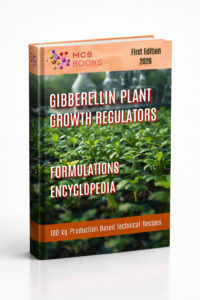
For professionals looking to develop or understand advanced GA3 products, the Gibberellin Plant Growth Regulators Formulations Encyclopedia provides detailed information on formulation strategies, manufacturing processes, and commercial applications.
This type of resource is essential for achieving high-quality production and gaining a competitive advantage in the agrochemical market.
SUMMARY
Commercial GA3 products are a cornerstone of modern agriculture, offering powerful solutions for improving plant growth, flowering, and yield. Their effectiveness depends on carefully designed formulations, high-quality ingredients, and precise manufacturing processes.
From fermentation and purification to formulation and packaging, each stage plays a critical role in determining product performance. With ongoing advancements in formulation technology, GA3 products continue to evolve, providing even greater efficiency and value to the agricultural industry.