
 Quality control is one of the most important stages in fulvic acid powder manufacturing. Even when the same production process is used, variations in humic raw materials, extraction efficiency, purification, concentration, and drying conditions can significantly affect the characteristics of the finished product. A structured quality control program therefore helps manufacturers maintain consistent commercial specifications and identify production problems before packaging.
The first stage of quality control begins with incoming raw materials. Leonardite, lignite, peat, and other humic-rich materials should be evaluated before production. Important parameters may include moisture content, ash level, organic matter, mineral composition, particle size, and extractable humic and fulvic fractions. Consistent raw materials generally result in more predictable extraction performance.
During extraction, operators should monitor parameters such as pH, temperature, mixing conditions, extraction time, and liquid-to-solid ratio. Samples taken during processing can help determine whether sufficient soluble material has been transferred into the liquid phase and whether further extraction time is required.
After extraction, solid-liquid separation and clarification must also be monitored carefully. Excessive suspended solids can increase ash content, reduce water solubility, and create difficulties during concentration and spray drying. Filtration performance, turbidity, insoluble matter, and solution appearance are therefore useful in-process indicators.
The purified fulvic acid solution is normally checked before entering the concentration and drying stages. Important variables may include solids content, pH, density, viscosity, conductivity, and appearance. These measurements help operators determine whether the liquid is suitable for efficient downstream processing.
During concentration, excessive heat exposure should be avoided. Changes in viscosity, color, solids concentration, or processing behavior can indicate that operating conditions require adjustment. Maintaining a stable concentrate is particularly important for consistent dryer performance.
The drying stage has a major influence on final powder quality. Spray dryer feed concentration, inlet and outlet temperature, atomization conditions, airflow, and powder recovery should be monitored. Incorrect drying conditions may result in excessive moisture, powder sticking, poor flowability, color changes, low recovery, or inconsistent particle size.
Finished fulvic acid powder can be evaluated using several important quality specifications. These may include fulvic acid content, moisture, pH, water solubility, ash content, insoluble matter, particle size, bulk density, color, and general appearance. The exact specification limits depend on product grade, manufacturing method, intended market, and customer requirements.
Water solubility is particularly important for products intended for fertigation, foliar fertilizers, soluble fertilizer blends, and other liquid applications. Excessive insoluble matter may indicate inadequate purification, high mineral content in the raw material, or inefficient filtration.
Moisture control is equally important. Powder containing excessive residual moisture may cake during storage, show reduced flowability, or experience stability problems. Appropriate drying conditions and moisture-resistant packaging help maintain product quality during transportation and storage.
When production problems occur, troubleshooting should focus on the entire manufacturing chain rather than only the final powder. High ash content may originate from raw material quality or insufficient separation. Poor solubility may be related to purification or drying conditions. Low production yield may result from inefficient extraction, product losses during filtration, or inadequate powder recovery from the dryer.
A systematic quality control program should therefore include raw material testing, in-process testing, finished product analysis, production records, equipment monitoring, and batch traceability. Comparing laboratory results with operating conditions enables manufacturers to identify trends and continuously improve the process.
Reliable fulvic acid powder production depends on maintaining control from the initial humic raw material through extraction, purification, concentration, drying, and packaging. Consistent testing and practical troubleshooting are essential for producing a commercially reliable product.
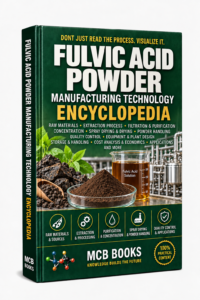
The FULVIC ACID POWDER MANUFACTURING TECHNOLOGY ENCYCLOPEDIA provides comprehensive technical information on quality specifications, laboratory testing, production control, process troubleshooting, manufacturing equipment, extraction technology, purification, drying, and industrial fulvic acid powder production.