
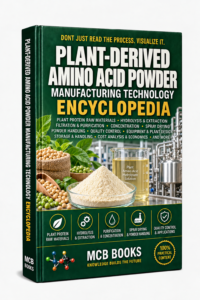
 Plant-derived amino acid powder is produced by breaking down plant proteins into smaller peptides and free amino acids, followed by purification, concentration, drying, and powder conditioning. These products are widely used in agriculture, fertilizer formulations, plant nutrition products, biostimulants, and specialty industrial applications.
The manufacturing process begins with raw material selection. Common plant protein sources may include soybean meal, corn protein, wheat protein, pea protein, rice protein, and other protein-rich vegetable materials. Raw materials are evaluated for protein content, moisture, ash, impurities, and processing suitability before entering production.
The selected material is then subjected to protein hydrolysis. Hydrolysis breaks large protein molecules into smaller peptides and amino acids. Depending on the production method, manufacturers may use enzymatic hydrolysis, acid hydrolysis, alkaline hydrolysis, or controlled combinations of these technologies. Process variables such as temperature, pH, reaction time, enzyme dosage, and solid-to-liquid ratio strongly influence hydrolysis efficiency and final product composition.
After hydrolysis, the reaction mixture contains soluble amino acids, peptides, unreacted solids, and other plant-derived components. The material therefore passes through solid-liquid separation and clarification. Filtration, centrifugation, settling, or fine filtration systems may be used to remove insoluble particles and improve product purity.
The clarified amino acid solution can then undergo purification and refinement. Depending on the target product grade, this stage may include decolorization, fine filtration, membrane separation, ion exchange, or other purification methods. The objective is to obtain a stable amino acid-rich liquid with controlled ash, color, solubility, and impurity levels.
The purified liquid is transferred to the concentration stage, where part of the water is removed before drying. Vacuum evaporation is commonly considered because it can increase solids concentration while limiting unnecessary thermal exposure.
The concentrated amino acid solution is then converted into powder using an appropriate drying system. Spray drying is widely used in commercial manufacturing because it enables continuous production, rapid moisture removal, and relatively uniform powder formation. Other drying technologies may also be selected depending on product characteristics and production capacity.
After drying, the powder may undergo milling, sieving, blending, standardization, and packaging. Finished product quality is typically evaluated through parameters such as total amino acid content, free amino acid content, moisture, pH, solubility, ash, particle size, bulk density, color, and appearance.
Successful plant-derived amino acid powder manufacturing depends on coordinated control of raw material quality, hydrolysis conditions, separation efficiency, purification, concentration, drying, and laboratory testing.
The PLANT-DERIVED AMINO ACID POWDER MANUFACTURING TECHNOLOGY ENCYCLOPEDIA provides detailed technical information on vegetable protein raw materials, hydrolysis technologies, purification systems, production equipment, drying processes, process control, quality testing, troubleshooting, and industrial manufacturing considerations.