INTRODUCTION
Hand disinfectants are essential products in modern hygiene systems, widely used in healthcare, industrial environments, and daily life. They provide rapid antimicrobial protection against bacteria, viruses, and fungi, helping prevent the spread of infections.
Alcohol-based hand disinfectants are particularly effective due to their fast action, broad-spectrum activity, and ease of application. In industrial production, these formulations must be carefully designed to ensure both effectiveness and skin compatibility.
In this article, we will explore the formulation, ingredients, and production process of hand disinfectants used in real industrial applications.
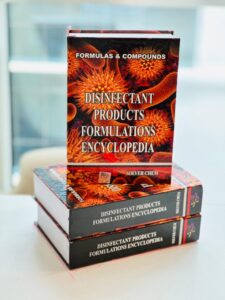
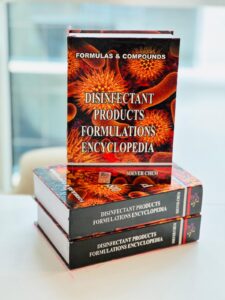
This formulation is part of the Disinfectant Products Formulations Encyclopedia developed by a chemical engineer with 40+ years of experience, containing real industrial recipes and production processes.
WHAT ARE HAND DISINFECTANTS AND HOW DO THEY WORK
Hand disinfectants are antimicrobial solutions or gels designed to eliminate harmful microorganisms on the skin. Most effective formulations are based on alcohol, which denatures proteins and disrupts microbial cell membranes.
These products are used in:
- Hospitals and healthcare facilities
- Laboratories and industrial environments
- Public hygiene systems
- Personal daily use
KEY INGREDIENTS IN HAND DISINFECTANT FORMULATIONS
1. Alcohol (Active Ingredient)
- Ethanol (60–80%)
- Isopropanol (60–70%)
✔ Provides rapid antimicrobial action
2. Water
✔ Essential for proper antimicrobial mechanism
3. Humectants
- Glycerin
✔ Prevents skin dryness
4. Thickening Agents (for gel systems)
- Carbomer
✔ Provides gel structure
5. Neutralizers
- Triethanolamine
✔ Adjusts pH and stabilizes gel
6. Additives
- Fragrance
- Skin conditioners
HAND DISINFECTANT FORMULA (100 KG)
Raw Material | Function | Amount (kg)
- Ethanol (96%) → Active disinfectant → 70 kg
- Water → Carrier → 25 kg
- Glycerin → Humectant → 2 kg
- Carbomer → Thickener → 0.5 kg
- Triethanolamine → Neutralizer → 0.5 kg
- Fragrance → Optional → 2 kg
Total: 100 kg
PRODUCTION PROCESS
The production process begins by dispersing carbomer in water under continuous mixing to prevent lump formation. Glycerin is then added to improve skin compatibility.
Alcohol is slowly introduced into the mixture while maintaining agitation to ensure uniform distribution. This step must be carefully controlled to minimize evaporation.
Triethanolamine is added to neutralize the carbomer and form the gel structure. The mixture is stirred until a clear and homogeneous gel is obtained.
Finally, fragrance is added, and the product is mixed thoroughly before packaging.
APPLICATION AREAS
Hand disinfectants are used in:
- Healthcare and hospitals
- Laboratories
- Food processing facilities
- Industrial hygiene systems
- Daily personal use
👉 For complete alcohol disinfectant formulations, see:
Alcohol-Based Disinfectant | Formula, Ingredients – Production Process
https://makingchembooks.com/alcohol-based-disinfectant-formulations/
ADVANTAGES OF HAND DISINFECTANTS
- Fast antimicrobial action
- Easy application
- No need for water
- Broad-spectrum activity
- Suitable for frequent use
Related Disinfectant Formulations
For more disinfectant systems, explore:
- Alcohol-based skin disinfectant formulations
- Hydrogen peroxide disinfectant systems
- Peracetic acid disinfectant formulations
SUMMARY
Hand disinfectants are among the most important hygiene products in modern life. Proper formulation ensures effectiveness, safety, and stability, making these products suitable for industrial and commercial use.
🔥 Get Professional Disinfectant Formulations (150+ Industrial Recipes)
If you want to produce industrial-grade disinfectants instead of basic mixtures, you need precise formulations and proven production methods.
The Disinfectant Products Formulations Encyclopedia includes:
✔ 150+ disinfectant formulations
✔ Industrial production techniques
✔ Raw materials and formulation details
✔ Suitable for manufacturing and commercial production
👉 Access full formulations here:
https://makingchembooks.com/product/disinfectant-products-formulations-encyclopedia/