Baby wet wipes are essential hygiene products used during diaper changes, feeding, travel, and daily baby care. Although they may appear simple, the manufacturing of baby wet wipes requires a carefully controlled combination of formulation science, nonwoven material selection, hygienic production conditions, quality control, and suitable packaging. Professional baby wet wipes formulas must provide effective cleansing while remaining gentle, stable, and suitable for sensitive baby skin.
The first stage of baby wet wipes manufacturing is the development of the wet wipes lotion. Purified water generally represents the largest part of the formulation. However, water alone cannot provide sufficient cleansing, moisturizing, preservation, or skin-conditioning performance. A professional formula may also contain mild surfactants, humectants, emollients, soothing agents, botanical extracts, preservatives, chelating agents, pH regulators, and optional fragrance ingredients.
Raw material selection is especially important because baby skin is more delicate than adult skin. Harsh cleansing agents, excessive fragrance, unsuitable preservatives, and poorly balanced pH levels may increase the risk of dryness or irritation. For this reason, manufacturers often develop alcohol-free, fragrance-free, hypoallergenic, paraben-free, moisturizing, or extra-sensitive baby wet wipes formulations.
During production, purified water is transferred into a clean stainless-steel mixing tank. Water-soluble ingredients are normally added under controlled agitation. Humectants, chelating agents, mild cleansing ingredients, preservatives, and skin-conditioning materials are incorporated according to the recommended mixing sequence. Oil-soluble ingredients may require a suitable solubilizer or emulsification system to achieve a clear and uniform lotion.
Temperature control can also be important. Some raw materials dissolve more effectively when the water phase is moderately heated, while heat-sensitive ingredients should be added during the cooling stage. Excessive mixing should be avoided when it causes foam formation. The objective is to obtain a homogeneous wet wipes solution with a stable appearance, suitable odor, and consistent performance.
After mixing, the lotion is tested before being transferred to the wet wipes production line. Typical quality control parameters include pH, appearance, odor, viscosity, density, solution clarity, and microbiological quality. Stability testing may also be conducted to determine whether the formulation changes color, separates, forms sediment, or loses effectiveness during storage.
The next stage is the preparation of the nonwoven fabric. Baby wet wipes are commonly produced from soft nonwoven materials selected according to absorbency, thickness, strength, biodegradability, and skin feel. The fabric is unwound, folded, cut, and impregnated with a controlled quantity of wet wipes lotion. Accurate liquid loading is important because insufficient lotion can cause dryness, while excessive lotion may result in leakage and packaging problems.
Once impregnated, the wipes are placed into flow packs, soft packs, canisters, or refill packages. The packaging must reduce moisture loss, prevent contamination, and allow convenient use. Resealable labels and plastic lids are frequently used to help keep the wipes moist after opening.
Hygiene is one of the most critical parts of professional wet wipes production. Mixing tanks, pipelines, filling machines, contact surfaces, and storage containers must be properly cleaned and sanitized. Purified water quality, employee hygiene, environmental controls, and raw material storage conditions directly affect the microbiological safety of the finished product.
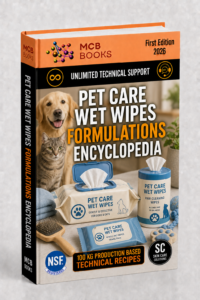
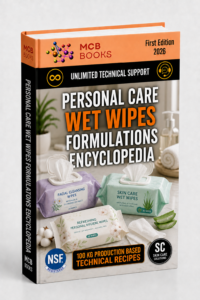
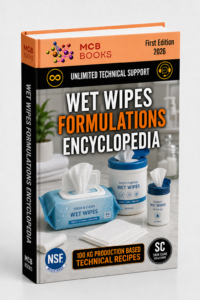
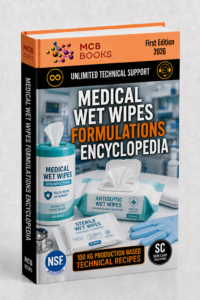
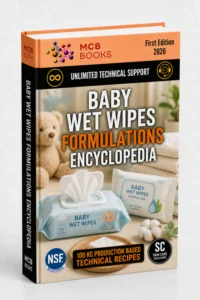
The Baby Wet Wipes Formulations Encyclopedia provides technical guidance for producers seeking practical information about professional formulas and production methods. It can support manufacturers in developing newborn wipes, sensitive-skin wipes, botanical baby wipes, moisturizing wipes, biodegradable products, and private-label baby care products.
Successful baby wet wipes manufacturing depends on more than a single formula. It requires the correct balance of raw materials, controlled production procedures, suitable nonwoven fabric, reliable preservation, quality packaging, and consistent testing. With professional formulation knowledge and organized manufacturing methods, producers can develop safe, stable, and commercially competitive baby wet wipes for different market segments.