Baby skin is naturally delicate, thin, and more sensitive to external factors than adult skin. Products used during diaper changes and daily cleansing must therefore be carefully formulated to minimize dryness, discomfort, and irritation. Hypoallergenic wet wipes formulations for sensitive baby skin are developed with mild raw materials, balanced cleansing performance, effective preservation, and skin-compatible pH values.
The term “hypoallergenic” generally refers to products formulated to reduce the likelihood of allergic reactions. However, no cosmetic or personal care product can guarantee that an allergic reaction will never occur. For this reason, manufacturers should combine careful ingredient selection with dermatological testing, microbiological testing, stability analysis, and appropriate product labeling.
Purified water is usually the main component of a baby wet wipes lotion. The quality of the water is extremely important because contaminated or mineral-rich water may negatively affect product stability and microbiological safety. Manufacturers commonly use purified, deionized, or reverse-osmosis-treated water in professional baby wipes production.
Mild cleansing agents are added to remove dirt, urine residues, and other impurities from the skin. These surfactants should provide sufficient cleansing without removing excessive amounts of the skin’s natural protective lipids. Strong detergents and aggressive cleansing systems are generally avoided in formulations intended for newborns and babies with sensitive skin.
Humectants such as glycerin may be included to help retain moisture and reduce the drying effect of repeated cleansing. Emollients and skin-conditioning ingredients can improve softness and leave the skin feeling smooth after use. Soothing materials such as panthenol, allantoin, aloe vera, chamomile extract, calendula extract, or oat-derived ingredients may also be used, depending on the desired product concept.
Fragrance is one of the most important considerations in sensitive-skin wet wipes. Although fragrance can improve the sensory appeal of a product, it may also increase the risk of sensitivity for some users. Fragrance-free baby wet wipes are therefore often preferred for newborns, allergy-prone babies, and consumers seeking minimal-ingredient products. Manufacturers who use fragrance should select a mild system and keep the concentration as low as technically necessary.
Preservation is essential because baby wet wipes contain a large amount of water and are repeatedly exposed to air and handling after opening. The preservative system must protect the lotion against bacteria, yeast, and mold throughout the expected shelf life. It should also remain effective at the final pH of the product and be compatible with all other formulation ingredients.
The pH of hypoallergenic baby wet wipes is commonly adjusted to remain close to the natural acidic environment of the skin. A carefully controlled pH can support skin comfort, formulation stability, and preservative performance. The final pH should be measured during production and monitored during stability testing.
The nonwoven fabric is another major part of product performance. It should be soft, absorbent, strong when wet, and free from rough fibers that may cause friction. Fabric composition, thickness, lotion-loading capacity, and biodegradability can all influence the quality and market positioning of the finished wipes.
Professional manufacturing requires hygienic mixing tanks, sanitized filling equipment, controlled raw material storage, and reliable packaging. The packaging should prevent moisture loss and protect the wipes from environmental contamination. Resealable labels or plastic lids are commonly used to help maintain product quality after opening.
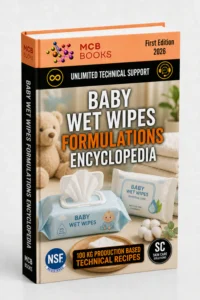
The Baby Wet Wipes Formulations Encyclopedia provides practical formulation concepts, raw material information, production methods, and technical guidance for manufacturers developing hypoallergenic wet wipes for sensitive baby skin. It can support the development of fragrance-free, alcohol-free, moisturizing, botanical, newborn, and extra-sensitive baby wipes.
Creating a successful hypoallergenic baby wipe requires more than removing a few controversial ingredients. Manufacturers must balance mild cleansing, moisturizing performance, microbiological protection, fabric softness, packaging quality, and product stability. With professional formulation knowledge and controlled production methods, it is possible to develop gentle, reliable, and commercially competitive wet wipes for sensitive baby skin.