Introduction
How to make pigment printing paste is an important topic in textile printing industry because the quality of the paste directly affects color strength, printing smoothness and fabric durability. Professional pigment printing paste systems are formulated with carefully selected binders, thickeners, pigments and auxiliary chemicals to achieve stable and high-quality textile printing performance.
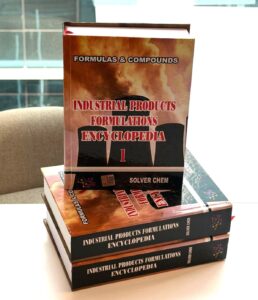
Discover professional industrial formulations in the Industrial Products Formulations Encyclopedia – 1, developed by a chemical engineer with over 40 years of experience.
What is Pigment Printing Paste?
Pigment printing paste is a formulation used in textile printing to fix pigments onto fabric surfaces. Unlike dye-based systems, pigments do not chemically bond with fibers, so binders are used to ensure adhesion and durability.
These formulations are widely used in industrial textile printing due to their versatility and cost-effectiveness.
Pigment Printing Paste Formula (Example)
A typical industrial pigment printing paste formulation may include:
- Pigment: 5–15%
- Binder (acrylic or polymer): 10–25%
- Thickener: 1–5%
- Water: balance
- Additives (fixers, softeners): small amounts
This formulation ensures proper viscosity, adhesion, and color performance.
Raw Materials and Their Functions
Each component plays a critical role:
- Pigments: provide color
- Binders: fix pigments to fabric
- Thickeners: control viscosity and printing quality
- Water: acts as a carrier
- Additives: improve performance and durability
👉 Similar formulation logic is used in other industrial products such as chalk manufacturing systems:
https://makingchembooks.com/production-process-of-chalks-formulation-materials/
Industrial Production Process
The production process involves controlled formulation steps:
1. Raw Material Preparation
All ingredients are measured accurately.
2. Mixing
Pigments are dispersed in water with continuous agitation.
3. Binder Addition
Binders are added to ensure adhesion to fabric.
4. Thickener Incorporation
Thickeners are introduced to achieve desired viscosity.
5. Homogenization
The mixture is blended until uniform.
6. Packaging
The final paste is packed for industrial use.
Applications of Pigment Printing Paste
Pigment printing paste is used in:
- Textile printing
- Fabric decoration
- Industrial printing processes
- Apparel manufacturing
These applications require stable and high-performance formulations.
Advantages of Pigment Printing Paste
- Cost-effective compared to dyes
- Suitable for various fabrics
- Easy application process
- Good color stability
- Industrial scalability
Formulation Tips
- Ensure proper pigment dispersion
- Balance binder ratio for durability
- Control viscosity carefully
- Use compatible additives
Advanced formulation strategies can be developed using the Industrial Products Formulations Encyclopedia – 1.
Safety and Handling
- Use protective equipment
- Avoid inhalation of powders
- Store materials properly
- Follow industrial safety guidelines
Frequently Asked Questions (FAQ)
What is pigment printing paste?
It is a formulation used to apply pigments onto fabric surfaces.
How does pigment printing work?
Pigments are fixed onto fabric using binders and heat.
What are the main ingredients?
Pigments, binders, thickeners, water, and additives.
Is pigment printing durable?
Yes, when properly formulated, it provides long-lasting results.
Author
This content is prepared by a professional chemical engineer with over 40 years of industrial formulation experience.
SUMMARY
Pigment printing paste formulations are essential in textile printing, enabling efficient and durable color application on fabrics. By combining pigments, binders, and thickeners, manufacturers can produce high-performance printing systems suitable for industrial use.
Understanding formulation techniques and production methods allows the development of reliable and scalable pigment printing solutions.
Related Articles
- https://makingchembooks.com/production-process-of-chalks-formulation-materials/
- https://makingchembooks.com/dustless-chalk-production-process-formula-making-methods/
- https://makingchembooks.com/degreaser-ingredients-degreaser-recipe-formulas/
- https://makingchembooks.com/formulation-of-stainless-steel-cleaner-compounds/