Industrial Production of Calcium Fertilizers: Complete Guide
Calcium fertilizers are essential for modern agriculture, playing a key role in improving plant structure, enhancing crop quality, and preventing physiological disorders such as blossom end rot, bitter pit, and tip burn. As a secondary nutrient, calcium strengthens cell walls, supports root development, and improves nutrient transport within plants. The Industrial Production of Calcium Fertilizers: Complete Guide provides a comprehensive overview of how calcium fertilizers are formulated and manufactured on an industrial scale using efficient and reliable production methods.
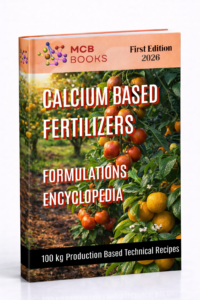
The industrial production of calcium fertilizers begins with the selection of high-quality raw materials. Common calcium sources include calcium nitrate, calcium chloride, calcium sulfate, and chelated calcium compounds. Each raw material has unique characteristics that influence the final product’s performance. For example, calcium nitrate is highly soluble and widely used in fertigation systems, while calcium chloride is suitable for foliar applications due to its rapid absorption. Calcium sulfate, commonly known as gypsum, is often used in granular formulations for soil improvement and long-term nutrient release.
Calcium fertilizers are produced in various forms, including liquid solutions, water-soluble powders, suspension concentrates, and granules. Liquid formulations are widely used due to their ease of application and fast nutrient uptake. In industrial production, liquid fertilizers are prepared by dissolving calcium sources in water under controlled conditions. Maintaining the correct pH and mixing sequence is essential to prevent precipitation and ensure product stability. Filtration and homogenization processes are often applied to achieve a clear and consistent solution.
Powder and water-soluble calcium fertilizers require precise blending of dry materials. Controlling particle size distribution and moisture content is critical to ensure uniform mixing and rapid dissolution. Granular calcium fertilizers are produced using advanced processes such as granulation and drying, which create uniform particles that are easy to handle and apply. These formulations provide a slow and controlled release of calcium, making them suitable for soil application and long-term nutrient management.
One of the main challenges in industrial calcium fertilizer production is maintaining formulation stability, especially in liquid products. Calcium ions can react with other components, leading to precipitation and reduced effectiveness. To overcome this, manufacturers use stabilizers, buffering agents, and precise pH control systems. These techniques help maintain solubility and ensure consistent product performance during storage and application.
The manufacturing process involves several key steps, including raw material selection, accurate weighing, controlled mixing, dissolution or granulation, quality control, and packaging. Each stage must be carefully managed to ensure product consistency and compliance with industry standards. Quality control procedures, such as pH testing, solubility analysis, and nutrient content verification, are essential to guarantee product reliability.
Efficiency and scalability are critical in industrial production. By optimizing processes and using advanced equipment, manufacturers can reduce production costs, minimize waste, and improve productivity. This is especially important in a competitive fertilizer market where efficiency and quality determine success.
Calcium fertilizers are widely used in horticulture, greenhouse production, and field crops. Their ability to improve fruit firmness, extend shelf life, and enhance overall crop quality makes them highly valuable in modern agriculture. With increasing demand for high-quality agricultural products, the importance of calcium fertilizers continues to grow.
In conclusion, the Industrial Production of Calcium Fertilizers: Complete Guide provides a detailed framework for producing high-quality calcium fertilizers on a commercial scale. By combining advanced formulation techniques with efficient manufacturing processes, producers can develop reliable products and achieve long-term success in the agricultural industry.