Liquid vs Granular Calcium Fertilizers: Formulation Differences Explained
Calcium fertilizers are essential for improving plant structure, enhancing crop quality, and preventing common physiological disorders such as blossom end rot, bitter pit, and tip burn. As a key secondary nutrient, calcium plays a vital role in strengthening cell walls, supporting root development, and improving nutrient transport within plants. Among the most widely used calcium fertilizer types are liquid and granular formulations. Understanding the formulation differences between liquid and granular calcium fertilizers is crucial for manufacturers, agronomists, and farmers seeking to optimize performance and application efficiency.
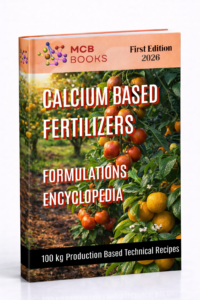
Liquid calcium fertilizers are designed for rapid absorption and immediate availability to plants. These formulations are typically applied through foliar spraying or fertigation systems, allowing calcium to be delivered directly to plant tissues. The main advantage of liquid fertilizers is their high solubility, which ensures uniform distribution and fast uptake. However, producing stable liquid calcium formulations requires precise control of pH, water quality, and ingredient compatibility. Calcium ions can react with other components, leading to precipitation if not properly managed. To prevent this, stabilizers and buffering agents are often added to maintain long-term stability.
Granular calcium fertilizers, on the other hand, are primarily used for soil application and provide a slow and controlled release of nutrients. These formulations are typically produced using calcium sulfate (gypsum) or other calcium compounds that improve soil structure and gradually supply calcium over time. Granular fertilizers are especially beneficial for improving soil conditions, enhancing water infiltration, and supporting long-term nutrient availability. Their solid form makes them easier to store, transport, and handle in large-scale agricultural operations.
One of the key differences between liquid and granular calcium fertilizers lies in their production processes. Liquid fertilizers are produced by dissolving calcium sources such as calcium nitrate or calcium chloride in water under controlled conditions. Maintaining the correct mixing sequence and pH level is essential to ensure a stable and homogeneous solution. Filtration and homogenization processes are often used to achieve product clarity and consistency.
In contrast, granular calcium fertilizers are produced through processes such as granulation and drying. These techniques involve binding fine particles into uniform granules that are easy to apply and handle. Controlling particle size distribution and moisture content is critical to ensure product quality and prevent issues such as dust formation or uneven nutrient release.
Another important difference is application flexibility. Liquid calcium fertilizers are ideal for precision agriculture systems, where nutrients need to be delivered quickly and accurately. They are commonly used in high-value crops such as fruits and vegetables, where immediate calcium uptake is essential. Granular fertilizers, however, are better suited for long-term soil improvement and are often used in field crops and large-scale farming operations.
Quality control is essential for both liquid and granular calcium fertilizers. Manufacturers must ensure that products meet standards for nutrient content, solubility, and physical properties. Proper packaging and storage conditions are also important to maintain product stability and effectiveness over time.
Both liquid and granular calcium fertilizers offer unique advantages, and the choice between them depends on specific agricultural needs. Liquid formulations provide fast results and precise application, while granular formulations offer long-term benefits and ease of handling. By understanding these formulation differences, manufacturers and farmers can select the most appropriate product for their operations.
In conclusion, the Liquid vs Granular Calcium Fertilizers: Formulation Differences Explained highlights the importance of choosing the right fertilizer type for optimal performance. By leveraging advanced formulation techniques and production methods, both liquid and granular calcium fertilizers can deliver effective and reliable results in modern agriculture.