INTRODUCTION
Surface disinfection in poultry and livestock farms is one of the most critical steps in preventing the spread of harmful microorganisms. Contaminated surfaces can easily transmit bacteria, viruses, and fungi, leading to serious productivity losses and disease outbreaks.
In modern agricultural hygiene systems, surface disinfectants are formulated not only to eliminate pathogens but also to provide long-lasting protection and compatibility with various surfaces. Especially in chicken farms, where organic contamination is high, selecting the right disinfectant formulation is essential.
This article explains how to make a high-performance surface disinfectant for chicken farms, including raw materials, formulation logic, and industrial production methods.
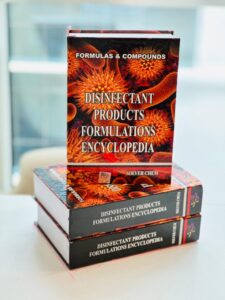
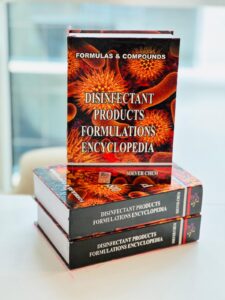
This formulation is part of the Disinfectant Products Formulations Encyclopedia, developed by a chemical engineer with 40+ years of experience, containing real industrial recipes and production methods.
KEY INGREDIENTS IN SURFACE DISINFECTANT FORMULATIONS
A high-quality surface disinfectant typically includes the following components:
1. Active Disinfectants
- Quaternary ammonium compounds (DDAC, BAC)
- Hydrogen peroxide
- Peracetic acid (for advanced systems)
These provide strong antimicrobial action against bacteria, viruses, and fungi.
2. Surfactants
- Nonionic surfactants (e.g., Alcohol ethoxylates)
- Amphoteric surfactants
They improve wetting ability and help the disinfectant spread evenly on surfaces.
3. Solvents
- Water (main carrier)
- Isopropyl alcohol (optional for faster drying)
4. Stabilizers and Additives
- Chelating agents (EDTA)
- pH regulators
- Corrosion inhibitors
These ensure long shelf life and formulation stability.
EXAMPLE SURFACE DISINFECTANT FORMULA (100 KG)
Raw Material | Function | Amount (kg)
- Didecyl Dimethyl Ammonium Chloride → Active disinfectant → 5 kg
- Nonionic Surfactant (C9-11 Alcohol Ethoxylate) → Wetting agent → 3 kg
- EDTA → Chelating agent → 0.5 kg
- Isopropyl Alcohol → Solvent → 10 kg
- Sodium Carbonate → pH adjuster → 1 kg
- Water → Carrier → 80.5 kg
Total: 100 kg
PRODUCTION PROCESS
The production process starts by adding water into a stainless steel mixing tank. EDTA is dissolved completely under moderate stirring to ensure proper chelation. Then, the nonionic surfactant is slowly added to avoid excessive foaming.
After achieving a homogeneous mixture, the quaternary ammonium compound is introduced carefully into the system. Isopropyl alcohol is added in the next stage to enhance drying performance and antimicrobial efficiency.
pH adjustment is carried out using sodium carbonate until the desired range is achieved. The mixture is then stirred for 20–30 minutes to ensure full homogenization. Finally, the product is filtered if necessary and filled into appropriate containers.
APPLICATION AREAS IN CHICKEN FARMS
Surface disinfectants are widely used in:
- Poultry house floors and walls
- Equipment and feeding systems
- Transport vehicles
- Entry and exit sanitation points
Regular application significantly reduces contamination risks.
For deeper understanding, you can also explore:
- Hydrogen peroxide based disinfectant systems
- Peracetic acid disinfectant formulations
- Alcohol-based disinfectant production processes
These articles provide additional industrial formulation insights.
SUMMARY
Surface disinfectants for chicken farms must be carefully formulated to ensure strong antimicrobial activity, stability, and compatibility with different surfaces. Using the right combination of active ingredients, surfactants, and stabilizers allows the production of high-performance disinfectants suitable for industrial use.
🚀 DISCOVER PROFESSIONAL DISINFECTANT FORMULATIONS
If you want to access real industrial disinfectant formulas, including advanced surface disinfectants, hospital-grade solutions, and agricultural sanitation systems:
👉 The Disinfectant Products Formulations Encyclopedia provides 150+ professional formulations, raw materials, and production techniques used in real manufacturing.
✔ Developed by a chemical engineer with 40+ years of experience
✔ Includes industrial-scale recipes
✔ Suitable for manufacturers, entrepreneurs, and R&D professionals