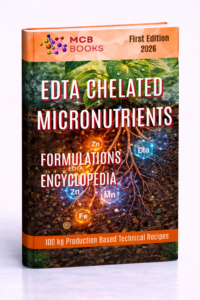
Micronutrient Fertilizer Production Secrets: Industrial Formulas Inside
 Micronutrient fertilizers have become a critical component of modern agriculture, delivering essential trace elements that significantly improve
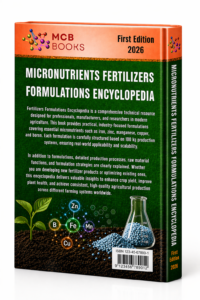 crop yield, quality, and resistance to stress conditions. Although required in small quantities, micronutrients such as iron (Fe), zinc (Zn), manganese (Mn), copper (Cu), boron (B), and molybdenum (Mo) are indispensable for plant metabolism and enzymatic functions. The Micronutrient Fertilizer Production Secrets: Industrial Formulas Inside reveals the key techniques, formulation strategies, and manufacturing insights that enable producers to develop high-performance fertilizers for commercial success.
One of the biggest “secrets” in micronutrient fertilizer production lies in the formulation design. Industrial formulas are carefully developed to ensure optimal solubility, stability, and nutrient availability. Unlike basic formulations, professional-grade recipes incorporate stabilizers, dispersing agents, and chelating compounds to enhance performance. These ready-to-use formulations eliminate the need for extensive research and allow manufacturers to produce consistent and reliable products from the start.
Liquid micronutrient fertilizers are among the most widely used products due to their fast absorption and ease of application. However, maintaining stability in liquid formulations requires precise control of pH, water quality, and the order of ingredient addition. Even small deviations can lead to precipitation or reduced effectiveness. Industrial formulas address these challenges by specifying exact processing conditions and ingredient combinations that ensure long-term stability and clarity.
Powder and water-soluble micronutrient fertilizers offer additional advantages such as ease of storage, transportation, and extended shelf life. The production of these formulations involves precise blending techniques, control of particle size distribution, and strict moisture management. These factors are essential to achieve uniform nutrient distribution and rapid dissolution in water. Granular formulations, produced through advanced granulation and drying processes, provide controlled nutrient release and improved handling for large-scale agricultural applications.
Chelation technology is another key element that differentiates high-quality micronutrient fertilizers from standard products. Chelated micronutrients, such as EDTA, DTPA, and EDDHA complexes, protect nutrients from becoming unavailable in the soil. This is particularly important in alkaline conditions where micronutrient fixation can limit plant uptake. By incorporating chelating agents into industrial formulas, manufacturers can significantly improve nutrient efficiency and crop performance.
The manufacturing process itself is a combination of precision and control. It includes raw material selection, accurate weighing, controlled mixing, dissolution or granulation, quality control, and packaging. Each step must be carefully monitored to ensure consistency and compliance with industry standards. Quality control procedures such as pH testing, solubility analysis, and nutrient verification are essential to guarantee product performance and reliability.
Another important “secret” to success in micronutrient fertilizer production is scalability. Industrial formulas are designed to be easily adapted from small-scale production to large manufacturing operations. This allows businesses to grow without needing to redesign their products or processes. By using proven formulations and standardized methods, manufacturers can reduce costs, minimize waste, and improve production efficiency.
With the increasing global demand for high-efficiency fertilizers, micronutrient products represent a rapidly expanding market. Farmers are becoming more aware of the importance of balanced plant nutrition, creating strong demand for advanced and reliable solutions. By leveraging industrial formulas and production techniques, manufacturers can develop competitive products and establish a strong presence in the market.
In conclusion, the Micronutrient Fertilizer Production Secrets: Industrial Formulas Inside provides valuable insights into the science and practice of fertilizer manufacturing. It combines advanced formulation knowledge with practical production methods, enabling manufacturers to produce high-quality micronutrient fertilizers and achieve long-term success in the agricultural industry.