Seaweed and algae biostimulants are increasingly used in modern agriculture to support plant performance under challenging environmental conditions. Drought, salinity, heat, cold, and other forms of abiotic stress can reduce plant growth, nutrient uptake, root activity, flowering, fruit development, and overall crop productivity. For this reason, algae-based biostimulant fertilizers are becoming important components of professional crop nutrition and stress-management programs.
Seaweed extract fertilizers are commonly produced from selected marine algae and may contain naturally occurring polysaccharides, minerals, organic compounds, amino acids, and other biologically active components. Depending on the formulation, these materials can be combined with potassium, micronutrients, humic substances, fulvic acids, amino acids, and other functional ingredients. The objective is to develop stable liquid or water-soluble products that can support plants during periods of environmental stress.
Drought stress is one of the most important problems affecting agricultural production. Limited water availability can reduce root activity, nutrient movement, photosynthesis, and vegetative development. Seaweed and algae biostimulant formulations designed for drought conditions may be applied through foliar spray, fertigation, or soil application. These products are often positioned to support root development, water-use efficiency, nutrient uptake, and plant recovery during or after water stress.
Salinity is another major challenge in commercial agriculture, particularly in areas where irrigation water or soil contains elevated salt levels. High salinity can interfere with water absorption and nutrient balance. Algae biostimulant fertilizers formulated for saline conditions may include seaweed extracts, amino acids, potassium compounds, micronutrients, and organic acids. These ingredients are selected to create specialized products that can be integrated into crop management programs aimed at supporting plant vigor and maintaining productivity under salt stress.
Abiotic stress also includes high temperature, low temperature, transplant shock, and other non-biological environmental pressures. Liquid algae and seaweed biostimulants can be developed for application before, during, or after stressful periods depending on the crop and cultivation system. Foliar products should provide good spreading and compatibility, while fertigation formulations should remain soluble and stable in irrigation systems.
Commercial production of stress-tolerance biostimulants requires careful control of raw material compatibility, pH, viscosity, density, solubility, filtration, sediment formation, and storage stability. Manufacturers should also evaluate the formulation according to its intended crop, application method, and environmental conditions.
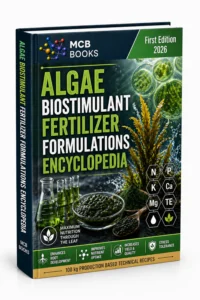
The ALGAE BIOSTIMULANT FERTILIZER FORMULATIONS ENCYCLOPEDIA provides practical information about seaweed and algae biostimulant formulations, raw materials, production processes, quality control, and commercial manufacturing. It is a valuable reference for fertilizer manufacturers, agricultural companies, formulators, and entrepreneurs interested in developing biostimulant products for drought tolerance, salinity management, abiotic stress resistance, and improved plant performance.