Introduction
Fabric softeners are widely used in the detergent industry to improve the softness, fragrance, and overall feel of fabrics after washing. The production of these products requires specialized industrial equipment designed for liquid chemical processing and detergent manufacturing.
Modern fabric softener formulations are typically produced in liquid form using mixing tanks, heating systems, homogenizers, and filling equipment. These systems allow manufacturers to produce stable and uniform products while maintaining consistent quality during large-scale production.
For a complete overview of how fabric softeners are formulated and produced, see our main guide on:
Fabric Softener Formulation and Manufacturing Process

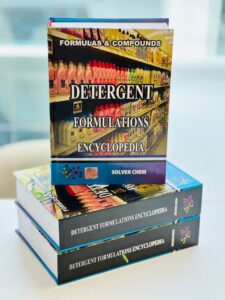
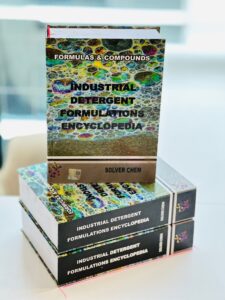
Looking for professional detergent formulations and manufacturing guidance? Detailed fabric softener formulations, production methods, and ingredient selection strategies can be found in the Detergent Formulations Encyclopedia, a comprehensive reference guide for chemists, detergent manufacturers, and entrepreneurs working in the cleaning products industry.
Role of Manufacturing Equipment in Fabric Softener Production
Industrial equipment plays a critical role in ensuring that fabric softener formulations remain stable and properly mixed during production.
Fabric softener products usually contain conditioning agents, stabilizers, fragrances, and water-based solvents. Proper mixing equipment is required to disperse these ingredients evenly and maintain formulation stability.
You can learn more about the ingredients used in these products in our article on:
Raw Materials Used in Fabric Softener Formulations
Main Equipment Used in Fabric Softener Manufacturing
Several types of equipment are commonly used in fabric softener production facilities.
Mixing Tanks
Stainless steel mixing tanks are the most important equipment used in fabric softener manufacturing. These tanks are equipped with agitators that ensure proper mixing of conditioning agents, stabilizers, and other additives.
Heating Systems
Heating systems are often used during production to help dissolve ingredients and improve emulsification during mixing.
Homogenizers
Homogenizers help create a uniform mixture by breaking down particles and ensuring proper dispersion of ingredients throughout the formulation.
Transfer Pumps
Industrial pumps are used to transfer the finished formulation between mixing tanks, storage tanks, and packaging lines.
Filling Machines
Automatic filling machines are used to package liquid fabric softeners into bottles or containers for distribution.
Importance of Equipment in Maintaining Product Stability
Proper manufacturing equipment is essential for maintaining the physical stability of fabric softener formulations.
During production, equipment must ensure:
-
uniform mixing of ingredients
-
consistent viscosity
-
proper emulsification of conditioning agents
-
stable dispersion of fragrances and additives
Stabilizers and preservatives also play an important role in maintaining product stability. More information about these ingredients can be found in:
Fabric Softener Stabilizers and Preservatives
Industrial Production Considerations
Fabric softener manufacturing facilities must be designed to ensure efficient and safe production.
Important considerations include:
-
stainless steel equipment to prevent corrosion
-
controlled mixing speeds
-
temperature control systems
-
hygienic production environments
Proper equipment selection helps manufacturers produce high-quality fabric softeners suitable for both household and industrial laundry applications.
Further Reading
Detailed industrial fabric softener formulations, ingredient selection strategies, and detergent manufacturing techniques are explained in the Detergent Formulations Encyclopedia, a comprehensive reference guide used by chemists, manufacturers, and entrepreneurs working in the detergent industry.
SUMMARY
Fabric softener manufacturing requires specialized equipment designed for liquid detergent production. Mixing tanks, heating systems, homogenizers, pumps, and filling machines are commonly used in industrial production facilities.
Proper equipment ensures uniform mixing, stable formulations, and efficient large-scale production. By using appropriate manufacturing systems and formulation techniques, detergent manufacturers can produce high-quality fabric softeners suitable for commercial distribution.
For a deeper understanding of fabric softener formulations, ingredients, and industrial production methods, you may also find the following related articles helpful:
Fabric Softener Formulation and Manufacturing Process
Raw Materials Used in Fabric Softener Formulations
Cationic Surfactants Used in Fabric Softener Formulations
Fabric Softener Stabilizers and Preservatives