Fruit setting is one of the most decisive stages in crop production, directly affecting yield, fruit quality, and overall agricultural profitability. Even when plants produce a large number of flowers, not all of them develop into fruits due to environmental stress, hormonal imbalances, or insufficient pollination. This is where fruit setting plant growth regulators play a crucial role. These specialized formulations are designed to stimulate fruit formation, improve fruit retention, and ensure consistent productivity even under challenging conditions. In modern agriculture, plant growth regulators are not optional tools but essential components of high-efficiency production systems.
Fruit setting refers to the transformation of a flower into a developing fruit, a process that typically follows pollination and fertilization. However, many crops experience poor fruit set due to high temperatures, low humidity, nutrient deficiencies, or physiological stress. In such cases, plants may abort flowers or young fruits, leading to significant yield losses. Plant growth regulators help overcome these limitations by mimicking or modifying natural plant hormones, allowing fruit development to proceed even when natural conditions are not ideal. This makes them highly valuable in both open-field agriculture and controlled environments such as greenhouses.
The effectiveness of fruit setting regulators lies in their interaction with plant hormones. Auxins, gibberellins, cytokinins, and ethylene are the primary hormonal groups involved in fruit development. Auxins such as indole-3-acetic acid (IAA) and naphthalene acetic acid (NAA) are particularly important for initiating fruit formation. They promote cell elongation and help prevent premature flower drop. NAA, in particular, is widely used in commercial formulations because of its stability and strong physiological effects. Gibberellins, especially GA3, play a key role in cell division and elongation, contributing to fruit size and uniformity. Cytokinins enhance cell division and delay aging processes, ensuring better fruit development and quality. Ethylene, often applied through ethephon, regulates fruit maturation and supports hormonal balance during development.
Fruit setting formulations are available in different physical forms, each designed for specific agricultural needs. Liquid formulations are the most commonly used due to their ease of application and rapid absorption by plant tissues. These formulations are typically applied as foliar sprays, allowing the active ingredients to penetrate directly through the leaves. Suspension concentrates offer improved stability and controlled release, making them suitable for long-term storage and consistent performance. Water-soluble powders are preferred for their high concentration and ease of transportation, while controlled-release formulations represent an advanced approach that provides gradual hormone delivery over time, reducing the need for repeated applications.
The formulation of fruit setting plant growth regulators requires careful selection of raw materials. Active ingredients such as NAA, GA3, IAA, cytokinins, and ethephon must be combined with appropriate solvents, surfactants, stabilizers, and adjuvants. Solvents like water or alcohol ensure proper dissolution of active compounds, while surfactants improve spreading and penetration on plant surfaces. Stabilizers are essential to maintain chemical integrity and prevent degradation, especially in liquid formulations. Adjuvants enhance the overall effectiveness of the product by improving adhesion and absorption. The balance between these components determines the performance, stability, and shelf life of the final formulation.
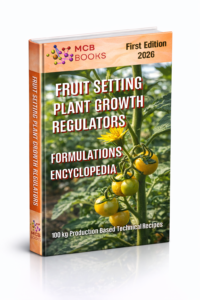
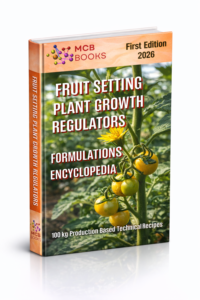
Industrial production of fruit setting regulators involves precise and controlled processes. The typical manufacturing sequence begins with the preparation of the solvent phase, followed by the dissolution of active ingredients. Surfactants and stabilizers are then added under controlled mixing conditions to ensure uniform distribution. Homogenization is carried out to achieve a stable and consistent product, after which pH adjustment is performed to optimize chemical stability. The formulation is then filtered to remove impurities and packaged under suitable conditions. Each step must be carefully managed to prevent degradation of sensitive compounds such as gibberellins and auxins. Advanced production techniques and industrial formulations are extensively detailed in the Fruit Setting Plant Growth Regulators Formulations Encyclopedia, which serves as a comprehensive guide for manufacturers and agricultural professionals.
Application methods play a critical role in the effectiveness of fruit setting regulators. Foliar spraying is the most widely used technique, as it allows direct absorption through plant leaves and ensures rapid response. Pre-flowering applications are often used to prepare the plant for fruit development by enhancing flower quality and hormonal balance. Post-flowering treatments focus on reducing fruit drop and supporting early fruit growth. Timing and dosage are extremely important, as excessive application can lead to abnormal growth or reduced yield. Proper application strategies are essential to achieve the desired results without causing physiological stress to the plant.
The benefits of fruit setting plant growth regulators are significant and well-documented. They increase overall yield by improving the percentage of flowers that develop into fruits. They enhance fruit size and uniformity, which is crucial for market acceptance and export quality. They reduce fruit drop, ensuring that the plant retains more of its developing fruits. They also improve stress tolerance, allowing crops to perform better under adverse environmental conditions. These advantages make them indispensable in commercial agriculture, particularly in high-value crops such as citrus, grapes, apples, tomatoes, and strawberries.
Despite their effectiveness, improper formulation or application can lead to problems. Poor fruit set may occur if the formulation lacks sufficient active ingredients or if it is applied at the wrong stage of plant development. Excessive fruit drop may result from hormonal imbalance, which can be corrected by using balanced formulations containing auxins and cytokinins. Uneven fruit development can be addressed by incorporating gibberellins into the formulation. Low yield under stress conditions often requires multi-hormone formulations that combine several active ingredients to provide comprehensive support. Understanding these challenges and their solutions is essential for optimizing the use of plant growth regulators.
Recent advancements in formulation technology have introduced new possibilities in the field of plant growth regulation. Nano-formulations offer improved penetration and efficiency by reducing particle size and increasing surface area. Microencapsulation techniques allow controlled release of active ingredients, ensuring long-lasting effects and reducing the frequency of application. Controlled-release systems are particularly beneficial in large-scale agriculture, where labor and application costs are significant factors. Biostimulant integration is another emerging trend, combining plant growth regulators with natural extracts such as seaweed or amino acids to enhance overall plant performance.
The commercial importance of fruit setting plant growth regulators continues to grow as agriculture becomes more technology-driven and yield-focused. Farmers and producers are increasingly relying on scientifically formulated products to achieve consistent results and meet market demands. In this context, access to professional and industrial-level formulations becomes a key competitive advantage. The Fruit Setting Plant Growth Regulators Formulations Encyclopedia provides detailed insights into formulation techniques, raw materials, and production processes, making it an invaluable resource for anyone involved in agricultural production or formulation development.
In conclusion, fruit setting plant growth regulators represent a powerful tool for improving agricultural productivity and ensuring stable crop performance. By understanding the role of plant hormones, formulation principles, and application techniques, it is possible to significantly enhance fruit set and overall yield. As agricultural practices continue to evolve, the importance of high-quality formulations and advanced technologies will only increase. For professionals seeking to develop or use effective fruit setting solutions, having access to comprehensive and practical knowledge is essential, and resources such as specialized formulation encyclopedias provide the necessary expertise to succeed in this field.