Best Calcium Fertilizer Formulations for Fruits and Vegetables
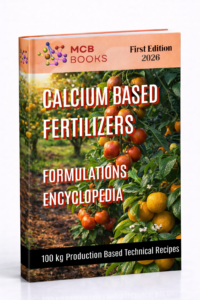
Calcium fertilizers are essential for producing high-quality fruits and vegetables, as they play a critical role in plant structure, nutrient transport, and resistance to physiological disorders. Calcium strengthens cell walls, improves root development, and enhances the overall firmness and shelf life of produce. For growers and manufacturers, selecting the best calcium fertilizer formulations is key to achieving optimal crop performance and market value. The Best Calcium Fertilizer Formulations for Fruits and Vegetables provides a comprehensive overview of the most effective formulations and their applications in modern agriculture.
Calcium deficiency is a common issue in fruit and vegetable production, often leading to disorders such as blossom end rot in tomatoes and peppers, tip burn in lettuce, and bitter pit in apples. These problems can significantly reduce both yield and quality. The best calcium fertilizer formulations are designed to deliver calcium in a highly available form, ensuring efficient absorption and utilization by plants.
Liquid calcium fertilizers are widely considered among the best formulations for fruits and vegetables due to their rapid absorption and ease of application. These products are typically applied through foliar spraying or fertigation systems, allowing calcium to be delivered directly to plant tissues. Liquid formulations often use calcium nitrate or calcium chloride as the primary source, combined with stabilizers and buffering agents to maintain solubility and prevent precipitation.
Water-soluble powder formulations are another effective option, particularly for large-scale agricultural operations. These formulations are easy to store and transport, and they can be dissolved in water before application. High-quality powder formulations require uniform particle size and low moisture content to ensure rapid dissolution and consistent nutrient delivery. They are commonly used in fertigation systems and can be tailored to specific crop needs.
Granular calcium fertilizers are also widely used, especially for soil application. These formulations provide a slow and controlled release of calcium, improving soil structure and long-term nutrient availability. Calcium sulfate (gypsum) is often used in granular formulations to enhance soil properties and provide a steady supply of calcium over time.
One of the most advanced approaches in calcium fertilizer formulation is the use of chelated calcium. Chelated forms improve nutrient stability and availability, particularly in challenging soil conditions such as high pH levels. These formulations ensure that calcium remains accessible to plants and can be efficiently absorbed, resulting in better crop quality and reduced nutrient losses.
The production of high-quality calcium fertilizers involves careful selection of raw materials, precise formulation design, and strict quality control. Parameters such as pH, solubility, and nutrient concentration must be carefully managed to ensure consistent performance. Proper manufacturing techniques, including controlled mixing and granulation, help maintain product stability and effectiveness.
The best calcium fertilizer formulations are those that are tailored to specific crops and growing conditions. For fruits, calcium is essential for improving firmness, reducing cracking, and extending shelf life. For vegetables, it enhances leaf structure, prevents tip burn, and supports overall plant health. By selecting the right formulation and application method, growers can achieve higher yields and better-quality produce.
With increasing demand for premium fruits and vegetables, calcium fertilizers have become an indispensable tool in modern agriculture. Farmers are looking for solutions that not only improve yield but also enhance product quality and marketability. By using advanced calcium fertilizer formulations, both manufacturers and growers can meet these expectations and achieve better results.
In conclusion, the Best Calcium Fertilizer Formulations for Fruits and Vegetables highlights the importance of selecting the right formulation for optimal crop performance. By combining advanced formulation techniques with proper application strategies, calcium fertilizers can significantly improve agricultural productivity and product quality.