Flower Booster Formulations for Agriculture
(Industrial Production Methods)
 In modern agriculture, improving flowering performance is one of the most direct ways to increase crop yield and overall quality. Flower booster formulations are designed to support plants during the critical transition into the flowering stage, helping them produce more uniform blooms and stronger reproductive development. For both growers and manufacturers, understanding how these formulations are produced at an industrial level is essential for consistent results.
Most flower booster systems are built around plant growth regulators such as gibberellins, cytokinins, and sometimes auxins. Gibberellins are commonly used to stimulate flowering and promote plant development, especially in crops that show delayed or uneven blooming. Cytokinins enhance cell division and improve flower formation, while auxins help regulate plant growth balance and increase the overall effectiveness of the formulation when used in controlled amounts.
However, the performance of a flower booster product depends not only on the active ingredients but also on how they are formulated. Industrial formulations include supporting components such as solvents, surfactants, stabilizers, and in some cases chelating agents. Solvents ensure that active ingredients are fully dissolved and remain stable. Surfactants improve spreading and absorption on plant surfaces, allowing better uptake of active components. Stabilizers protect sensitive hormone molecules from degradation, while chelating agents enhance compatibility and performance under different water conditions.
The industrial production process follows a structured and controlled sequence. It begins with dissolving the active ingredients in a suitable solvent system under controlled temperature conditions. This step is critical to ensure complete solubility and prevent instability in the final product. Once the actives are properly dissolved, surfactants are added gradually while maintaining continuous mixing to achieve a uniform solution.
After this stage, stabilizers and other additives are incorporated into the formulation to enhance shelf life and performance. The next step involves adjusting the pH to an optimal range, as plant hormones are sensitive to pH variations. Proper pH control ensures both storage stability and effectiveness during application. Once the formulation meets the desired specifications, it is filtered to remove any undissolved particles and then packaged for commercial distribution.
For manufacturers, developing stable and effective flower booster formulations can be challenging. Small formulation errors—such as incorrect ratios, poor solubility, or incompatible ingredients—can lead to reduced performance or product instability. This is why many professionals prefer working with proven systems rather than relying entirely on trial and error.
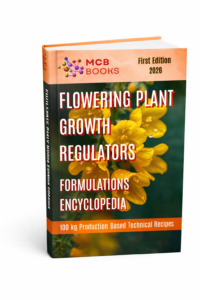
The FLOWERING PLANT GROWTH REGULATORS FORMULATIONS ENCYCLOPEDIA provides ready-to-use formulations, optimized ingredient systems, and detailed production insights based on real industrial applications. It helps producers accelerate product development and create reliable, high-performance solutions.
In the end, successful flower booster formulations are built on precision, balance, and process control. When these elements are combined effectively, the result is a product that enhances flowering performance and delivers consistent agricultural results.