Growth Regulators for Faster Flowering
(Professional Formulation Secrets)
 In many crops, delayed or uneven flowering can quietly cut into yield and quality. Growers often notice it as irregular bloom timing, weak flower development, or poor fruit set. Growth regulators are used to manage this stage more precisely, helping plants shift into flowering faster and more uniformly when conditions are not ideal.
Most systems designed for faster flowering rely on plant hormones such as gibberellins and cytokinins, sometimes supported by low levels of auxins. Gibberellins are typically chosen to encourage the transition into the reproductive phase, especially in crops that tend to lag. Cytokinins help sustain cell activity and support stronger flower formation, while auxins can stabilize growth patterns so the plant responds more consistently. The goal is not to push the plant aggressively, but to guide it at the right moment.
Formulation quality is where professional systems stand out. It’s not only about which actives are used, but how they are delivered. Hormones must be fully dissolved in a suitable solvent system to remain stable. Surfactants are included to improve coverage on leaf surfaces and enhance uptake into plant tissue. Without proper spreading and absorption, even well-chosen actives can underperform in real conditions. Stabilizers are also critical, as many hormone compounds are sensitive to light, temperature, and oxidation.
Another factor that affects speed of flowering is application timing. Growth regulators tend to work best when applied just before the plant naturally enters the flowering phase or at the very early stage of bloom development. This timing allows the formulation to interact with the plant’s internal processes more effectively. Over-application or poor timing can have the opposite effect, slowing development or causing stress.
From a production standpoint, achieving this balance requires experience. Small formulation issues—like incorrect pH, incomplete solubility, or incompatible ingredients—can lead to reduced performance. That’s why many producers prefer working with established formulation systems rather than building everything from scratch.
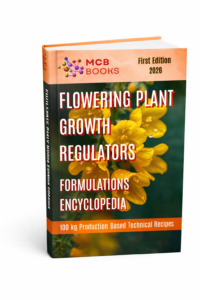
For those looking to develop reliable, market-ready products, the FLOWERING PLANT GROWTH REGULATORS FORMULATIONS ENCYCLOPEDIA provides professionally structured formulations and practical production insights based on real industry use. It offers a faster path to creating stable and effective flowering regulators without unnecessary trial and error.
In practice, faster flowering is not about using stronger chemicals—it’s about using the right formulation, at the right time, in a balanced way. When these elements come together, plants respond with more uniform flowering and improved yield potential.