How to Develop Flowering Plant Growth Regulator Products
(Startup Guide)
Entering the agrochemical market with flowering plant growth regulator (PGR) products can be a strong opportunity, especially as growers continue to look for ways to improve yield and crop consistency. But building a product that actually works in real conditions requires more than a basic idea. It’s a combination of formulation knowledge, process control, and understanding what the market truly needs.
The first step in developing a flowering PGR product is identifying your target application. Are you focusing on greenhouse crops, open-field farming, or high-value specialty plants? Each segment has different requirements in terms of performance, stability, and pricing. Once the target is clear, the next stage is selecting the right active ingredients. Most flowering-focused systems rely on plant hormones such as gibberellins, cytokinins, and sometimes auxins. These actives help regulate the flowering process, improve uniformity, and enhance overall plant performance.
However, choosing the right actives is only part of the process. The real value comes from formulation design. A successful product must be stable, easy to apply, and effective under different environmental conditions. This is why solvents, surfactants, and stabilizers are essential components. Solvents ensure that active ingredients are properly dissolved, surfactants improve spreading and absorption on plant surfaces, and stabilizers protect the formulation from degradation over time.
After defining the formulation concept, the next step is small-scale testing. This stage involves evaluating solubility, pH stability, and compatibility with water and other agricultural inputs. Even minor formulation issues at this level can lead to major performance problems later. Once the formulation shows stable behavior in lab conditions, pilot-scale production can begin. This allows you to test the product under more realistic conditions and refine the process if necessary.
Manufacturing setup is another important consideration. Consistency between batches is critical in the agrochemical industry. Controlled mixing, proper temperature management, and accurate dosing all play a role in maintaining product quality. Packaging and storage conditions must also be designed to protect the formulation during distribution.
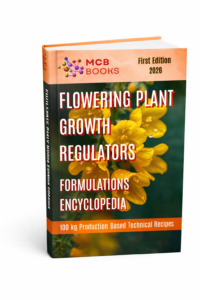
For startups, one of the biggest challenges is the time and cost involved in developing reliable formulations from scratch. Trial-and-error approaches can delay product launch and increase risk. Instead, many new producers choose to start with proven formulation systems and adapt them to their needs. The FLOWERING PLANT GROWTH REGULATORS FORMULATIONS ENCYCLOPEDIA provides ready-to-use formulations, optimized ingredient systems, and production insights that can significantly shorten the development process.
In the end, building a successful flowering PGR product is about combining the right formulation with a clear market strategy. With the right approach, it’s possible to create products that not only perform well but also stand out in a competitive market.