Commercial Flowering Enhancer Formulations
(Ingredients & Mixing Ratios)
 In commercial crop production, achieving strong and uniform flowering is one of the key factors that directly influence yield and product quality. Flowering enhancer formulations are widely used to support this stage, helping plants transition smoothly into flowering while improving bloom density and consistency. For growers and manufacturers alike, understanding how these formulations are built is essential for reliable results.
Most commercial flowering enhancers are based on plant growth regulators such as gibberellins, cytokinins, and in some cases auxins. Gibberellins are typically used to initiate or accelerate flowering, especially in crops that show delayed development. Cytokinins play an important role in improving flower formation and maintaining plant energy during the flowering phase. Auxins, when used in low and controlled amounts, help balance plant growth and enhance the effectiveness of the overall system.
The real strength of a commercial formulation lies in the balance between these active ingredients. Mixing ratios must be carefully optimized to ensure that the formulation supports flowering without causing excessive vegetative growth or stress. For example, a higher proportion of gibberellin may speed up flowering, but without adequate cytokinin support, flower quality may suffer. This is why professional formulations are designed with precise ratios rather than approximate mixtures.
Beyond active ingredients, supporting components are equally important. Solvents are used to dissolve hormone compounds that are not easily soluble in water, ensuring a stable and uniform formulation. Surfactants improve spreading and absorption on plant surfaces, allowing the active ingredients to penetrate effectively. Stabilizers help protect sensitive hormone molecules from degradation, especially during storage and transportation. In some systems, chelating agents are also included to improve compatibility and performance under different water conditions.
From a production perspective, mixing these ingredients requires a controlled process. Active ingredients are first dissolved in the chosen solvent system under appropriate temperature conditions. Surfactants are then added gradually with continuous mixing to maintain homogeneity. Stabilizers and other additives are introduced afterward, followed by careful pH adjustment. Maintaining the correct pH range is critical for ensuring both stability and performance. Finally, the formulation is filtered and packaged for commercial use.
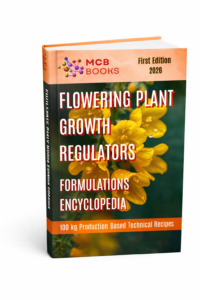
For those developing products, achieving the right balance can be challenging. Small errors in ratios or mixing conditions can lead to unstable formulations or reduced effectiveness. This is why many professionals prefer using tested systems instead of starting from scratch. The FLOWERING PLANT GROWTH REGULATORS FORMULATIONS ENCYCLOPEDIA offers ready-to-use formulations with optimized ingredient ratios and practical production guidance based on real industry applications.
In the end, successful flowering enhancer formulations depend on precision, balance, and consistency. When these factors are aligned, the result is a high-performance product that delivers reliable flowering and improved crop yield.