
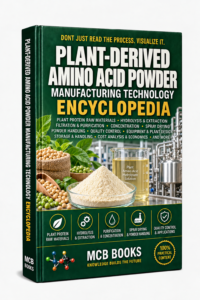
 Plant-derived amino acid powder can be manufactured from protein-rich vegetable raw materials through a controlled sequence of hydrolysis, clarification, purification, concentration, drying, and final powder conditioning. The efficiency of the process depends largely on the quality of the plant protein source and the operating conditions used during hydrolysis.
The process begins with vegetable protein selection and preparation. Soybean protein, corn protein, wheat protein, pea protein, rice protein, and other plant-based protein materials may be used depending on availability, protein concentration, cost, and desired product characteristics. Before processing, the raw material is typically evaluated for protein content, moisture, ash, fiber, impurities, and particle size.
Prepared vegetable protein is then transferred to the hydrolysis stage. The purpose of hydrolysis is to break larger protein molecules into smaller peptides and free amino acids. Depending on the required product profile, manufacturers may use enzymatic, acid, alkaline, or combined hydrolysis technologies. Parameters such as pH, temperature, reaction time, enzyme activity, reagent concentration, and solid-to-liquid ratio must be carefully controlled.
After hydrolysis, the reaction mixture normally contains soluble amino acids and peptides together with insoluble plant residues. The mixture therefore passes through solid-liquid separation. Filtration, centrifugation, settling, or fine clarification systems may be used to remove insoluble particles and obtain a cleaner amino acid-rich liquid.
The clarified hydrolysate may then undergo purification and refinement. This stage can include fine filtration, activated carbon treatment, membrane separation, ion exchange, decolorization, or other technologies depending on the desired product grade. Purification is important for controlling color, ash, odor, insoluble matter, and overall product consistency.
The purified amino acid solution is subsequently transferred to the concentration stage. Vacuum evaporation or similar concentration technologies can be used to remove water and increase solids content before drying. This reduces the energy load on the dryer and can improve production efficiency.
The concentrated liquid is then converted into powder through an appropriate drying process. Spray drying is widely used in industrial production because it enables rapid moisture removal and continuous powder formation. Dryer feed concentration, inlet temperature, outlet temperature, atomization, airflow, and residence time can all influence powder quality.
Following drying, the material may undergo milling, sieving, blending, and standardization. These operations help achieve a uniform particle size and consistent commercial specification. Moisture-resistant packaging is generally preferred to reduce caking and moisture absorption during storage.
Finished plant-