
Introduction
If you have ever opened a packet of salt, spice mix, or powdered milk and found it free-flowing instead of clumped together, you have already experienced the effect of anticaking agents. These substances play a quiet but critical role in modern food production. Without them, many powdered and granulated products would quickly absorb moisture, stick together, and become unusable.
Anticaking agents in food are widely used to prevent clumping and maintain product quality in powdered and granulated systems.
At first, anticaking agents may seem like simple additives. But in real food production, their role is much more critical than it appears.
Understanding how they function in different systems is essential for achieving stable and consistent products.
In industrial food manufacturing, consistency, stability, and shelf life are not optional—they are essential. This is where anticaking agents become indispensable.
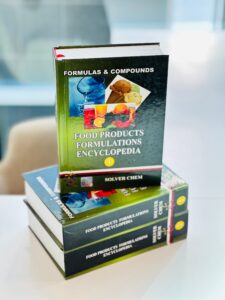
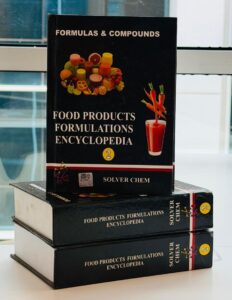
Looking for real industrial formulations?
Explore the complete collection inside:
👉 https://makingchembooks.com
The Food Products Formulations Encyclopedia (Vol. 1 & 2) includes professional-grade formulations developed with over 40 years of chemical engineering experience.
What Are Anticaking Agents?
Anticaking agents are additives used in powdered or granulated materials to prevent the formation of lumps. They work by either absorbing excess moisture or coating particles to reduce adhesion between them.
In simple terms, they keep powders “free-flowing.”
From a production perspective, this improves:
- Packaging efficiency
- Product appearance
- Dosing accuracy
- Consumer usability
Properties of Anticaking Agents
To be effective in industrial applications, anticaking agents must have specific physical and chemical characteristics:
- Moisture Absorption Capacity
They can bind or repel water, preventing clumping. - Particle Coating Ability
Some agents create a thin layer around particles to reduce friction. - Chemical Stability
They must remain inert and not react with food components. - Flow Improvement
Ensures smooth movement in production lines and packaging systems. - Thermal Resistance
Stability during processing conditions such as drying or heating.
Common Anticaking Ingredients Used in Food
Different industries use different agents depending on the product type. Some of the most widely used include:
- Silicon Dioxide
- Calcium Silicate
- Magnesium Carbonate
- Sodium Aluminosilicate
- Tricalcium Phosphate
- Calcium Carbonate
Each of these ingredients is selected based on particle size, moisture behavior, and compatibility with the final product.
Applications in the Food Industry
Anticaking agents are used across a wide range of food categories. You will find them in:
- Powdered milk and dairy products
- Salt and sugar
- Spice blends and seasoning mixes
- Instant soups and beverage powders
- Flour and baking premixes
- Protein powders and supplements
In large-scale manufacturing, even a small percentage of anticaking agent can significantly improve product performance.
In industrial applications, anticaking agents in food play a critical role in maintaining consistency and flow properties.
Food Categories Using Anticaking Agents
Certain food groups are more prone to caking due to their structure or moisture sensitivity:
- Dairy Powders → milk powder, whey powder
- Seasonings → spices, spice blends, flavor enhancers
- Beverage Powders → coffee creamers, cocoa mixes
- Processed Foods → instant meals, soup bases
- Bakery Ingredients → flour blends, powdered sugar
These categories rely heavily on anticaking technology to maintain quality from factory to consumer.
List of Anti-Caking Agents (E Numbers)
For regulatory and labeling purposes, anticaking agents are often identified by their E numbers. Here are some of the most commonly used ones:
- E551 – Silicon Dioxide
- E552 – Calcium Silicate
- E553a – Magnesium Silicate
- E553b – Talc
- E554 – Sodium Aluminosilicate
- E555 – Potassium Aluminosilicate
- E556 – Calcium Aluminosilicate
- E558 – Bentonite
- E559 – Aluminum Silicate
- E341 – Tricalcium Phosphate
- E170 – Calcium Carbonate
These additives are approved in controlled amounts and are widely used across global food industries.
Advantages and Limitations
Advantages
- Improves product flowability
- Extends shelf life
- Prevents clumping
- Enhances visual quality
- Supports automated production systems
Limitations
- Must be used within regulatory limits
- Overuse can affect texture
- Some consumers prefer additive-free products
Why Industrial Formulations Matter
One of the biggest mistakes in formulation work is assuming that all anticaking agents behave the same. In reality, performance depends on:
- Particle size distribution
- Humidity conditions
- Interaction with other ingredients
- Processing method
This is why professional formulations are critical. A small adjustment in composition can completely change the stability of a product.
📘 Final Note for Professionals
If you are working in food production, private label manufacturing, or planning to enter the formulations business, understanding theory is not enough.
You need tested, production-ready formulations.
The Food Products Formulations Encyclopedia (Vol. 1 & 2) provides:
- Real industrial recipes
- Raw material breakdowns
- Practical production insights
- Years of field experience
👉 Access here:
Food Products Formulations Encyclopedia – 1
Food Products Formulations Encyclopedia – 2
SUMMARY
Anticaking agents are essential components in modern food production, ensuring that powdered and granulated products remain stable, free-flowing, and easy to use. From dairy powders to spice blends, their applications are widespread and critical. Understanding their properties, selecting the right ingredients, and applying correct formulations can significantly improve product quality and production efficiency. For professionals, investing in real, experience-based formulations is the key to achieving consistent and scalable results.
In real food production, anticaking agents are only one part of a much larger formulation system.
For those working on food product development, understanding how different ingredients interact within a formulation is key to achieving stable and high-quality results.