Common Herbicide Formulations and Their Applications
Herbicide formulations play a critical role in determining the effectiveness, stability, and application performance of weed control products in modern agriculture. While the active ingredient is responsible for controlling weeds, the formulation ensures that the herbicide can be applied efficiently, remains stable during storage, and performs effectively under different environmental conditions. Understanding common herbicide formulations and their applications is essential for farmers, agronomists, and agrochemical manufacturers.
One of the most widely used herbicide formulations is the emulsifiable concentrate (EC). EC formulations consist of an active ingredient dissolved in an organic solvent along with emulsifiers that allow the product to mix with water. When diluted, EC herbicides form a stable emulsion, making them easy to apply and highly effective in penetrating plant tissues. These formulations are commonly used for systemic herbicides that require efficient absorption.
Suspension concentrates (SC) are another important formulation type. In SC formulations, finely ground solid active ingredients are suspended in a liquid, usually water. These products do not require organic solvents, making them safer and more environmentally friendly compared to EC formulations. SC herbicides are widely used for their stability, reduced toxicity, and consistent performance in field applications.
Soluble liquid (SL) formulations are designed to dissolve completely in water, forming a clear and homogeneous solution. These herbicides are particularly useful for applications where uniform distribution is critical. SL formulations are often used for active ingredients such as glyphosate, as they provide fast action and easy handling.
Wettable powders (WP) are dry formulations that can be mixed with water to form a suspension before application. They are cost-effective and have a long shelf life, but may generate dust during handling. Water-dispersible granules (WG), on the other hand, are an improved version of WP formulations. They produce less dust, are easier to handle, and disperse quickly in water, making them safer and more convenient for users.
Each formulation type has specific applications depending on the crop, weed type, and environmental conditions. For example, EC and SL formulations are often used for foliar applications, where quick absorption is required, while SC and WG formulations are preferred for safer handling and reduced environmental impact. The choice of formulation also affects application methods, such as spraying, soil treatment, or targeted weed control.
Formulation components such as surfactants, dispersants, and stabilizers further enhance the performance of herbicides. Surfactants improve spreading and absorption, dispersants maintain uniform distribution, and stabilizers ensure long-term product stability. Without proper formulation, even highly effective active ingredients may fail to deliver the desired results.
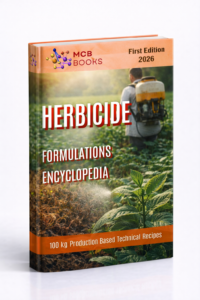
For professionals and manufacturers seeking advanced knowledge of herbicide formulations and industrial production, the Herbicide Formulations Encyclopedia provides comprehensive insights into real-world formulations, raw material selection, and proven manufacturing techniques used in the agrochemical industry.
In conclusion, common herbicide formulations such as EC, SC, SL, WP, and WG each offer unique advantages and applications. By understanding these formulation types and their uses, users and manufacturers can select the most appropriate herbicide solutions to achieve effective weed control and improve agricultural productivity.