 Overview
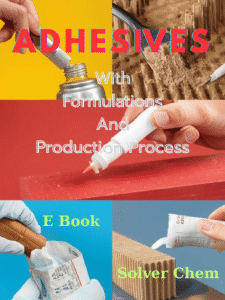
Hot melt adhesives (HMA) are thermoplastic, solvent-free bonding materials that melt when heated and solidify on cooling. They provide fast setting, high bonding strength and are widely used in packaging, woodworking, textile, bookbinding, product assembly, automotive and hygiene products.
What is Hot Melt Adhesive (HMA)
Hot melt adhesive is a solid thermoplastic adhesive composed mainly of polymers, tackifiers, waxes and stabilizers, becoming liquid when heated and forming an instant bond upon cooling.
Properties of Hot Melt Adhesives
-
Fast setting and fast bonding
-
100% solids, no solvent
-
Good thermal stability
-
Adjustable viscosity & open time
-
Compatible with automatic production lines
General Raw Materials
-
Base Polymer: EVA, APO/APAO, SBC, polyamide, polyester
-
Tackifiers: hydrocarbon resins, rosin esters
-
Waxes: paraffin, microcrystalline, synthetic wax
-
Plasticizers: mineral oils, phthalate-free plasticizers
-
Stabilizers: antioxidants (BHT, Irganox types)
Production of Hot Melt Adhesive (HMA)
Step-by-step manufacturing procedure:
1. Heating
Jacketed reactor is heated to 140–180°C depending on polymer type.
2. Polymer Addition
Base polymer (EVA/APO/SBC etc.) is charged and melted under slow agitation.
3. Tackifier Addition
Once polymer melts, tackifier resins are added to adjust bonding performance and adhesion strength.
4. Wax Addition
Waxes are introduced to adjust viscosity, open time and hardness.
5. Stabilizer Addition
Antioxidants are added to prevent thermal degradation during production and application.
6. Homogenization
Mixing continues until a fully clear, homogeneous hot melt mass is obtained.
7. Filtration & Packaging
Molten adhesive is filtered and poured into silicone-coated molds, pillow-pack systems or drum-liners.
Applications
-
Corrugated cardboard & packaging
-
Hygiene products (diapers, sanitary pads)
-
Bookbinding
-
Furniture edge banding
-
Textile lamination
-
Product assembly
-
Automotive interior components
Summary
Hot melt adhesive (HMA) is a thermoplastic, fast-setting, solvent-free adhesive widely used in industrial bonding applications. Manufacturing includes melting the polymer, adding tackifiers, waxes and stabilizers, homogenizing and packaging. HMAs offer excellent versatility, cost-effectiveness and compatibility with high-speed production lines.