High-efficiency granular NPK fertilizer production is a critical goal for manufacturers aiming to deliver superior crop performance while maintaining cost competitiveness. In modern agriculture, fertilizers are expected not only to provide essential nutrients but also to maximize nutrient uptake, minimize losses, and support sustainable farming practices. Achieving this requires advanced production methods, optimized formulations, and strict process control.
The foundation of high-efficiency production begins with the intelligent selection of raw materials. Nitrogen sources such as urea, ammonium sulfate, or ammonium nitrate are chosen based on release characteristics and cost. Phosphorus is typically supplied through monoammonium phosphate (MAP) or diammonium phosphate (DAP), while potassium is introduced via potassium chloride (MOP) or potassium sulfate (SOP). The key to efficiency lies in selecting materials that are compatible, highly soluble, and capable of delivering nutrients in plant-available forms.
Formulation design is equally important. High-efficiency fertilizers are not just balanced in terms of NPK ratios but are tailored to specific crop needs and soil conditions. Ratios such as 15-15-15, 20-10-10, or 12-12-17 are commonly used, but advanced formulations often include secondary nutrients like sulfur and magnesium, as well as micronutrients such as zinc, boron, and iron. These additions enhance nutrient uptake, improve plant metabolism, and ultimately increase crop yield.
One of the most effective production methods for high-efficiency fertilizers is optimized granulation. Techniques such as rotary drum granulation and pan granulation allow manufacturers to produce uniform granules with controlled size and strength. Process parameters—including moisture content, temperature, binder type, and residence time—must be precisely managed to ensure consistent granule formation. Uniform granules, typically within the 2–5 mm range, ensure even distribution in the field and reduce nutrient loss.
Another important factor is nutrient integration within each granule. High-efficiency fertilizers are designed so that each granule contains a balanced nutrient composition, rather than a simple blend of separate particles. This ensures that plants receive all essential nutrients simultaneously, improving nutrient use efficiency and reducing the risk of uneven crop growth.
Drying and cooling processes also play a significant role in efficiency. Proper drying reduces moisture content to safe levels, preventing caking and ensuring long-term storage stability. Cooling strengthens the granules and prepares them for packaging. Both steps must be carefully controlled to avoid damaging nutrient integrity or compromising granule quality.
Advanced coating technologies further enhance fertilizer efficiency. Coatings can reduce nutrient losses caused by leaching, volatilization, or environmental factors. For example, anti-caking coatings improve storage stability, while controlled-release coatings regulate nutrient availability over time, allowing plants to absorb nutrients more effectively.
Process optimization and automation are increasingly used in modern fertilizer plants. Real-time monitoring systems help maintain consistent production conditions, reduce waste, and improve overall efficiency. By minimizing variability in raw materials and process parameters, manufacturers can produce fertilizers with reliable performance and high agronomic value.
Quality control is essential for ensuring high-efficiency products. Regular testing of nutrient content, granule hardness, moisture levels, and particle size distribution helps maintain consistency and meet industry standards. A high-quality product not only improves crop yield but also builds trust with customers and strengthens market position.
In addition to technical performance, cost efficiency is a major consideration. Manufacturers must optimize raw material usage, energy consumption, and production throughput to remain competitive. High-efficiency production methods allow companies to deliver premium-quality fertilizers without significantly increasing production costs.
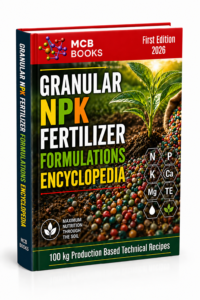
For professionals who want to access real industrial formulations, detailed raw material strategies, and 100 kg production-based recipes, the Granular NPK Fertilizer Formulations Encyclopedia provides a comprehensive technical resource. It is designed for manufacturers, entrepreneurs, and agricultural product developers aiming to produce high-efficiency granular fertilizers that maximize crop yield and profitability.