In the competitive fertilizer industry, professional formulation is the difference between a basic product and a high-performance solution that farmers trust. NPK fertilizers must deliver consistent nutrient availability, strong physical quality, and compatibility with modern application systems. For manufacturers, mastering formulation techniques is essential to produce reliable, market-ready granular fertilizers that meet both agronomic and commercial expectations.
The starting point of any professional NPK formulation is raw material selection. Nitrogen sources such as urea, ammonium sulfate, and ammonium nitrate differ in nitrogen content, release behavior, and cost. Phosphorus is typically supplied through monoammonium phosphate (MAP), diammonium phosphate (DAP), or phosphoric acid systems, while potassium is derived from potassium chloride (MOP) or potassium sulfate (SOP). The key is to choose materials that are not only cost-effective but also chemically compatible and suitable for the intended crop applications.
A critical formulation principle is nutrient balance and targeting. While standard ratios like 15-15-15 or 20-10-10 are widely used, professional manufacturers go further by designing crop-specific formulations. For example, high-nitrogen systems support vegetative growth, phosphorus-rich blends enhance root development, and potassium-dominant formulations improve fruit quality and stress resistance. Understanding the agronomic function of each nutrient allows manufacturers to create products that deliver measurable results in the field.
Another important technique is homogeneous nutrient distribution. In high-quality granular fertilizers, each granule should contain a balanced proportion of nutrients. This is achieved through proper mixing and integrated granulation rather than simple blending. Homogeneous granules ensure uniform nutrient application, reducing the risk of uneven crop growth and improving overall fertilizer efficiency.
Chemical compatibility is a key factor often overlooked by inexperienced producers. Certain raw materials can react with each other, leading to caking, nutrient loss, or instability. Professional formulation requires careful evaluation of pH, moisture sensitivity, and potential interactions between components. Stabilizing agents or process adjustments may be necessary to maintain product integrity.
Granulation plays a central role in formulation success. Techniques such as drum granulation and pan granulation allow manufacturers to produce strong, uniform granules. The use of appropriate binders—such as lignosulfonates, molasses, or ammonium-based solutions—improves granule strength and reduces dust formation. Controlling parameters like moisture content, temperature, and residence time is essential for achieving optimal granule quality.
Modern formulation techniques also include the integration of secondary nutrients and micronutrients. Elements such as sulfur, magnesium, zinc, boron, and iron are added to address soil deficiencies and enhance crop performance. These value-added formulations are increasingly important in commercial agriculture, where farmers seek higher yields and improved product quality.
Granule size and physical quality optimization are equally important. High-quality fertilizers typically have a uniform particle size range of 2–5 mm, ensuring efficient mechanical spreading. Granules must also have sufficient hardness to resist breakage during handling and transportation. Screening, recycling, and coating processes are used to achieve these properties.
Coating technologies represent another advanced formulation technique. Anti-caking agents improve storage stability, while specialized coatings can regulate nutrient release or enhance resistance to environmental factors. These innovations allow manufacturers to differentiate their products in the market and offer premium solutions.
Quality control is an integral part of professional formulation. Continuous monitoring of nutrient content, moisture levels, particle size distribution, and granule strength ensures consistency and compliance with industry standards. Reliable quality not only improves crop performance but also strengthens brand reputation.
Finally, cost optimization must be considered alongside technical performance. Professional manufacturers carefully balance raw material costs, production efficiency, and product value to remain competitive. Strategic sourcing and process optimization can significantly impact profitability without compromising quality.
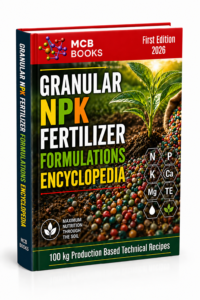
For manufacturers who want to go beyond theoretical knowledge and access real industrial formulations, the Granular NPK Fertilizer Formulations Encyclopedia provides detailed 100 kg production-based recipes, raw material combinations, and step-by-step manufacturing techniques. It is a powerful resource for developing high-performance, commercially successful fertilizer products.