
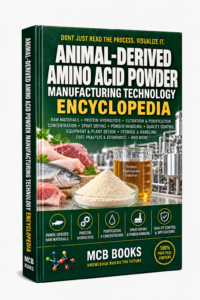
 Animal-derived amino acid powder is produced by converting protein-rich animal raw materials into smaller peptides and free amino acids through controlled hydrolysis and downstream processing. The quality of the finished powder depends heavily on raw material selection, hydrolysis conditions, purification efficiency, concentration, drying, and final quality control.
The manufacturing process begins with the selection and preparation of suitable animal-derived protein raw materials. Depending on the production route, these may include processed protein-rich materials originating from animal tissues, collagen-containing materials, feathers, fish-derived materials, or other approved industrial protein sources. Raw materials are inspected, cleaned, reduced in size, and prepared to obtain a more uniform feed for hydrolysis.
The most important production stage is protein hydrolysis. During this operation, large protein molecules are broken down into smaller peptides and amino acids. Industrial manufacturers may use acid hydrolysis, alkaline hydrolysis, enzymatic hydrolysis, or combinations of different methods depending on the required product characteristics. Temperature, pH, reaction time, mixing intensity, raw-material concentration, and reagent dosage must be carefully controlled.
After hydrolysis, the resulting liquid normally contains amino acids, peptides, insoluble residues, minerals, fats, pigments, and other components. The process therefore continues with solid-liquid separation, filtration, clarification, and purification. Centrifuges, filter systems, settling units, activated treatment systems, or membrane technologies may be used depending on the required purity level.
The purified amino acid solution is then concentrated to reduce its water content. Evaporation or other concentration technologies are commonly integrated before drying to improve process efficiency and lower energy consumption.
The concentrated material is subsequently converted into powder using an appropriate drying system. Spray drying is widely suitable for many liquid amino acid products, while alternative drying technologies may be selected according to production scale and heat sensitivity. Drying conditions must be controlled to achieve suitable moisture content, flowability, stability, and powder quality.
After drying, the product may undergo milling, sieving, blending, and packaging. Final quality-control testing can include moisture, total amino acid content, nitrogen, solubility, pH, particle size, appearance, bulk density, and application-specific parameters.
Industrial animal-derived amino acid powder production is therefore a complete manufacturing system involving raw material preparation, hydrolysis, purification, concentration, drying, powder handling, and quality assurance.
For manufacturers, engineers, investors, and technical professionals seeking deeper production knowledge, the ANIMAL-DERIVED AMINO ACID POWDER MANUFACTURING TECHNOLOGY ENCYCLOPEDIA provides detailed guidance on raw materials, hydrolysis technologies, process equipment, operating parameters, purification, drying, quality control, troubleshooting, and industrial-scale manufacturing.