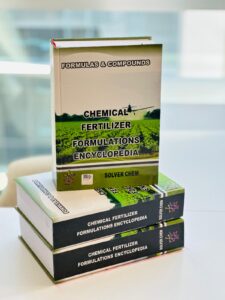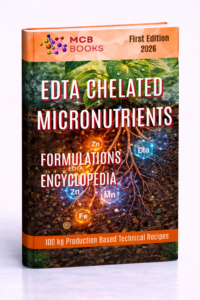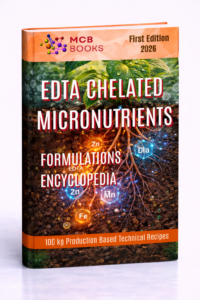
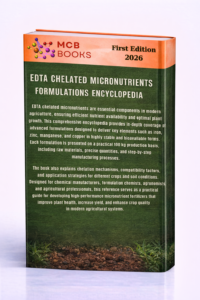
Micronutrient fertilizers are specially formulated products designed to supply essential trace elements required for plant growth and metabolic functions. Although needed in small quantities, micronutrients play a critical role in enzyme activation, chlorophyll synthesis, hormone regulation, and nutrient balance. Understanding how to make micronutrient fertilizers and their formulations is essential for producing effective, stable, and crop-specific fertilizer products.
IMPORTANCE OF MICRONUTRIENTS IN PLANT NUTRITION
Micronutrients are vital for healthy plant development and productivity.
-
Iron (Fe) – chlorophyll synthesis and respiration
-
Zinc (Zn) – enzyme activity and hormone regulation
-
Manganese (Mn) – photosynthesis and nitrogen metabolism
-
Copper (Cu) – enzyme systems and lignin formation
-
Boron (B) – cell wall formation and reproduction
-
Molybdenum (Mo) – nitrogen fixation and metabolism
Deficiency of any micronutrient leads to visible disorders and yield loss.
RAW MATERIALS USED IN MICRONUTRIENT FERTILIZER PRODUCTION
-
Micronutrient salts (sulfates, oxides, chlorides)
-
Chelating agents (EDTA, DTPA, EDDHA)
-
Acids and alkalis for pH adjustment
-
Carrier materials and fillers
-
Water (deionized for liquid formulations)
Raw material purity directly affects fertilizer efficiency.
TYPES OF MICRONUTRIENT FERTILIZER FORMULATIONS
INORGANIC MICRONUTRIENT FORMULATIONS
-
Sulfate-based fertilizers
-
Oxide-based fertilizers
-
Carbonate and chloride forms
These formulations are cost-effective and widely used in soil applications.
CHELATED MICRONUTRIENT FORMULATIONS
Chelation improves nutrient stability and availability.
-
EDTA chelated micronutrients
-
DTPA chelated micronutrients
-
EDDHA chelated micronutrients
Chelated forms are preferred in alkaline and calcareous soils.
LIQUID MICRONUTRIENT FORMULATIONS
-
Fully soluble nutrient solutions
-
Used in fertigation and foliar feeding
-
Rapid deficiency correction
GRANULAR MICRONUTRIENT FORMULATIONS
-
Soil-applied slow-release products
-
Often blended with NPK fertilizers
-
Long-term nutrient availability
HOW TO MAKE MICRONUTRIENT FERTILIZERS
BLENDING METHOD
-
Mixing micronutrient salts with carriers
-
Used for granular and powder products
-
Simple and cost-effective process
CHELATION METHOD
Used for high-efficiency micronutrient fertilizers.
-
Dissolving chelating agent in water
-
pH adjustment
-
Gradual addition of micronutrient salts
-
Stabilization and filtration
LIQUID FORMULATION METHOD
-
Dissolution of water-soluble micronutrients
-
pH buffering and stabilization
-
Filtration and packaging
GRANULATION METHOD
-
Mixing micronutrients with binders
-
Granulation using drum or pan granulators
-
Drying, cooling, and screening
QUALITY CONTROL IN MICRONUTRIENT FERTILIZER MAKING
-
Nutrient concentration analysis
-
pH and solubility testing
-
Granule size and moisture control
-
Storage stability evaluation
Quality control ensures consistent product performance.
APPLICATION METHODS OF MICRONUTRIENT FERTILIZERS
-
Soil application
-
Foliar spray application
-
Fertigation systems
-
Seed treatment
Application method depends on crop type and deficiency severity.
ADVANTAGES OF PROPER MICRONUTRIENT FORMULATIONS
-
Efficient deficiency correction
-
Improved nutrient uptake
-
Enhanced crop yield and quality
-
Reduced nutrient losses
SUMMARY
How to make micronutrient fertilizers | formulations involves selecting appropriate raw materials, applying suitable production methods, and designing stable formulations for specific crops and soil conditions. Well-formulated micronutrient fertilizers improve plant health, maximize nutrient efficiency, and support sustainable agricultural productivity.