Introduction
Povidone iodine solution is one of the most widely used disinfectant formulations in both medical and industrial hygiene applications. Known for its strong antimicrobial properties, it is highly effective against bacteria, viruses, fungi, and other pathogens.
Understanding povidone iodine solution formulation, preparation methods, and disinfectant uses is essential for manufacturers aiming to develop high-performance hygiene and cleaning products. In this guide, you will learn the complete formulation process, raw materials, and industrial applications of povidone iodine solutions.
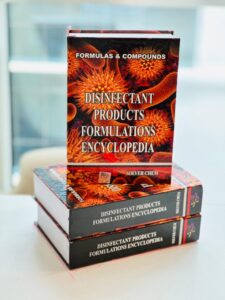
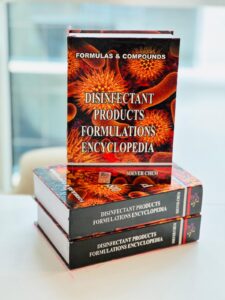
Discover powerful disinfectant formulations in the Disinfectant Products Formulations Encyclopedia, developed by a chemical engineer with over 40 years of experience.
-
WHAT IS POVIDONE IODINE AND HOW DOES IT WORK
Povidone iodine is a complex of iodine and polyvinylpyrrolidone (PVP). It gradually releases free iodine, which penetrates microbial cell walls and disrupts proteins and nucleic acids.
This mechanism provides:
- Rapid antimicrobial action
- Long-lasting effect
- Reduced resistance development
- Stability in different environments
POVIDONE IODINE DISINFECTANT FORMULA (100 KG)
Raw Material | Function | Amount (kg)
- Povidone Iodine (10%) → Active disinfectant → 15 kg
- Nonionic Surfactant → Cleaning agent → 5 kg
- Cocamidopropyl Betaine → Foam booster → 3 kg
- Isopropyl Alcohol → Solvent → 5 kg
- Citric Acid → pH adjuster → 1 kg
- EDTA → Chelating agent → 0.5 kg
- Water → Carrier → 70.5 kg
Total: 100 kg
PRODUCTION PROCESS
Production begins by adding water into a mixing tank under continuous agitation. EDTA is dissolved first to stabilize the formulation and improve performance in the presence of metal ions.
Citric acid is added to adjust the pH to the optimal range for iodine stability. Surfactants are then slowly introduced to ensure proper dispersion and avoid excessive foaming.
Cocamidopropyl betaine is incorporated to enhance cleaning and wetting performance. Povidone iodine is added carefully under controlled mixing to ensure uniform distribution and prevent iodine degradation.
Finally, isopropyl alcohol is added to improve drying performance. The mixture is homogenized for 20–30 minutes, filtered if necessary, and filled into appropriate containers.
APPLICATION AREAS
Povidone iodine disinfectants are used in:
- Poultry farm hygiene systems
- Dairy farm sanitation
- Surface disinfection in industrial areas
- Medical and hospital environments
- Equipment and tool sanitation
👉 For poultry-specific applications, see:
Povidone Iodine Disinfectant for Chicken Farm: Formulation, Ingredients and Production Process
(👉 https://makingchembooks.com/prepare-povidone-iodine-based-disinfectant-for-chicken-farm-making-formula/)👉 For dairy applications, see:
Povidone Iodine Teat Disinfectant | Formulation, Ingredients and Production Process
(👉 https://makingchembooks.com/povidone-iodine-based-disinfectants-for-cow-udder-formulations-and-production-process/)
ADVANTAGES OF POVIDONE IODINE DISINFECTANTS
- Broad-spectrum antimicrobial activity
- Effective in organic environments
- Stable formulation system
- Low resistance development
- Suitable for multiple applications
Related Disinfectant Formulations
For a deeper understanding of disinfectant systems, you can also explore:
- Hydrogen peroxide disinfectant formulations
- Peracetic acid disinfectant systems
- Alcohol-based disinfectant production processes
SUMMARY
Povidone iodine disinfectant formulations are among the most reliable solutions for industrial hygiene and sanitation. Their controlled iodine release, stability, and broad-spectrum activity make them suitable for various applications, from poultry farms to medical environments.
However, achieving industrial-level performance requires precise formulation and proper production methods.
🔥 Get Professional Disinfectant Formulations (150+ Industrial Recipes)
If you want to produce industrial-grade disinfectants instead of basic mixtures, you need accurate formulations and proven production techniques.
The Industrial Disinfectant Formulations Encyclopedia includes:
- 150+ disinfectant formulations
- Raw materials and CAS numbers
- Industrial production methods
- Professional formulation strategies
👉 Access full formulations here:
https://makingchembooks.com/product/disinfectant-products-formulations-encyclopedia/