 Liquid organic biostimulant fertilizers are increasingly used in modern agriculture to support plant performance under drought, salinity, heat, cold, transplant shock, and other forms of abiotic stress. Environmental stress can reduce root activity, nutrient uptake, water balance, vegetative growth, flowering, fruit development, and overall crop productivity. For this reason, liquid organic biostimulant formulations are becoming important components of professional crop nutrition and stress-management programs.
These fertilizers may contain humic acid, fulvic acid, amino acids, protein hydrolysates, seaweed extracts, organic nitrogen sources, potassium compounds, micronutrients, organic acids, and other compatible ingredients. The exact formulation depends on the target crop, stress condition, application method, and desired product characteristics. By combining different organic components, manufacturers can develop multifunctional products designed to support plant vigor, root development, nutrient availability, and crop recovery under unfavorable growing conditions.
Drought stress is one of the most common challenges in agricultural production. Limited water availability can restrict nutrient movement and reduce root activity. Liquid organic biostimulant fertilizers developed for drought conditions may combine amino acids, seaweed extracts, humic substances, fulvic acid, potassium, and selected micronutrients. These products can be applied through fertigation, soil treatment, or foliar spraying as part of an integrated crop management program.
Salinity stress can also have a major impact on plant growth and nutrient balance. High salt levels in soil or irrigation water may interfere with water uptake and root performance. Liquid organic fertilizers for saline conditions may include humic and fulvic substances, amino acids, potassium, calcium, seaweed extracts, and compatible micronutrients. The formulation should remain stable and sufficiently soluble for the selected application system.
Heat, cold, transplant shock, and other abiotic stresses can also affect crop development. Specialized liquid organic biostimulants may be applied before, during, or after stressful periods depending on the crop and production system. Foliar formulations should provide suitable spreading and compatibility with plant surfaces, while fertigation products should remain soluble and free from excessive sediment.
Commercial production requires careful control of raw material compatibility, mixing order, pH, density, viscosity, solubility, filtration, and storage stability. Quality control should also include appearance, nutrient content, organic matter, sediment formation, and packaging compatibility.
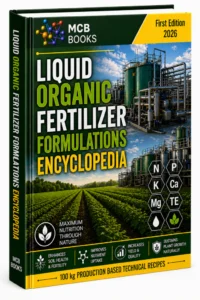
The LIQUID ORGANIC FERTILIZER FORMULATIONS ENCYCLOPEDIA provides practical technical information about liquid organic biostimulant fertilizer formulations, raw materials, production methods, manufacturing procedures, and quality control. It is designed for fertilizer manufacturers, formulators, agricultural companies, and entrepreneurs seeking to develop professional products for drought, salinity, abiotic stress management, root development, and modern crop nutrition.