Liquid vs Powder Micronutrient Fertilizers: Formulation Differences Explained
Micronutrient fertilizers are essential for modern agriculture, providing plants with critical trace elements such as iron (Fe), zinc (Zn), manganese (Mn), copper (Cu), boron (B), and molybdenum (Mo). These nutrients play a vital role in plant metabolism, enzyme activity, and crop quality. Among the most widely used forms of micronutrient fertilizers are liquid and powder formulations. Understanding the formulation differences between liquid and powder micronutrient fertilizers is crucial for manufacturers, agronomists, and farmers seeking to optimize performance and application efficiency.
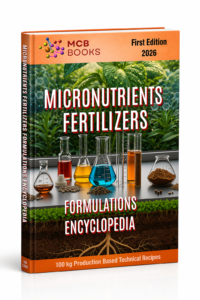 Liquid micronutrient fertilizers are designed for rapid absorption and immediate availability to plants. These formulations are typically used in
 foliar applications and fertigation systems, where nutrients need to be delivered quickly and efficiently. The key advantage of liquid fertilizers lies in their complete solubility, allowing for uniform distribution and fast plant uptake. However, producing stable liquid formulations requires precise control of pH, water quality, and ingredient compatibility. Stabilizers, chelating agents, and dispersing agents are often added to maintain nutrient solubility and prevent precipitation over time.
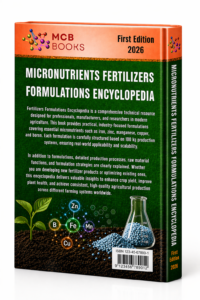
Powder micronutrient fertilizers, on the other hand, are primarily produced as water-soluble or dispersible products. These formulations offer advantages such as longer shelf life, easier storage, and reduced transportation costs. Powder fertilizers are highly concentrated and can be dissolved in water before application, making them suitable for large-scale agricultural operations. Achieving a high-quality powder formulation requires careful control of particle size distribution, moisture content, and blending uniformity. These factors ensure rapid dissolution and consistent nutrient delivery when mixed with water.
One of the main differences between liquid and powder formulations is their production process. Liquid fertilizers are produced by dissolving micronutrient salts and additives in water under controlled conditions. The order of ingredient addition and mixing parameters are critical to achieving a stable and homogeneous solution. In contrast, powder fertilizers are produced through dry blending processes, where raw materials are mixed in precise proportions. Advanced techniques such as spray drying or granulation may also be used to improve product performance and handling characteristics.
Chelation technology plays an important role in both liquid and powder micronutrient fertilizers. Chelated micronutrients, such as EDTA, DTPA, and EDDHA complexes, improve nutrient availability and prevent losses due to soil interactions. In liquid formulations, chelation helps maintain stability and prevents precipitation, while in powder formulations, it ensures that nutrients remain available after dissolution. The choice of chelating agent and its concentration is a key factor in determining the effectiveness of the final product.
Another important consideration is application flexibility. Liquid fertilizers are ideal for precision agriculture systems, allowing for controlled dosing and uniform coverage. Powder fertilizers, however, are more versatile in terms of storage and transport, making them suitable for regions where logistics and infrastructure may be limited. Both types have their own advantages, and the choice between them depends on specific agricultural needs and operational requirements.
Quality control is essential for both liquid and powder micronutrient fertilizers. Manufacturers must ensure that products meet standards for nutrient content, solubility, pH, and physical properties. Proper packaging and storage conditions are also important to maintain product stability and effectiveness over time.
In conclusion, understanding the formulation differences between liquid and powder micronutrient fertilizers is essential for selecting the right product for specific applications. Each type offers unique advantages in terms of performance, production, and usability. By leveraging advanced formulation techniques and production methods, manufacturers can develop high-quality fertilizers that meet the evolving demands of modern agriculture.