Introduction
Touchless car wash shampoos have become one of the most preferred solutions in modern vehicle cleaning. The reason is simple — they allow effective cleaning without physical contact, reducing the risk of surface damage.
But in practice, not every touchless shampoo performs the same way. Some remove dirt easily, while others struggle with road film or leave residues behind. The difference usually comes down to how the formulation is built.
If you’re looking at this from a production perspective, understanding how these systems are designed can save a lot of trial and error.
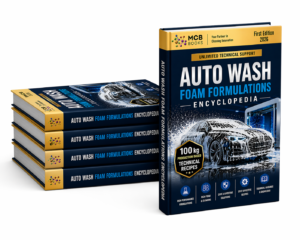
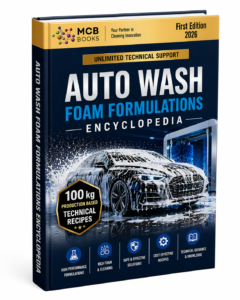
Includes high-foam systems, touchless wash formulations, and production-ready recipes.
👉 AUTO WASH FOAM FORMULATIONS ENCYCLOPEDIA
What Makes a Touchless Shampoo Different?
Unlike standard car shampoos, touchless systems rely entirely on chemistry rather than mechanical action.
This means the formulation must:
- break down dirt quickly
- maintain strong foam on vertical surfaces
- rinse off without leaving marks
To achieve this, manufacturers use a combination of surfactants, builders, and supporting ingredients that work together under different water conditions.
Why Some Formulations Work Better Than Others
One of the most common issues in touchless systems is inconsistency.
A formula might work well in one location but fail in another due to water hardness or temperature. This is why professional formulations are usually designed with flexibility in mind.
👉 If you want to understand how these systems are developed step by step:
👉 Touchless Car Wash Shampoo Production Process
This explains how raw materials are combined and adjusted for different production conditions.
Foam Behavior and Cleaning Efficiency
Foam is not just about appearance in touchless washing.
A stable foam layer helps the product stay on the surface longer, allowing it to break down dirt without scrubbing. At the same time, it should rinse off easily without leaving residue.
Balancing these two factors is one of the main challenges in formulation.
Building a Reliable Formula
A typical touchless shampoo includes:
- high-performance surfactants
- builders for water hardness control
- foam stabilizers
- optional solvents for heavy dirt
The key is not just selecting the right ingredients, but using them in the right proportions.
👉 For a more detailed breakdown of composition and ingredient roles:
👉 Car Wash Shampoo Formula & Composition Guide
This helps connect the theory with practical formulation details.
From Single Product to Product Line
In real production, touchless shampoos are rarely developed alone.
They are usually part of a larger product range that includes:
- pre-wash systems
- foam shampoos
- finishing and protection products
Why Structured Formulations Matter
One of the biggest differences between small-scale trials and real production is consistency.
Instead of testing random combinations, many producers work with structured formulation systems that already include:
- tested ingredient combinations
- multiple product variations
- scalable production methods
👉 AUTO WASH FOAM FORMULATIONS ENCYCLOPEDIA
This approach reduces development time and helps achieve more reliable results.
SUMMARY
Touchless car wash shampoos rely entirely on formulation design to deliver cleaning performance without mechanical action.
While the basic production process is relatively simple, achieving consistent results requires a well-balanced combination of surfactants, builders, and foam systems.
In practice, these formulations are often developed as part of a broader product system, where different cleaning solutions work together.
Understanding this structure can make it much easier to move from a single product to a more complete and scalable production setup.
Related Articles
If you want to understand how different car care and wash products work together as a system:
👉 Car Care Products Formulation System (Complete Automotive Chemical Production Guide)
This gives a clearer idea of how cleaning, foam systems, and detailing products are connected in real use.