Introduction
Liquid toilet cleaners are widely used in both household and industrial cleaning applications. They are designed to remove limescale, stains, and organic residues while maintaining hygiene in sanitary areas.
Although these products may seem simple, an effective toilet cleaner requires a carefully balanced formulation. The strength of the acid system, the choice of surfactants, and the stability of the mixture all play an important role in performance.
For anyone interested in producing cleaning products, toilet cleaners are often one of the first formulations studied because they combine strong cleaning action with relatively straightforward production.
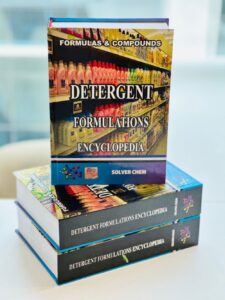
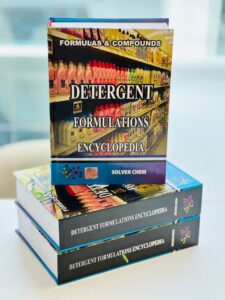
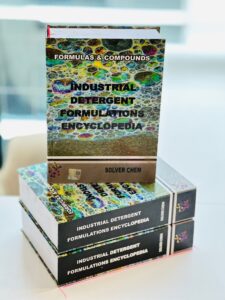
Includes toilet cleaners, descalers, and a wide range of detergent formulations used in real production.
👉 DETERGENT FORMULATIONS ENCYCLOPEDIA
What is a Liquid Toilet Cleaner?
A liquid toilet cleaner is typically an acid-based formulation used to dissolve mineral deposits, remove stains, and eliminate bacteria in toilet bowls.
Most products are designed to:
- break down limescale and rust
- remove organic residues
- improve surface cleanliness and appearance
Depending on the formulation, they can also include fragrance and coloring to improve user experience.
Key Ingredients in Toilet Cleaner Formulation
A typical liquid toilet cleaner includes the following components:
- Acid system (such as HCl or organic acids) → dissolves scale and stains
- Surfactants → improve wetting and cleaning performance
- Thickeners (optional) → help the product cling to vertical surfaces
- Fragrance and dyes → improve usability and appearance
- Corrosion inhibitors (optional) → protect surfaces and packaging
The balance of these ingredients determines both cleaning strength and safety.
Production Process Overview
The production of liquid toilet cleaner is usually a controlled mixing process.
Water is added to the mixing tank first, followed by the acid component under controlled conditions. Surfactants and additives are then incorporated gradually while mixing continues.
The order of addition is important to maintain stability and avoid unwanted reactions.
Although the process is relatively simple, proper handling and safety precautions are essential due to the acidic nature of the formulation.
Practical Considerations in Production
In real manufacturing environments, several factors influence product quality:
- concentration of the acid system
- compatibility of raw materials
- viscosity control for better surface adhesion
- storage stability over time
A well-designed formulation should remain stable, effective, and easy to apply.
Not Just a Single Product
Liquid toilet cleaners are often part of a wider cleaning product range.
In practice, manufacturers usually produce multiple related products such as:
- general bathroom cleaners
- descaling agents
- multi-purpose cleaners
👉 DETERGENT FORMULATIONS ENCYCLOPEDIA
Looking at different product categories together can help in building a more complete and consistent production line.
A More Structured Approach
In larger-scale production, formulations are rarely developed randomly.
Instead, they are based on tested systems that include multiple variations and production-ready formulations.
👉 DETERGENT FORMULATIONS ENCYCLOPEDIA
Working with structured formulation systems can make production more efficient and consistent.
SUMMARY
Liquid toilet cleaner formulations rely on a balance between acid systems, surfactants, and supporting additives to achieve effective cleaning.
While the production process is relatively straightforward, formulation quality plays a key role in performance, stability, and usability.
In practice, these products are often developed as part of a wider detergent system, allowing manufacturers to create a broader and more consistent product range.