 NPK-based organomineral granular fertilizers combine essential mineral nutrients with organic matter to provide balanced plant nutrition while supporting soil fertility. Nitrogen, phosphorus, and potassium are the primary nutrients required for healthy crop development, but their proportions must be carefully selected according to the targeted growth stage, crop type, and agricultural application. Organomineral formulations allow manufacturers to combine these major nutrients with organic components, humic substances, secondary nutrients, and micronutrients in a practical granular fertilizer product.
Nitrogen is primarily responsible for vegetative development, chlorophyll formation, and overall plant growth. Adequate nitrogen nutrition supports leaf development and photosynthetic activity. However, excessive nitrogen may produce excessive vegetative growth and negatively affect flowering or fruit development. For this reason, nitrogen concentration should be balanced with phosphorus and potassium according to the intended fertilizer application.
Phosphorus is particularly important for root growth, early plant establishment, energy transfer, flowering, and reproductive development. NPK-based organomineral granular fertilizer formulations designed for young plants or root development may therefore contain carefully selected phosphorus sources. Proper phosphorus availability can help establish stronger root systems capable of improving nutrient and water uptake from the soil.
Potassium plays an important role in water regulation, enzyme activity, plant stress tolerance, fruit development, and crop quality. Fertilizer formulations intended for flowering and fruiting stages can be designed with increased potassium levels depending on the nutritional requirements of the crop. Balanced potassium nutrition can contribute to fruit size, quality, firmness, and overall crop performance.
The organic fraction is another important component of organomineral granular fertilizers. Organic matter, humic acid, and other suitable organic materials can be incorporated with mineral nutrients to create products that support both plant nutrition and soil properties. Humic substances may also be combined with NPK nutrients and micronutrients to develop more specialized commercial fertilizer formulations.
Micronutrients such as iron, zinc, manganese, boron, copper, and molybdenum may be added according to crop requirements. Secondary nutrients including calcium, magnesium, and sulfur can also be incorporated when developing complete plant nutrition products. This flexibility allows fertilizer manufacturers to create different formulations for root development, vegetative growth, flowering, fruit setting, fruit enlargement, and crop quality.
Commercial production requires accurate raw material weighing, homogeneous mixing, controlled granulation, drying, cooling, screening, and final conditioning. Granule size, nutrient distribution, moisture content, mechanical strength, and storage stability should be carefully controlled to obtain a consistent final product.
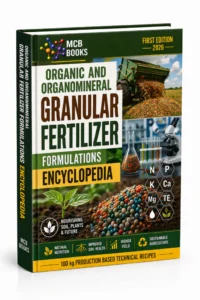
The ORGANIC AND ORGANOMINERAL GRANULAR FERTILIZER FORMULATIONS ENCYCLOPEDIA provides practical information for manufacturers interested in developing NPK-based organomineral fertilizer products. It covers production-based formulations, raw material functions, manufacturing principles, and technical considerations that can assist with professional fertilizer development.
Different NPK ratios can be developed according to the nutritional objectives of individual crops and growth stages. Manufacturers may also combine NPK nutrients with organic matter, humic substances, micronutrients, and secondary nutrients to create specialized fertilizer products for modern agricultural markets.
For fertilizer manufacturers, agricultural companies, entrepreneurs, and formulation specialists, the ORGANIC AND ORGANOMINERAL GRANULAR FERTILIZER FORMULATIONS ENCYCLOPEDIA can serve as a practical reference for developing commercially viable granular fertilizers designed to support root growth, balanced plant development, higher crop yield, and improved fruit quality.