Paint Thinner Formula and Manufacturing Process
Paint thinners are essential products used throughout the coatings industry for viscosity adjustment, equipment cleaning, application performance improvement, and paint system compatibility. Whether used in decorative paints, industrial coatings, metal finishes, wood coatings, or maintenance paints, the quality of the thinner can significantly influence the final performance of the coating system. For this reason, selecting the right Thinner Formula is an important part of successful paint manufacturing.
A professional Thinner Formula is not simply a mixture of solvents. The balance between evaporation rate, solvency strength, drying characteristics, application properties, and cost efficiency must be carefully controlled. Different paint systems often require different thinner compositions, which is why manufacturers develop specialized formulations for synthetic paints, alkyd coatings, industrial paints, primers, and various solvent-based coating products.
Many entrepreneurs and manufacturers searching for a Thinner Formula are also interested in understanding the raw materials used in thinner production, the manufacturing process, and the practical requirements for commercial production. In this guide, we examine the common ingredients found in paint thinners, how thinner products are manufactured, and the key factors that influence product quality, production efficiency, and commercial performance.
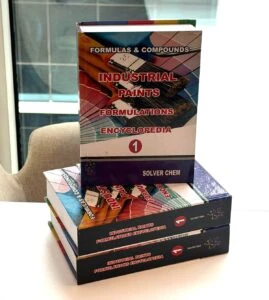
Looking for Professional Thinner Formulas for Commercial Production?
If you are researching a Thinner Formula, chances are you are looking for more than a simple solvent list. Commercial thinner production requires carefully balanced formulations that provide the correct evaporation rate, solvency power, drying characteristics, compatibility, and production cost.
The
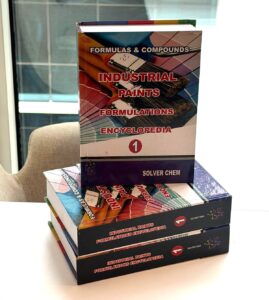
INDUSTRIAL PAINTS FORMULATIONS ENCYCLOPEDIA – 1
contains professional formulation knowledge developed for industrial paint and coating manufacturers, including:
✔ Paint Thinner Formulas
✔ Synthetic Thinner Formulas
✔ Industrial Coating Solvent Systems
✔ Paint Manufacturing Formulations
✔ Primer and Undercoat Systems
✔ Solvent-Based Coating Technologies
✔ Raw Material Information
✔ Production Processes
✔ Industrial Manufacturing Knowledge
✔ Commercial Formulation Systems
Whether you are planning to start a paint manufacturing business, develop private-label coating products, expand your product portfolio, or improve existing formulations, access to professional formulation knowledge can significantly reduce development time and costly trial-and-error work.
Instead of relying on incomplete recipes found online, professional formulations provide a more reliable foundation for commercial production and product development.
Thinner Raw Materials
Most commercial thinner products are manufactured using a combination of carefully selected solvents. The exact raw materials depend on the intended application, paint system compatibility, evaporation rate requirements, and production cost targets.
Common thinner raw materials may include aromatic solvents, ketones, esters, alcohols, and other specialty solvents. Different combinations can produce significantly different performance characteristics, which is why manufacturers often develop separate formulations for various coating systems and market segments.
Choosing the right raw materials is one of the most important factors affecting product quality, customer satisfaction, and production consistency.
What Is Thinner Made Of?
Many people searching for a Thinner Formula simply want to know what thinner is made of.
In reality, there is no single universal thinner composition. Different products are designed for different applications, and the solvent system used for one paint type may not be suitable for another. Factors such as drying speed, solvency strength, odor level, application method, and coating compatibility all influence formulation design.
For this reason, commercial manufacturers rarely rely on generic solvent mixtures. Instead, they develop formulations specifically designed for their target products and customers.
How Thinner Is Made
The production of thinner is generally a straightforward blending operation. However, producing a consistent commercial product requires proper formulation design, accurate weighing, controlled mixing, and strict quality control procedures.
Manufacturers typically combine selected solvents according to a predetermined formulation and mix the batch until a homogeneous product is obtained. The finished thinner is then tested, filtered if necessary, and packaged for distribution.
While the manufacturing process itself may appear simple, the formulation behind the product often determines its market success.
Thinner Manufacturing Process
A typical thinner manufacturing process begins with raw material preparation and quality verification. Solvents are measured according to the formulation and transferred into suitable mixing equipment.
After blending is completed, the product is evaluated for appearance, compatibility, evaporation behavior, and other quality parameters. The finished material is then transferred to packaging containers for storage and sale.
Successful manufacturers focus not only on production efficiency but also on maintaining consistent product quality from batch to batch.
Paint Thinner Production Equipment
The equipment required for thinner production varies according to plant size and production capacity.
Small-scale operations often use basic mixing tanks, transfer pumps, storage vessels, filtration systems, and filling equipment. Larger facilities may incorporate automated dosing systems, advanced storage infrastructure, laboratory testing equipment, and high-capacity packaging lines.
Before investing in production equipment, manufacturers typically determine their target products, production volumes, and formulation requirements.
Commercial Thinner Formulas
Many visitors searching for a Thinner Formula are not looking for general information. They are looking for formulations that can actually be manufactured, packaged, marketed, and sold.
Commercial thinner production requires more than knowing which solvents are commonly used. It requires understanding formulation balance, raw material compatibility, production procedures, quality control requirements, and application performance.
Manufacturers looking for professional formulation knowledge often use references such as the INDUSTRIAL PAINTS FORMULATIONS ENCYCLOPEDIA – 1, which contains formulation systems, production information, raw material guidance, and practical manufacturing knowledge for industrial paint and coating products.
Whether you are starting a new paint manufacturing business, developing private-label products, or expanding an existing production facility, professionally developed formulations can significantly reduce development time and help avoid costly production mistakes.
SUMMARY
A successful Thinner Formula depends on proper raw material selection, formulation design, manufacturing procedures, and quality control practices. While thinner production itself is relatively straightforward, creating a commercially successful product requires a carefully balanced formulation developed for the intended application. For manufacturers and entrepreneurs, access to professional formulation knowledge can be one of the most valuable tools in the product development process.